Micellar Casein Toxicity
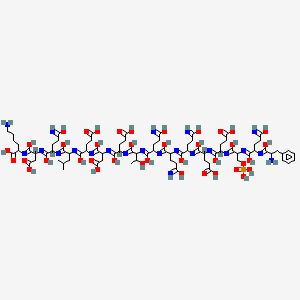
Identifiers
Functions
Where is micellar casein used, and what role does it play in each application?
Micellar casein is used as a high-purity protein source in nutritional liquids, enteral compositions, and culinary emulsions. In high-protein nutritional liquids, it provides at least 70% of total protein and supports viscosity stability without cold gelation. In enteral nutrition, it serves as the primary protein (≥70-81% of total protein) for renal function support. In toppings and creams, it functions as an emulsifier, often combined with chelating agents. Cosmetically, casein is listed for antistatic, hair conditioning, and skin conditioning functions.
Which product or formulation problem does micellar casein address?
Micellar casein addresses formulation challenges in high-protein and enteral products by enabling high protein content (≥70% of total protein) while maintaining low viscosity (2-400 cP) and preventing cold gelation during storage. In enteral compositions, it helps manage phosphorus levels through dephosphorylation, supporting renal health. As an emulsifier, it stabilizes oil-water interfaces in toppings and creams, with chelating agents to control calcium-mediated interactions.
What supports the main commercial or clinical uses of micellar casein?
Support for micellar casein's uses comes primarily from patent applications describing specific formulations and claimed benefits. These include high-protein nutritional liquids with polyphenols for stability, dephosphorylated micellar casein for enteral compositions with reduced phosphorus, and compositions for renal function support. The ingredient's role as an emulsifier in culinary products is also claimed. However, no clinical trial data or regulatory approvals are provided in the evidence.
Which formulation trade-offs should researchers consider for micellar casein?
Key trade-offs include balancing high protein concentration with viscosity and stability. Micellar casein can achieve high protein levels (≥70% w/w) but requires careful control of pH, temperature, and additives to avoid cold gelation. Dephosphorylation reduces phosphorus content but adds processing steps and chelating agents. In emulsions, combining with chelating agents (0.0001-20% w/w) is necessary to manage calcium interactions, but this affects final texture and ingredient costs.
What are the physicochemical properties of Micellar casein?
| Property | Value | Category |
|---|---|---|
| XLogP3 | -7.1 | Computed Molecular Properties |
| Exact Mass | 2060.8211892 | Computed Molecular Properties |
| Monoisotopic Mass | 2060.8211892 | Computed Molecular Properties |
| Topological Polar Surface Area | 1110.0 | Computed Molecular Properties |
| Complexity | 4830.0 | Computed Molecular Properties |
| Hydrogen Bond Donor Count | 37 | Computed Molecular Properties |
| Hydrogen Bond Acceptor Count | 61 | Computed Molecular Properties |
| Rotatable Bond Count | 74 | Computed Molecular Properties |
| Heavy Atom Count | 143 | Computed Molecular Properties |
| Formal Charge | 0 | Computed Molecular Properties |
Which formulation benchmark best contextualizes micellar casein, and what differs?
A relevant benchmark is standard milk protein concentrate or isolate, which also provides high protein but lacks the native micellar structure. Micellar casein retains its micellar form, offering different emulsifying and gelation properties. In high-protein liquids, it achieves lower viscosity and better storage stability compared to non-micellar casein, but requires specific processing (e.g., dephosphorylation) for enteral applications to reduce phosphorus.