Chitosan Toxicity
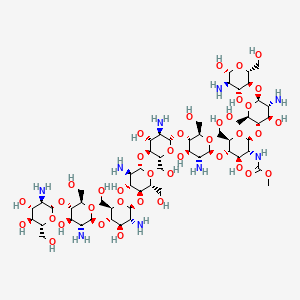
Identifiers
Functions
Where is Chitosan used, and what role does it play in each application?
Chitosan functions primarily as a film-forming and hair-fixing agent in cosmetics, with commercial product data showing its use in hair styling products, hair sprays, and conditioners, as well as in skincare items like face creams, moisturizers, and masks. In pharmaceuticals, patent evidence shows it serves as a structural backbone for hydrogels, wound dressings, and drug delivery systems, including pH-responsive beads and sustained-release matrices. It also appears in food preservation coatings, packaging films, and bioplastic barrier coatings. Across these applications, its role is consistently that of a structural or film-forming polymer, often modified to achieve specific functional properties.
Which product or formulation problem does Chitosan address?
Chitosan addresses formulation problems requiring film formation, structural integrity, and controlled release. In hair care, it solves the need for hold and curl definition without relying solely on synthetic polymers. In pharmaceuticals, it provides a biocompatible matrix for wound healing, tissue regeneration, and pH-responsive drug delivery, protecting actives like NMN from gastric degradation. For food and packaging, it offers antimicrobial surface protection and barrier properties for perishable goods. Its cationic nature also enables polyion complex formation that improves spreadability and reduces stickiness in cosmetic compositions, addressing sensory and application issues.
What supports the main commercial or clinical uses of Chitosan?
Evidence for chitosan's main uses comes from multiple sources. Cosmetic regulatory data lists it as an active film-forming and hair-fixing ingredient, and commercial product records show its presence in 83 products across 18 brands, predominantly in hair styling and skincare categories. Patent literature extensively documents its use in pharmaceutical applications such as antibacterial hydrogels, wound dressings, and drug delivery systems, as well as in food preservation coatings and packaging films. The breadth of patent activity across pharmaceuticals, cosmetics, food, and packaging domains indicates recognized versatility, though patent filings represent claimed approaches rather than confirmed market adoption.
Which formulation trade-offs should researchers consider for Chitosan?
Key formulation trade-offs for chitosan involve its solubility and reactivity. It requires acidic solutions for dissolution, typically acetic acid, which constrains pH-sensitive formulations. Chemical modification is often necessary to achieve specific properties: phenylboronic acid grafting enables pH-responsive hydrogels, while cross-linking with agents like 1,4-butanediol diglycidyl ether improves structural stability. Molecular weight selection is critical, with low molecular weight variants (≤20,000 Da) used to reduce film stickiness, while higher molecular weights provide better film-forming properties. Concentration ranges vary widely by application, from 0.01% in cosmetic compositions to 25% in adhesive materials, requiring careful optimization for each use case.
What are the physicochemical properties of Chitosan?
| Property | Value | Category |
|---|---|---|
| Physical Description | Solid | Appearance |
| XLogP3 | -21.4 | Computed Molecular Properties |
| Exact Mass | 1525.6353145 | Computed Molecular Properties |
| Monoisotopic Mass | 1525.6353145 | Computed Molecular Properties |
| Topological Polar Surface Area | 808.0 | Computed Molecular Properties |
| Complexity | 2630.0 | Computed Molecular Properties |
| Hydrogen Bond Donor Count | 29 | Computed Molecular Properties |
| Hydrogen Bond Acceptor Count | 47 | Computed Molecular Properties |
| Rotatable Bond Count | 27 | Computed Molecular Properties |
| Heavy Atom Count | 104 | Computed Molecular Properties |
Which formulation benchmark best contextualizes Chitosan, and what differs?
Polyvinylpyrrolidone (PVP) serves as a relevant formulation benchmark for chitosan in hair styling applications, as both are film-forming polymers. Patent evidence shows a styling composition combining chitosan neutralization product (0.2-1.0%) with PVP or vinylpyrrolidone/vinyl acetate copolymers (0.3-3.0%), indicating they can be used together rather than as direct substitutes. Chitosan differs by being a cationic, bio-based polymer requiring acidic dissolution, while PVP is synthetic and water-soluble across broader pH ranges. In commercial products, both appear as co-ingredients, suggesting formulators may use chitosan to add conditioning or bio-based positioning while relying on PVP for conventional hold performance.