Citral: rules by market, safety and alternatives
Citral gives lemongrass, litsea and lemon myrtle oils their lemon smell. Perfumers add citral for a lemon note in fragrances, cosmetics, household products and foods.
Does this affect your product?
Our read: on our reading, the EU caps count citral from every source, essential oils included, and the Commission has not said so. If citral is at IFRA's limit, which equals the EU cap in six of nine product types, no citral-rich oil fits on top. With no other citral, 0.18 to 0.25% lemongrass or litsea oil reaches the 0.15% leave-on cap (0.21% for a 72% oil).
| If you sell in... | Check this first |
|---|---|
| The EU, new products | Products over an EU citral cap cannot be placed on the EU market from 1 January 2027. Add up the citral in each finished product, from added citral and from every oil. Compare the total with the cap for its product type. Ask each oil supplier for the batch's citral share. Lemongrass oil is also a labelled allergen of its own, as the label section says |
| The EU, sell-through | From 1 July 2028 no product over an EU citral cap may be made available (sold or supplied) under the Citral entry. For Geranial and Neral the date is 1 August 2028. Which date applies to a product that holds both is a question for your regulatory team |
| India | Name citral on the label above the EU's thresholds. India sets thresholds and no caps. India's Amendment No. 1 prints no effective date, and ChemLinked's database lists 26 April 2027 |
| Canada or South Korea | Check that each label names citral above the thresholds in the label section. Canada's and South Korea's label rules are in force |
| Australia | Check whether any cosmetic or household cleaning preparation holds more than 5% citral isomers, the level at which the Poisons Standard lists citral in Schedule 5 |
| The US, China, Japan or ASEAN | We found no cap for citral |
We read the EU regulation, the SCCS opinion, the IFRA standard and each market's official rule list. We searched patents published from 27 November 2025 to 27 November 2026 in Slate R&D. "Our read" lines are our judgement.
What is citral used for?
Citral is a lemon-scented fragrance and flavour ingredient, and it makes up most of lemongrass, litsea and lemon myrtle oils. The SCCS calls citral widely used in cosmetic and household products and in food. US food rules list citral as generally recognised as safe.
674 patent families published in the last 12 months name citral in their title, abstract or claims. 178 of the 674 families are in cosmetic or fragrance classes, and 35 of the 178 name citral in the title or abstract. The other 496 families are in classes we did not sort. In our grouping of the 35, citral is a listed ingredient in a fragrance or flavour recipe in 10 and an antimicrobial in 9.
Is citral banned?
No market we checked bans citral, and only the EU caps it. The nine EU caps apply to products placed on the EU market from 1 January 2027.
Our read: the EU's nine caps equal the maxima that industry proposed to the SCCS (SCCS Table 7). IFRA's limits are the same or lower in every pairing we made.
Regulation (EU) 2026/909 replaced Annex III entry 70. The EU caps apply to the ready-for-use product. We read the caps as counting citral, geranial and neral together, as Regulation 2026/909's label rule does. The IFRA column is our pairing of IFRA's categories with the EU's product types.
| Against IFRA | EU cap | Product type, as the regulation words it | IFRA limit, closest category |
|---|---|---|---|
| Same | 0.6% | Fragrance products, hydroalcoholic and non-hydroalcoholic, spray and non-spray | 0.60%, category 4 |
| Same | 0.35% | Oral products | 0.35%, category 6 |
| Same | 0.15% | Leave-on skin products (except lip products, deodorants and antiperspirants, fragrance products, eye products, face make-up and make-up remover) and nail products | 0.15%, categories 5A to 5C |
| Same | 0.11% | Lip make-up products, lipstick, lip salves | 0.11%, category 1 |
| Same | 0.032% | Deodorants and antiperspirants | 0.032%, category 2 |
| Same | 1.2% | Skin and hair rinse-off products | 1.2%, category 9 |
| IFRA stricter | 1.2% | Hair leave-on products | 0.20%, category 7B |
| IFRA stricter | 0.65% | Eye products, face make-up and make-up remover | 0.10%, category 3 |
| IFRA stricter | 0.063% | Leave-on products for the anogenital area, baby wipes and intimate wipes | 0.051%, category 8 |
IFRA's citral standard is a restriction, last amended in the 49th amendment of 2020. IFRA's limits are for the finished product. The EU text has no baby product line, so baby creams and oils fall under the leave-on skin cap. IFRA sets 0.051% for baby creams and oils in category 5D.
How much lemongrass or litsea oil fits under each cap
Our read
use the batch's own citral share, not the textbook range. In lemongrass oil the range moves the most oil that fits by more than a third. Regulation 2026/909 does not mention essential oils. Several consultancies read the regulation as counting citral from natural oils, and we found no Commission statement.
Lemongrass or litsea oil used alone fits at 0.039 to 0.053% of a deodorant. In a leave-on cream, lemongrass or litsea oil fits at 0.18 to 0.25%. Both figures ignore any other citral in the product.
| Product type | Lemongrass (East Indian) or litsea oil, 60 to 82% citral | Lemon myrtle oil, 80 to 98% citral |
|---|---|---|
| Deodorants and antiperspirants | 0.039 to 0.053 | 0.033 to 0.040 |
| Leave-on anogenital products | 0.077 to 0.11 | 0.064 to 0.079 |
| Lip make-up | 0.13 to 0.18 | 0.11 to 0.14 |
| Leave-on skin and nail products | 0.18 to 0.25 | 0.15 to 0.19 |
| Oral products | 0.43 to 0.58 | 0.36 to 0.44 |
| Fragrance products | 0.73 to 1.0 | 0.61 to 0.75 |
| Eye products, face make-up and remover | 0.79 to 1.1 | 0.66 to 0.81 |
| Hair leave-on and skin and hair rinse-off | 1.5 to 2.0 | 1.2 to 1.5 |
Each cell is the most oil that fits, in percent by weight of the finished product. The calculation is ours: the cap divided by the oil's citral share. The table assumes the oil is the only source of citral. We counted neral plus geranial as citral and treated gas chromatography area as weight. The shares come from ISO 4718:2004 for East Indian lemongrass (60 to 82%) and ISO 3214:2000 for litsea (63 to 78%). A 2021 review gives the citral share of lemon myrtle oil.
India, Canada and South Korea name citral on the label and set no cap. Australia lists citral isomers, and lemongrass oil, in Schedule 5 of its Poisons Standard above 5% citral isomers. Schedule 5 sets caution labelling and container rules, not a maximum.
Citral and the 2027 EU caps
The full report as a PDF, with every source cited. Then one email a month when something new appears.
Is citral safe?
The SCCS judged citral safe for skin sensitisation at the concentrations industry proposed, and said the method needs refinement before a firm conclusion. The SCCS's final opinion on citral is dated 29 July 2024.
The SCCS opinion says: "However, the SCCS has identified some aspects of the QRA2 methodology that still need clarification and therefore, some refinement is needed before a firm conclusion on the safety of Citral could be drawn."
Our read: the SCCS opinion covers skin sensitisation only and gives no verdict on other kinds of toxicity. On the way the maximum levels are set, the SCCS wrote: "Since cosmetics are not the only product category that may contain Citral, this approach will always lead to an aggregate CEL that exceeds safe limits" (page 41). Recital 24 of Regulation 2026/909 repeats the first half of the SCCS conclusion.
The US National Toxicology Program fed citral to rats and mice. The program found no evidence of carcinogenic activity in rats and male mice, and equivocal evidence in female mice (TR-505, January 2003). The doses of citral were in feed, not on skin.
Does citral need to be on the label?
The EU, South Korea and Canada require citral on the label above 0.001% in leave-on and 0.01% in rinse-off products. India's Amendment No. 1 names citral above the same thresholds, with ChemLinked's implementation date of 26 April 2027.
The EU also counts geranial and neral as Citral. Regulation 2026/909 replaced the dates that Regulation (EU) 2023/1545 set for geranial and neral, 31 July 2026 and 31 July 2028.
Regulation 2023/1545 also lists lemongrass oil as its own labelled allergen. Entry 354 of Annex III covers Cymbopogon citratus, schoenanthus and flexuosus oils, named "Lemongrass Oil" above the same thresholds. Products that do not comply could be placed on the EU market until 31 July 2026 and made available until 31 July 2028. We read the Citral rule as also counting citral that comes from the oil, because the entry is set on the substance in the product. We found no Commission statement. Canada's rule follows the EU annex and, on our reading, covers lemongrass oil too.
| Named on the label? | Market | Since |
|---|---|---|
| Yes | European Union | 11 March 2005 (LGL Bayern) |
| Yes, as one of 25 named allergens | South Korea (MFDS, Cosinkorea) | 1 January 2020 |
| Yes, above the same thresholds, for allergens on the EU list | Canada (SOR/2024-63) | In force 12 April 2026, two years after registration on 12 April 2024. We read citral as covered because the EU annex lists citral |
| Yes, thresholds only | India (IS 4707 (Part 2):2025, Annex B, row 68, ChemLinked) | Amendment No. 1, established 26 October 2026, with no maximum concentration |
| No, fragrance may be declared as "fragrance" or "parfum" | Australia (Information Standard 2020) |
Asked to take Citral out of a product?
Tell us the product and where it sells. We send a one-page brief for your next step: what the rules say for that product and by when, the swaps the rules rule out, and the alternatives to test first. Forward it to your R&D head as it is.
Citral INCI name and other names
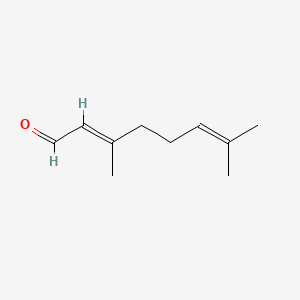
Citral is the INCI name on ingredient lists, and the EU entry also names its two isomers, geranial and neral.
| Name | Where you see it |
|---|---|
| Citral, CAS 5392-40-5, EC 226-394-6 | INCI name, in the EU annex |
| 3,7-Dimethyl-2,6-octadienal | Chemical name, in the EU annex |
| Geranial, (E)-3,7-dimethylocta-2,6-dienal, CAS 141-27-5, EC 205-476-5 | Isomer in the EU annex. IFRA's standard calls geranial trans-citral |
| Neral, (Z)-3,7-dimethylocta-2,6-dienal, CAS 106-26-3, EC 203-379-2 | Isomer in the EU annex |
| FEMA 2303, JECFA 1225 | Flavour lists (JECFA database) |
What replaces citral?
We found no tested drop-in for citral, and the rules catch most of the obvious swaps. The EU prohibits verbena oil as a fragrance ingredient, and on our reading lemongrass and litsea oils count toward the same caps. Cold-pressed lemon oil remains, with an IFRA limit and an EU label entry. Lemonile has neither in the sources we read. Isocitral has an IFRA limit and no EU entry we found.
Our read: a lemon note without citral is a new accord, not a swap. Each ingredient of the accord has to pass the same lists as citral. Givaudan's application says its molecule, 2,4,7-trimethyl-2,6-octadienal, cannot be used alone as a direct replacement and works as a citral substitute only with other named ingredients. Of the options that remain, only cold-pressed lemon oil has a level we can set against a citral cap. Givaudan states no base for Lemonile's level, and IFF gives none for isocitral.
| Caught by | Swap | The rule that catches it |
|---|---|---|
| Banned | Lemon verbena oil | Annex II entry 450 prohibits verbena essential oils (Lippia citriodora Kunth., also named Aloysia citrodora) and their derivatives, other than the absolute, as fragrance ingredients. IFRA's Standard says verbena oil should not be used as a fragrance ingredient and restricts the absolute. The EU allows the absolute at 0.2% in Annex III entry 196 |
| Same caps | Lemongrass oil | Lemongrass oil is 60 to 90% citral, counted toward the caps on our reading. The EU also lists lemongrass oil as its own labelled allergen, which the label section explains |
| Same caps | Litsea cubeba and lemon myrtle oils | Litsea cubeba oil is 63 to 78% citral and lemon myrtle oil is 80 to 98%, counted toward the caps on our reading. We found no separate EU label entry and no IFRA Standard for either oil |
| IFRA limit | Melissa (lemon balm) oil | IFRA's limits for melissa oil equal citral's in deodorants, body lotion and fine fragrance |
| IFRA limit | Ethyl citral and 3,6,7-trimethyl-2,6-octadienal | IFRA restriction Standards. Ethyl citral has citral's limits in deodorants, fine fragrance, body lotion and hand cream. The trimethyl compound (new in 2023) has citral's limits in all but hand cream, where its limit is lower. The trimethyl compound differs from the compound in Givaudan's application. We found neither compound in the EU changes of 2023 and 2026 |
| EU label, IFRA changing | Geranyl acetate, linalyl acetate | Annex III entries 369 and 337 require geranyl acetate and linalyl acetate on the label above 0.001% in leave-on and 0.01% in rinse-off products, for products placed on the market after 31 July 2026. The 52nd amendment adds IFRA Standards for both acetates, and for neryl acetate, geranyl and neryl isovalerate and dihydromyrcenyl acetate. We found no EU entry for those four. The new IFRA limits come with the notification expected in January 2027 |
The IFRA Standards named above are in IFRA's 51st compilation. The page numbers below are the printed footer numbers, and each PDF page is 16 higher. Melissa oil is on printed page 151 of 709 (PDF page 167), verbena on 250 (266) and cold-pressed lemon oil on 278 (294). Geranyl nitrile is on 398 (414), ethyl citral on 523 (539), isocitral on 529 (545) and the trimethyl compound on 579 (595). The 52nd amendment is in IFRA's letter, sections 6 and 7. Citronellol, which the 52nd amendment revises, is in the optional group of materials in Givaudan's application, and the EU names it on its label list.
IFF sells citral dimethyl acetal as a milder, more natural lemon note than citral (IFF). We found no IFRA Standard and no EU entry for citral dimethyl acetal. No source says whether citral dimethyl acetal releases citral in a finished product, which decides whether the acetal counts toward the cap.
| Option | Where it stands | A level from a named source | Families, last 12 months |
|---|---|---|---|
| Cold-pressed lemon oil | Named on the EU label as Citrus Limon Peel Oil (entry 353 of Annex III), and limonene is named too (LGL). IFRA's Standard caps cold-pressed lemon oil for phototoxicity. The 52nd amendment withdraws the phototoxicity Standard for a furocoumarin Standard. | IFRA: 2.0% of the finished product in the leave-on and oral categories when the furocoumarin level is unknown. Cold-pressed lemon oil at the IFRA level brings 0.014 to 0.064% citral (ISO 855:2003), which is 9 to 43% of the leave-on skin cap. In deodorants the same IFRA level can exceed the deodorant cap, at 44 to 200% of the cap. Our calculation | 100, searched as "lemon oil" or "citrus limon peel oil" |
| Isocitral, which IFF sells as Verbenal | An IFRA restriction Standard, CAS 55722-59-3. We found no EU entry in the 2023 and 2026 changes we read. IFF describes Verbenal as an "intense juicy aldehydic lemon grass note with natural citronellol, citral and linalool facets" (IFF). | IFRA, of the finished product: 0.16% in deodorants, 3.0% in fine fragrance, 0.76% in body lotion and 0.030% in hand cream. Isocitral's limits are about five times citral's in the first three. IFF's page gives no level. | 1, a weed-control patent that lists isocitral among an oil's constituents (CN122954000A). Searched as "isocitral", "verbenal" or two chemical names |
| Lemonile, a Givaudan nitrile | No IFRA Standard in the 51st compilation by name or CAS number, and none in the 52nd amendment's lists. Lemonile is not named in the EU's 2023 label annex or the 2026 caps. Givaudan's page says Lemonile is "More natural and long lasting than Geranitrile". IFRA prohibits geranyl nitrile (CAS 5585-39-7, 2008), a different substance. IFRA's Standard on geranyl nitrile lists "Geranitrile" as a trade name, on printed page 398 of 709 (PDF page 414). | Givaudan: "Traces - 5 %" in lemon, verbena and lime compositions (Givaudan). The base is not stated, so ask Givaudan whether it means the compound. Givaudan's page does not mention citral or call Lemonile a replacement | 12, searched as "lemonile" or its two chemical names |
| A citral-free lemon accord | One application, US20190062671A1, from Givaudan, published on 28 February 2019 and abandoned on 15 April 2021. Claim 2 lists Lemonile, by its chemical name, as an optional part of the accord. We found no granted patent in the application's family. Givaudan reports that its molecule has a peptide reactivity 27 times lower than citral's in vitro. That figure is Givaudan's claim, not a safety finding | The application gives no level for the accord. The application defines "essentially free" of citral as 10 ppm or less of the final product when leave-on, and below 100 ppm when rinse-off. | 1 application, outside the window |
The counts are INPADOC families in cosmetic or fragrance classes that name the option in the title, abstract or claims. The counts show mentions, not swaps.
None of the 35 families that name citral in the title or abstract has a title about replacing citral. Three of the 35 are about keeping citral from breaking down, from Kaneka with Kumamoto University, Hasegawa and Takasago.
What changed
- India named citral above the EU's label thresholds, in Amendment No. 1 to IS 4707 (Part 2):2025. Amendment No. 1 was published in the Gazette of India on 30 October 2026 (ChemLinked, 2 November 2026)
- IFRA's 52nd amendment does not list citral, so IFRA's citral limits stay. IFRA republishes its Annex on Contributions from Other Sources in January 2027, so recheck oil sums then (letter of 31 August 2026, IFRA)
Ask Slate R&D about citral
Ask what replaces it in your own product type, with a free account. Answers come from patents, papers and news, with each source linked.