Fava Bean Protein Environmental Fate & Ecotoxicity
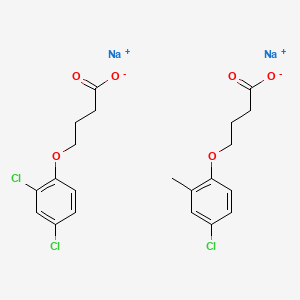
Identifiers
Where is fava bean protein used, and what role does it play in each application?
Fava bean protein is used as a primary plant protein source in non-dairy fermented food products, where it provides structure and texture, and in general food applications as a processed protein concentrate. In non-dairy fermented products, it is the main protein component, often combined with probiotic strains, and is claimed to support firmness relative to protein content. In broader food uses, a heat-moisture processed concentrate serves as the primary protein ingredient at high inclusion levels. These roles center on replacing dairy or other proteins while maintaining product integrity.
Which product or formulation problem does fava bean protein address?
Fava bean protein addresses the formulation challenge of creating non-dairy fermented foods with adequate texture and structure without dairy proteins. Patent claims specify a firmness-to-protein ratio above 10, indicating it solves the problem of weak gel or body in plant-based fermented products. It also enables high-protein food formulations, with concentrates used at 50–73% protein content, supporting products that need substantial protein levels while maintaining processability through heat-moisture treatment.
What supports the main commercial or clinical uses of fava bean protein?
The main commercial uses are supported by patent applications, not by market or clinical evidence. Two patent families describe non-dairy fermented foods with fava bean protein isolate as the primary protein source, claiming specific pH ranges (3.80–4.40) and firmness ratios. Another patent covers heat-moisture processed fava bean protein concentrate for general foods, specifying protein content and particle size. These filings indicate a claimed approach, but they do not confirm product adoption or regulatory approval.
Which formulation trade-offs should researchers consider for fava bean protein?
Researchers should consider that fava bean protein requires processing to achieve functional performance. Heat-moisture treatment is claimed to reduce denaturation enthalpy by 10–30% and increase particle size, which likely improves water binding or texture but may alter solubility. In fermented products, the protein must maintain firmness at low pH (3.80–4.40), which may limit options for acid-sensitive co-ingredients. High inclusion levels (50–73% protein) in concentrates could impact flavor, color, or mouthfeel, though no sensory data was provided.
What are the physicochemical properties of Fava bean protein?
| Property | Value | Category |
|---|---|---|
| Exact Mass | 520.01991 | Computed Molecular Properties |
| Monoisotopic Mass | 520.01991 | Computed Molecular Properties |
| Topological Polar Surface Area | 98.7 | Computed Molecular Properties |
| Complexity | 408.0 | Computed Molecular Properties |
| Hydrogen Bond Donor Count | 0 | Computed Molecular Properties |
| Hydrogen Bond Acceptor Count | 6 | Computed Molecular Properties |
| Rotatable Bond Count | 8 | Computed Molecular Properties |
| Heavy Atom Count | 32 | Computed Molecular Properties |
| Formal Charge | 0 | Computed Molecular Properties |
Which formulation benchmark best contextualizes fava bean protein, and what differs?
A relevant benchmark is soy or pea protein isolate in non-dairy fermented products, as fava bean protein is positioned as a primary plant protein for structure and texture. The key difference is fava bean protein's claimed firmness-to-protein ratio above 10, which suggests it may deliver comparable or superior gel strength at lower protein levels. However, no direct comparative data was available, and the heat-moisture processing step for concentrates is a distinct requirement not typically emphasized for soy or pea.