Nicotinamide Riboside
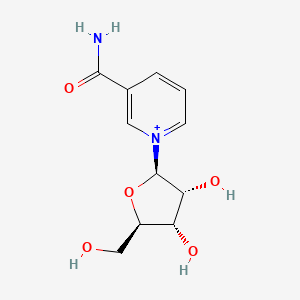
Identifiers
Where is Nicotinamide riboside used, and what role does it play in each application?
Nicotinamide riboside (NR) is used across dietary supplements, foods and beverages, pharmaceuticals, and cosmetics, primarily as an NAD+ precursor to support healthy aging, mitochondrial function, and cellular energy metabolism. In patent filings, it appears in anti-aging compositions, instant beverages, infant formula, and nutraceutical blends, often combined with NMN, resveratrol, or spermidine. In cosmetics, it is claimed for anti-wrinkle and hair-loss applications via mitochondrial activation. It also features in immune-support and neurological health compositions. Its role is consistently that of a bioactive NAD+ booster, with secondary functions as a metabolic enhancer or anti-aging active.
Which product or formulation problem does Nicotinamide riboside address?
Nicotinamide riboside addresses the formulation problem of delivering a stable, bioavailable NAD+ precursor in oral and topical products. Patent filings describe wax-coated prills to stabilize NR and its derivatives, and specific salt forms like NR chloride or NR alpha-ketoglutarate to improve handling and compatibility. In instant beverage matrices, NR is incorporated at defined weight percentages to maintain efficacy. The ingredient also solves the product problem of supporting NAD+ levels, which is linked to mitochondrial function and aging-related decline, thereby enabling anti-aging and energy-support claims in supplements and cosmetics.
What supports the main commercial or clinical uses of Nicotinamide riboside?
The main uses of nicotinamide riboside are supported by its biological role as an orally available vitamin B3 form and NAD+ precursor, with clinical investigation for chemotherapy-induced peripheral neuropathy and mitochondrial biogenesis. Patent filings provide evidence of claimed applications in anti-aging, mitochondrial support, infant formula, cosmetics, and immune function, often in combination with other actives. However, these are patent claims, not proof of efficacy. No clinical outcome data or regulatory approvals are available in the supplied evidence, so the evidence base is primarily mechanistic and patent-derived.
Which formulation trade-offs should researchers consider for Nicotinamide riboside?
Key formulation trade-offs for nicotinamide riboside include stability, solubility, and dosage form compatibility. Patent filings show stabilization via wax prills or encapsulation, and the use of salt forms like NR chloride to improve processability. In instant beverages, NR content ranges from 1.5% to 15% by weight, requiring balance with other ingredients to maintain taste and physical properties. For cosmetics, concentrations around 1% are used, but higher levels may affect texture or stability. Researchers must weigh the need for enhanced bioavailability against potential stability challenges and the choice of salt form.
What are the physicochemical properties of Nicotinamide riboside?
| Property | Value | Category |
|---|---|---|
| Physical Description | Solid | Appearance |
| XLogP3 | -1.8 | Computed Molecular Properties |
| Exact Mass | 255.09809658 | Computed Molecular Properties |
| Monoisotopic Mass | 255.09809658 | Computed Molecular Properties |
| Topological Polar Surface Area | 117.0 | Computed Molecular Properties |
| Complexity | 314.0 | Computed Molecular Properties |
| Hydrogen Bond Donor Count | 4 | Computed Molecular Properties |
| Hydrogen Bond Acceptor Count | 5 | Computed Molecular Properties |
| Rotatable Bond Count | 3 | Computed Molecular Properties |
| Heavy Atom Count | 18 | Computed Molecular Properties |
Which formulation benchmark best contextualizes Nicotinamide riboside, and what differs?
A relevant formulation benchmark is the instant beverage composition, where NR is combined with multiple actives at defined weight percentages (1.5–15% NR) to support healthy aging. This benchmark differs from typical supplement capsules by requiring water solubility, taste masking, and stability in a powder format. Another benchmark is the wax-prilled edible composition, which stabilizes NR at 0.1–30% by weight, addressing degradation issues. These benchmarks highlight the need for tailored delivery systems depending on the product format, with trade-offs between ingredient loading, stability, and consumer acceptability.