Regulations of Psyllium Husk

psyllium husk

Identifiers

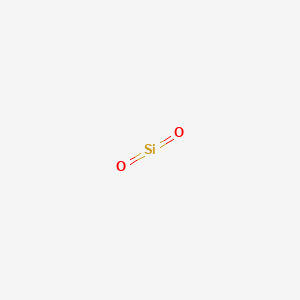
FormulaO2Si·CAS14464-46-1·EC231-545-4

How does the regulatory treatment of psyllium husk differ by market or product category?

The available evidence does not describe a regulatory framework specific to psyllium husk. Instead, the data pertain to silicon dioxide and related silica substances, which are regulated differently by market and category. In the EU, silica substances have active REACH registrations and ECHA C&L notifications with GHS classifications. In the US, FDA regulations address silicon dioxide as a food additive and in food-contact materials, while EPA FIFRA rules cover silica in pesticide formulations. Australia and New Zealand list silica on industrial chemical inventories. These distinctions are not transferable to psyllium husk, and no market-specific psyllium husk regulations are provided.

Which United States federal regulations apply to Psyllium husk?

4 regulations

EPA TSCA Regulatory Flag

Silica, vitreous is listed on the EPA's Chemical Data Reporting (CDR) system. Manufacturers and importers of Silica, vitreous are required to report information about their production and use of this chemical to the EPA under the Toxic Substances Control Act (TSCA). (40 eCFR Part 711)

FIFRA Requirements

Tolerance exemptions for minimal risk active and inert ingredients. Unless specifically excluded, residues resulting from the use of the following substances as either an inert or an active ingredient in a pesticide chemical formulation, including antimicrobial pesticide chemicals, are exempted from the requirement of a tolerance under FFDCA section 408, if such use is in accordance with good agricultural or manufacturing practices. Silica, amorphous, fumed (crystalline-free); silica, amorphous, precipitated and gel; silica gel; silica gel, precipitated, crystalline-free, silica, hydrate; and silica, vitreous are included on this list.

FDA Direct Food Additives

The food additive silicon dioxide may be safely used in food in accordance with /specified/ conditions.

FDA Technical Effects

The food additive silicon dioxide may be safely used in food in accordance with /specified/ conditions.

What EU regulatory requirements apply to Psyllium husk?

3 regulations

REACH Registered Substance

Status: Active Update: 13-09-2021 https://echa.europa.eu/registration-dossier/-/registered-dossier/15556

EFSA Legal Basis

Regulation (EC) No 257/2010

Status Regulation (EC)

2008/127, Reg. (EU) 2017/195, Reg. (EU) 2020/1160, Reg. (EU) 2021/745, Reg. (EU) 2022/708, Reg. (EU) 2023/1488, Reg. (EU) No 369/2012, Reg. (EU) No 540/2011

What regulations apply to Psyllium husk in Canada?

1 regulation

DSL / NDSL

Published
04 May 1994
Effective
04 May 1994

Regulatory records

EntryRegulationTypeStatus
14464-46-1SOR/94-311DSLauthorized

Conditions

This substance is on the Domestic Substances List (DSL). This substance was added to the DSL as an “Existing Substance” given that it meets the criteria set out in CEPA for substances that were in commerce in Canada between 1984 and 1986.

Record details

SOR/94-311

professional use only
No

What regulations apply to Psyllium husk in Australia?

1 regulation

The Australian Inventory of Industrial Chemicals

Chemical: Silica

What regulations apply to Psyllium husk in New Zealand?

1 regulation

New Zealand EPA Inventory of Chemical Status

Silica, amorphous, fumed, cryst.-free: Does not have an individual approval but may be used under an appropriate group standard

Which conditions, limits, and use contexts most affect a compliance assessment for psyllium husk?

For silica substances, compliance conditions include FDA food additive specifications, with uses as anticaking agents up to 2% by weight in finished food, and specific food-contact coating thickness limits (e.g., 440–500 angstroms for PET). EPA FIFRA tolerance exemptions apply when used as inert or active ingredients in pesticide formulations under good agricultural practices. Occupational exposure limits exist, such as a respirable fraction OEL of 0.1 mg/m³ and a NIOSH REL of 6 mg/m³ for amorphous silica. GHS classifications include irritation and carcinogenicity hazards. These conditions are not applicable to psyllium husk, for which no equivalent limits are provided.

What should be in place before a product containing psyllium husk is assessed for launch?

Before launch, a product containing psyllium husk would need to establish its regulatory status, but the evidence does not provide any psyllium-specific requirements. For analogous silica substances, documentation would include FDA food additive compliance or food-contact notifications, EPA TSCA reporting for manufacturers/importers, and REACH registration status in the EU. Safety data sheets would need to reflect GHS classifications and occupational exposure limits. However, these are not transferable to psyllium husk. The absence of psyllium-specific regulatory data means a compliance assessment cannot be completed based on the supplied evidence.

Where does the available regulatory position stop short of supporting a decision on psyllium husk?

The regulatory position stops short of supporting any decision on psyllium husk because all provided evidence concerns silica and silicon dioxide, not psyllium husk. There are no psyllium-specific regulations, food additive approvals, exposure limits, or safety classifications in the data. While silica has established FDA, EPA, and REACH frameworks, these cannot be extrapolated to psyllium husk. The GHS classifications and occupational limits for silica are irrelevant to psyllium husk. Therefore, any compliance decision for psyllium husk would require additional regulatory research beyond the supplied evidence.

Which recent regulatory changes or effective dates are material for psyllium husk?

No recent regulatory changes or effective dates are provided for psyllium husk. The evidence includes historical regulatory actions for silica, such as an EPA Reregistration Eligibility Decision for silicon dioxide and silica gel from September 1991, and ACGIH TLV withdrawals for amorphous silica in 2006. EU REACH registration updates are noted as of 2021. These are not relevant to psyllium husk. Without psyllium-specific regulatory updates, no material changes can be identified.