Bemotrizinol Toxicity
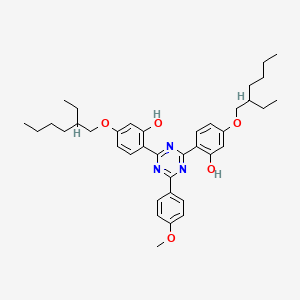
Identifiers
Functions
Which hazards are associated with Bemotrizinol?
GHS statements, classifications and precautions
Primary Hazards
Not Classified
Note
This chemical does not meet GHS hazard criteria for 100% (144 of 144) of all reports
This chemical does not meet GHS hazard criteria for 97% (97 of 100) of all reports
ECHA C&L Notifications Summary
Aggregated GHS information provided per 144 reports by companies from 2 notifications to the C&L Inventory
Reported as not meeting GHS hazard criteria per 144 of 144 reports by companies
There are 0 notifications provided by 0 of 144 reports by companies with hazard statement code(s)
Aggregated GHS information provided per 100 reports by companies from 3 notifications to the C&L Inventory
Reported as not meeting GHS hazard criteria per 97 of 100 reports by companies
There are 2 notifications provided by 3 of 100 reports by companies with hazard statement code(s)
Hazard Classes and Categories
Not Classified
What toxicological effects are reported for Bemotrizinol?
Toxicity Summary
The authors of this 2025 publication included bemotrizinol as an advanced filter with a demonstrated favorable safety and efficacy profile. It is marketed internationally is not yet approved for use in the United States
A 2023 publication noted that Bemotrizinol (BEMT) is the first new sunscreen active evaluated using U.S. FDA's Generally Recognized as Safe and Effective (GRASE) testing guidelines. This included an in vitro skin permeation test (IVPT) and a clinical pilot pharmacokinetic Maximum Usage Trial (MUsT). The authors stated that the vesults support the safety of BEMT 6% for human sunscreen use
U.S. FDA states that Bemotrizinol protects against ultraviolet A and B rays, and that it has a slow level of absorption through the skin. Also, U.S. FDA considers Bemotrizinol to be generally recognized as safe and effective (GRASE) for use in sunscreens for adults and children 6 months of age and older