Bemotrizinol Environmental Fate & Ecotoxicity
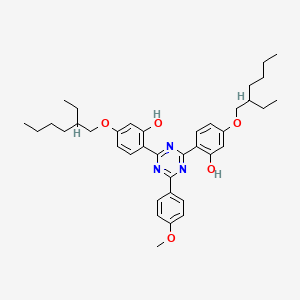
Identifiers
Functions
Where is BEMOTRIZINOL used, and what role does it play in each application?
Bemotrizinol is primarily used as a UV filter and UV absorber in sunscreens and daily-care cosmetics, where it provides broad-spectrum protection, particularly against UV-A rays. It also functions as a light stabilizer and hair-conditioning agent, extending its role to hair-care products that protect hair from UV damage. In color cosmetics, it is used to improve color stability of coloring agents. Its oil solubility and photostability make it suitable for various emulsion formats, including sprays, sticks, gels, and mousses, as well as water-in-oil and oil-in-water systems.
Which product or formulation problem does BEMOTRIZINOL address?
Bemotrizinol addresses several formulation problems: it provides photostability to other UV filters like avobenzone and octinoxate, reducing their degradation. It also inhibits reactive oxygen species generation from titanium dioxide, improving safety and efficacy in mineral-based sunscreens. Additionally, it enhances the stability of antioxidants and active ingredients, and improves color stability in tinted products. In emulsions, it can cause a 'soaping effect,' which is mitigated by specific film-forming agents or alkanediols, and its solubility is improved with certain oils and esters.
What supports the main commercial or clinical uses of BEMOTRIZINOL?
The main uses of bemotrizinol are supported by its regulatory status as an active UV filter in cosmetics, with functions listed as UV absorber, UV filter, and light stabilizer. Patent filings demonstrate its application in sunscreens, hair care, and color cosmetics, with claims of improving photostability of other filters, reducing reactive oxygen species, and enhancing color stability. These patents also show its use in various formats, including sprays, sticks, and emulsions, and at concentrations typically ranging from 0.1% to 10% by weight. However, patent applications are not evidence of market adoption.
How is Bemotrizinol used clinically?
Indicated as an active sunscreen agent
Which formulation trade-offs should researchers consider for BEMOTRIZINOL?
Researchers must consider bemotrizinol's solubility and its tendency to cause a 'soaping effect' in emulsions. Its oil solubility requires careful selection of solvents and oils, such as isoamyl caprylate caprate or fatty acid dextrin esters, to achieve high SPF without precipitation. The soaping effect can be mitigated by adding film-forming agents like polyamides or alkanediols. Additionally, combining bemotrizinol with pigmentary filters like zinc oxide or titanium dioxide can reduce whitening and improve sensory properties, but may require balancing UVA protection and formulation aesthetics.
What are the physicochemical properties of Bemotrizinol?
| Property | Value | Category |
|---|---|---|
| Solubility | Insoluble | Formulation Relevant Properties |
| Boiling Point | >400 | Handling Relevant Properties |
| Melting Point | 80.4 | Handling Relevant Properties |
| XLogP3 | 10.4 | Computed Molecular Properties |
| Exact Mass | 627.36722167 | Computed Molecular Properties |
| Monoisotopic Mass | 627.36722167 | Computed Molecular Properties |
| Topological Polar Surface Area | 107.0 | Computed Molecular Properties |
| Complexity | 761.0 | Computed Molecular Properties |
| Hydrogen Bond Donor Count | 2 | Computed Molecular Properties |
| Hydrogen Bond Acceptor Count | 8 | Computed Molecular Properties |
Which formulation benchmark best contextualizes BEMOTRIZINOL, and what differs?
A relevant formulation benchmark is the combination of bemotrizinol with avobenzone and octinoxate, as seen in patents that claim improved photostability of these filters. This benchmark is useful because it addresses a common challenge in sunscreen formulation: maintaining UVA protection over time. What differs is that bemotrizinol acts as a photostabilizer, allowing for lower concentrations of additional UV filters (≤10% by weight) while achieving critical wavelength ≥370 nm and UVA1/UV ratio ≥0.7. This contrasts with traditional systems that rely on higher filter loads or additional stabilizers.