Ceramides Environmental Fate & Ecotoxicity
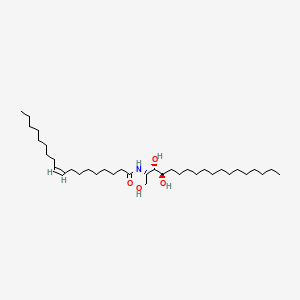
Identifiers
Functions
Where is ceramides used, and what role does it play in each application?
Ceramides, specifically Ceramide NP, are used in cosmetics and personal care products as skin and hair conditioning agents. In skin applications, they function as moisturizers and are major lipid components of the stratum corneum, contributing to skin barrier integrity. In hair care, they serve a conditioning role. The ingredient is also noted for skin-protecting properties. These roles are supported by its classification in cosmetic ingredient databases and its chemical description as a phytoceramide.
Which product or formulation problem does ceramides address?
Ceramides address the problem of compromised skin barrier function and moisture loss. As major lipid components of the stratum corneum, they help maintain the skin's structural integrity. Ceramide NP, in particular, is widely used as a moisturizer, and when combined with ceramide 1, it synergistically improves skin barrier function in humans. This addresses formulation needs for products targeting dry or barrier-damaged skin, and for hair conditioning to improve manageability.
What supports the main commercial or clinical uses of ceramides?
The main uses of ceramides are supported by their recognized function as skin and hair conditioning agents in cosmetic ingredient listings, and by their documented role as major lipid components of the stratum corneum. The Cosmetic Ingredient Review (CIR) has assessed Ceramide NP as safe in current practices of use and concentration, supporting its commercial use. Additionally, the ingredient is an active REACH registered substance in the EU, indicating regulatory acceptance for its intended applications.
Which formulation trade-offs should researchers consider for ceramides?
Formulation trade-offs for ceramides center on stability and compatibility. As lipid molecules, they may require careful incorporation into emulsion systems to maintain stability and efficacy. The ingredient's function as a skin conditioning agent suggests it may impact the sensory profile of formulations, potentially affecting texture or absorption. While no specific restrictions or maximum concentrations are listed in EU cosmetic regulations, formulators must ensure the ingredient remains stable and does not negatively interact with other components.
What are the physicochemical properties of Ceramides?
| Property | Value | Category |
|---|---|---|
| XLogP3 | 12.4 | Computed Molecular Properties |
| Exact Mass | 581.53830975 | Computed Molecular Properties |
| Monoisotopic Mass | 581.53830975 | Computed Molecular Properties |
| Topological Polar Surface Area | 89.8 | Computed Molecular Properties |
| Complexity | 568.0 | Computed Molecular Properties |
| Hydrogen Bond Donor Count | 4 | Computed Molecular Properties |
| Hydrogen Bond Acceptor Count | 4 | Computed Molecular Properties |
| Rotatable Bond Count | 32 | Computed Molecular Properties |
| Heavy Atom Count | 41 | Computed Molecular Properties |
| Formal Charge | 0 | Computed Molecular Properties |
Which formulation benchmark best contextualizes ceramides, and what differs?
A relevant formulation benchmark for ceramides is the combination of Ceramide NP with Ceramide 1, as this pairing has been shown to synergistically improve skin barrier function in humans. This suggests that formulations using a single ceramide may not achieve the same level of barrier benefit as those incorporating a blend. Therefore, researchers should consider multi-ceramide systems as a benchmark for products targeting barrier repair, rather than relying on Ceramide NP alone.