Ceramides Suppliers & Manufacturers
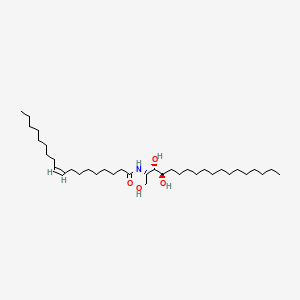
Identifiers
Functions
What does available trade activity indicate for Ceramides?
Ceramides is classified under HS Code 2924.19. This falls under Chapter 29: Organic chemicals, specifically Heading 2924 (Carboxyamide-function compounds; amide-function compounds of carbonic acid), under subheading: Acyclic amides (including acyclic carbamates) and their derivatives; salts thereof, other than meprobamate (INN), fluoroacetamide (ISO), monocrotophos (ISO) or phosphamidon (ISO).
* The data below is specific to the HS code, not the ingredient.
Suppliers
508
Across 35 countries
Shipments
12,302
from 2015 to 2026
Total weight
891M kg
23,238 TEU · standard 20-foot container units
Last shipment
8 months ago
Last updated at Feb 25, 2026
Growth
↑ 46%
Trade under 2924.19 has increased by 46% over the past 6 months
What does trade activity suggest about the ceramides supply chain?
Trade activity under HS 2924.19 shows a large, active supply chain with 508 suppliers, 12,302 shipments, and roughly 891 million kg moved since 2015. The growth score of 50.4 indicates moderate recent momentum. However, this HS code covers acyclic amides broadly, so the volume is not ceramide-specific. The presence of specialty chemical firms like Evonik, BASF, Croda, and Lonza suggests potential relevance for high-purity ingredients, but their shipments here do not confirm ceramide manufacturing. Business implication: treat this as a broad amide supply chain signal, not a ceramide market size indicator.
What does the HS or HTS classification include, and where are its limits for ceramides?
HS 2924.19 covers acyclic amides, including acyclic carbamates and their derivatives, excluding specific compounds like meprobamate and fluoroacetamide. This is a broad organic chemical class that includes industrial solvents, intermediates, and pharmaceutical precursors, not just ceramides. The classification does not distinguish ceramide types (e.g., NP, AP, EOP) or purity grades. Therefore, any supplier or shipment under this code may be unrelated to ceramides. For formulation or sourcing decisions, this code is only a starting point; confirm product-specific documentation to ensure the material is actually a ceramide.
Which suppliers are associated with Ceramides trade?
| Supplier | Shipments | Top customer | Growth | Last shipment | |
|---|---|---|---|---|---|
No suppliers found. | |||||
How concentrated or diversified does the supplier landscape appear for ceramides?
The supplier landscape appears fragmented, with 508 suppliers across 35 countries, but shipment concentration is notable. India’s Fine Organic Industries (1,972 shipments) and Vinati Organics (1,018) lead, while Belgium-based Evonik, BASF, and Lonza show moderate volumes. China has the most suppliers (157) but lower per-supplier shipment counts, indicating a dispersed base. This mix suggests a two-tier structure: a few high-volume players and many smaller suppliers. For ceramide sourcing, this implies potential supply options but also requires verification of each supplier’s actual ceramide production, as the data does not confirm ingredient specificity.
Which supply risks or dependencies around ceramides require further diligence?
Key supply risks include reliance on a broad HS code that may not reflect ceramide-specific trade, and the presence of high-volume suppliers like Fine Organic Industries and Vinati Organics whose ceramide production is unverified. Some suppliers show declining or inactive recent shipments (e.g., Vinati Organics last shipment Aug 2023, Croda Aug 2022), indicating potential supply instability. Additionally, downstream users like L’Oreal and Shiseido appear, but their shipments may be for finished products, not raw ceramides. Further diligence should confirm each supplier’s ceramide manufacturing capability, purity, and regulatory compliance.
Which sourcing geographies and trade lanes appear most relevant to ceramides?
India, Belgium, and China dominate supplier counts and shipment volumes. India has 70 suppliers and 5,907 shipments, Belgium 36 suppliers and 1,983 shipments, and China 157 suppliers but only 1,070 shipments. Belgium’s high weight (659 million kg) suggests large-scale chemical production, likely from major players like Evonik and BASF. Japan, Germany, and the UK also appear with notable activity. These lanes indicate a global supply network with strong European and Asian hubs. However, since the HS code is broad, these geographies are relevant to amide chemistry overall, not ceramides specifically.
Which countries drive Ceramides trade activity?
By shipment count
India
5,907 shipments
70 suppliers
123M kg total weight
Belgium
1,983 shipments
36 suppliers
659.5M kg total weight
China
1,070 shipments
157 suppliers
21M kg total weight
Indonesia
612 shipments
11 suppliers
12.5M kg total weight
Germany
453 shipments
37 suppliers
10.3M kg total weight
Japan
426 shipments
36 suppliers
8.8M kg total weight
United Kingdom
368 shipments
16 suppliers
7.2M kg total weight
Netherlands
357 shipments
19 suppliers
12.1M kg total weight
South Korea
184 shipments
18 suppliers
3.8M kg total weight
France
180 shipments
7 suppliers
8.7M kg total weight