Galactooligosaccharides
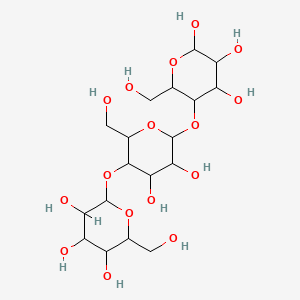
Identifiers
Functions
Where is galactooligosaccharides used, and what role does it play in each application?
Galactooligosaccharides are used in cosmetics as a humectant and skin-conditioning agent, and in food and pharmaceutical compositions as part of an intestinal health support group. In the cosmetic context, they help retain moisture and condition the skin. In the food/pharma context, they are included alongside other oligosaccharides to support digestive wellness, specifically within a traditional Chinese medicine composition aimed at assisting removal of microplastics and nanoplastics. No other application roles are documented in the available evidence.
Which product or formulation problem does galactooligosaccharides address?
Galactooligosaccharides address formulation needs for moisture retention and skin conditioning in cosmetic products, solving dryness and skin feel issues. In food and pharmaceutical formulations, they are positioned to support intestinal health, which is relevant for products targeting digestive wellness or toxin removal. The patent application places them in an 'intestinal health group' with fructooligosaccharides, suggesting a prebiotic-like role, though the specific mechanism is not detailed. This dual functionality makes them versatile for products requiring both hydration and digestive support.
What supports the main commercial or clinical uses of galactooligosaccharides?
The main commercial use evidence is regulatory listing in cosmetics, where galactooligosaccharides are officially recognized as a humectant and skin-conditioning ingredient. This supports its use in skincare and personal care products. For intestinal health, the only evidence is a patent application that includes it in a composition for removing microplastics and nanoplastics, with a claimed role in an intestinal health group. No clinical studies, food additive approvals, or market data are available to substantiate broader uses. Thus, the cosmetic use is well-supported, while the digestive health use is only a claimed approach.
Which formulation trade-offs should researchers consider for galactooligosaccharides?
Researchers should consider that galactooligosaccharides function as a humectant, which can affect water activity and product stability in cosmetic formulations. Its skin-conditioning properties may influence texture and sensory attributes. In food or pharmaceutical compositions, it is used in combination with other ingredients like fructooligosaccharides, so compatibility and potential synergistic effects must be evaluated. The patent does not specify concentrations, so dosage optimization is needed. No restrictions or maximum concentration limits are listed in cosmetic regulations, but formulators should still assess stability and efficacy at intended use levels.
What are the physicochemical properties of Galactooligosaccharides?
| Property | Value | Category |
|---|---|---|
| Collision Cross Section | 204.9 Ų [M+Na-H2O]+ [CCS Type: DT; Method: stepped-field] | Analytical Properties |
| XLogP3 | -6.9 | Computed Molecular Properties |
| Exact Mass | 504.16903493 | Computed Molecular Properties |
| Monoisotopic Mass | 504.16903493 | Computed Molecular Properties |
| Topological Polar Surface Area | 269.0 | Computed Molecular Properties |
| Complexity | 641.0 | Computed Molecular Properties |
| Hydrogen Bond Donor Count | 11 | Computed Molecular Properties |
| Hydrogen Bond Acceptor Count | 16 | Computed Molecular Properties |
| Rotatable Bond Count | 7 | Computed Molecular Properties |
| Heavy Atom Count | 34 | Computed Molecular Properties |
Which formulation benchmark best contextualizes galactooligosaccharides, and what differs?
A relevant formulation benchmark is the combination of galactooligosaccharides with fructooligosaccharides in an intestinal health group, as seen in the patent application. This pairing suggests that galactooligosaccharides are often used alongside other prebiotic fibers to enhance digestive benefits. In cosmetics, the benchmark is its role as a humectant and skin conditioner, similar to other sugar-based humectants. The key difference is that in food/pharma, it is part of a multi-ingredient functional blend, whereas in cosmetics it serves a direct moisturizing function. This dual context helps formulators position the ingredient appropriately.