Ganoderma Lucidum Ferment Suppliers & Manufacturers
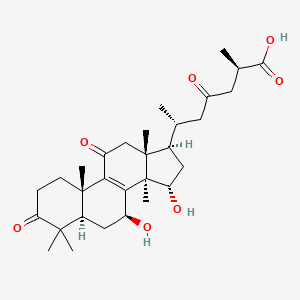
Identifiers
Functions
What does available trade activity indicate for Ganoderma lucidum ferment?
Ganoderma lucidum ferment is classified under HS Code 2102.20. This falls under Chapter 21: Miscellaneous edible preparations, specifically Heading 2102 (Yeasts (active or inactive); other single-cell micro-organisms, dead (but not including vaccines of heading no. 3002); prepared baking powders), under subheading: Yeasts; inactive, other single-cell micro-organisms, dead.
* The data below is specific to the HS code, not the ingredient.
Suppliers
495
Across 52 countries
Shipments
8,435
from 2015 to 2026
Total weight
338.6M kg
23,057 TEU · standard 20-foot container units
Last shipment
8 months ago
Last updated at Feb 25, 2026
Growth
↑ 44%
Trade under 2102.20 has increased by 44% over the past 6 months
What does trade activity suggest about the Ganoderma Lucidum Ferment supply chain?
Trade activity under HS 2102.20 shows a large, active supply chain with 495 suppliers, 8,435 shipments, and roughly 338,600 metric tons moved between 2015 and 2026. This volume indicates robust global fermentation-ingredient flows, but the classification covers inactive yeasts and dead single-cell microorganisms broadly, not Ganoderma lucidum ferment specifically. The presence of major yeast producers like Kerry, Angel Yeast, and Lallemand confirms this is primarily a general fermentation supply chain. For formulation planning, expect reliable access to fermentation-derived ingredients, but verify that any specific Ganoderma ferment product is sourced from a dedicated manufacturer rather than inferred from this HS-level activity.
What does the HS or HTS classification include, and where are its limits for Ganoderma Lucidum Ferment?
HS code 2102.20 covers inactive yeasts and other dead single-cell microorganisms, including feed additives, baking yeasts, and industrial enzymes. This scope is far broader than Ganoderma lucidum ferment, which is a fungal fermentation product. The classification does not distinguish between Saccharomyces yeast, microbial biomass, or reishi-derived ferments, so shipment counts and supplier lists include substantial non-Ganoderma activity. For regulatory or sourcing decisions, treat this HS code as a proxy for fermentation-ingredient trade, not as confirmation of Ganoderma-specific volumes. Any compliance or supply-chain conclusion must be validated with product-level documentation from individual suppliers.
Which suppliers are associated with Ganoderma lucidum ferment trade?
| Supplier | Shipments | Top customer | Growth | Last shipment | |
|---|---|---|---|---|---|
No suppliers found. | |||||
How concentrated or diversified does the supplier landscape appear for Ganoderma Lucidum Ferment?
The supplier landscape appears moderately concentrated among large fermentation players, with Kerry Ingredients, Angel Yeast, Danstar Ferment, and Lallemand entities accounting for a substantial share of shipments. However, the total of 495 suppliers across 52 countries indicates a diversified base overall. This mix suggests the broader fermentation supply chain is resilient, but for Ganoderma lucidum ferment specifically, the data does not reveal dedicated manufacturers. The presence of logistics providers and feed-focused exporters further dilutes the supplier signal. For sourcing, expect competitive options in general fermentation ingredients, but conduct targeted supplier identification for Ganoderma-specific ferment rather than relying on this HS-level landscape.
Which supply risks or dependencies around Ganoderma Lucidum Ferment require further diligence?
Key diligence risks include the inability to confirm ingredient-specific shipments, potential reliance on logistics intermediaries rather than manufacturers, and the possibility that high-volume suppliers ship conventional yeast products unrelated to Ganoderma. The data shows several transport entities and feed exporters, indicating that HS-level activity may not reflect true Ganoderma ferment production capacity. Additionally, Chinese suppliers appear but their Ganoderma-specific output is unverified. Before committing to a supplier, require product certificates, manufacturing site audits, and batch-level documentation to confirm the ingredient identity, purity, and fermentation process. This is essential to avoid inadvertently sourcing generic yeast or microbial biomass.
Which sourcing geographies and trade lanes appear most relevant to Ganoderma Lucidum Ferment?
Brazil, China, and Mexico dominate the trade lanes, with Brazil accounting for 69 suppliers and 3,427 shipments, China 93 suppliers and 667 shipments, and Mexico 50 suppliers and 722 shipments. Belgium and Germany also show significant activity, reflecting European fermentation hubs. China's presence suggests potential sourcing relevance for Ganoderma-specific ingredients, given the region's fungal cultivation expertise, but the data does not confirm Chinese suppliers manufacture Ganoderma ferment. For procurement strategy, prioritize direct supplier qualification in China and Brazil, while recognizing that most volume likely represents conventional yeast products rather than reishi ferment.
Which countries drive Ganoderma lucidum ferment trade activity?
By shipment count
Brazil
3,427 shipments
69 suppliers
123.1M kg total weight
Mexico
722 shipments
50 suppliers
18M kg total weight
Belgium
671 shipments
28 suppliers
30.2M kg total weight
China
667 shipments
93 suppliers
104.8M kg total weight
United Kingdom
489 shipments
18 suppliers
5.1M kg total weight
Japan
267 shipments
18 suppliers
1.5M kg total weight
Germany
263 shipments
26 suppliers
6.8M kg total weight
Italy
240 shipments
19 suppliers
4.5M kg total weight
France
219 shipments
18 suppliers
2.6M kg total weight
Estonia
165 shipments
7 suppliers
2.5M kg total weight