Products & Brands Using Lignin
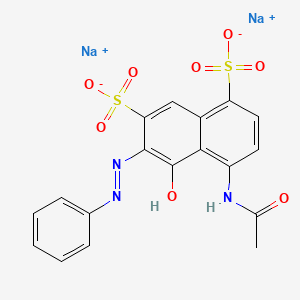
Identifiers
Functions
How broadly is Lignin used across tracked brands and products?
Brands
1
Across 2 product types
Products
9
Includes function: Filler
Product Types
2
Distinct formulation categories
Functions
5
Known functional-use labels
What does product breadth indicate about the commercial maturity of Lignin?
The commercial maturity of Lignin is low, based on only nine products from one brand over a 33-year period, with no recent product launches after 2018. In contrast, the patent landscape is extensive (280 patents) and recent, indicating active R&D but limited market translation. This suggests Lignin is in an early commercialization stage, with technology development outpacing product adoption. The business implication is that while there is significant innovation potential, the market is not yet mature, and companies entering this space may face challenges in scaling and consumer acceptance.
How is Lignin positioned across the market?
Lignin is positioned as a bio-based, functional additive across diverse industrial applications, with patent evidence emphasizing sustainability and performance benefits such as UV resistance, flame retardancy, and formaldehyde-free binding. Commercial products, however, show a more utilitarian positioning as a filler or processing aid in detergents and sealers, with no clear consumer-facing sustainability claim. This suggests a gap between the ingredient's technical promise and its current market communication. The implication is that there is an opportunity to reposition Lignin around its bio-based and functional attributes, but this would require bridging the gap between patent claims and commercial product evidence.
Top companies using Lignin in their products
Ranked by number of tracked products that list lignin, out of 9 total.
Where is Lignin covered by tracked regulatory lists?
Jurisdictions
Markets where this ingredient appears on tracked ingredient regulation lists.
US Federal
77 tracked lists
EU
11 tracked list
Regulatory Bodies
Authorities cited most often across the tracked ingredient lists.
EPA
Commission of the European Communities
USEPA
FDA
Which product categories, formats, and functions use Lignin?
Commercial product evidence for Lignin is limited to two categories: laundry detergent and stone surface sealer, with a single brand (Unilever) and nine total products spanning 1985–2018. Patent evidence, however, shows a much broader functional range, including rubber reinforcement, bioplastics, adhesives, binders, hydrogels, coatings, and battery components. This contrast indicates that while commercial adoption is narrow, the ingredient's technical versatility is well-documented. The business implication is that Lignin's market presence is not yet diversified, but its patent landscape suggests potential for expansion into higher-value industrial and consumer applications.
Which product categories contain Lignin?
Tracked product categories ranked by distinct products containing this ingredient.
Which formulation and co-ingredient patterns recur around Lignin?
Recurring formulation patterns around Lignin include its use as a filler or reinforcing agent in rubber and plastic composites, often co-formulated with cellulose, hemicellulose, tannins, or synthetic polymers like polyvinyl alcohol and polyurethane. In commercial products, Lignin appears with calcium carbonate, cellulose, and linseed oil, suggesting use in construction materials. Patent evidence shows frequent pairing with crosslinkers like aldehydes or epoxides to form binders and adhesives. The implication is that Lignin's role is typically as a structural or functional additive rather than a primary active, and formulation success often depends on chemical modification or compatibilization with other polymers.
Which product spaces around Lignin appear crowded or differentiated?
Patent evidence indicates crowded spaces in rubber and tire applications, with multiple filings from major companies like Pirelli and UPM-Kymmene, and in construction binders and adhesives. Differentiated spaces include emerging niches such as battery binders, Pickering emulsions for cosmetics and pharmaceuticals, and hair dye couplers, where fewer patents and novel applications suggest less competition. The implication is that differentiation opportunities lie in high-value, specialized applications rather than commodity filler uses. Companies should focus on these niches to leverage Lignin's unique properties and avoid saturated markets.