Rhamnogalacturonan I
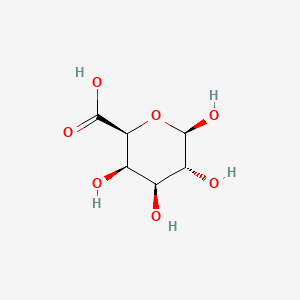
Identifiers
Functions
Where is rhamnogalacturonan i used, and what role does it play in each application?
Rhamnogalacturonan I is a pectin component used in food, cosmetics, and pharmaceuticals. In food, pectin acts as an emulsifier, gelling agent, stabilizer, and thickener, appearing in jams, jellies, preserves, frozen desserts, soft drinks, and salad dressings. In cosmetics, it functions as a binding, emulsion-stabilizing, and viscosity-controlling agent. In pharmaceuticals, it is included in antidiarrheal preparations and dental adhesives. Its role is to provide structure, texture, and stability across these applications.
Which product or formulation problem does rhamnogalacturonan i address?
Rhamnogalacturonan I, as part of pectin, addresses formulation problems requiring texture control, stabilization, and binding. In foods, it prevents separation in emulsions like salad dressings, stabilizes milk products and frozen desserts, and provides gelling for jams and confections. In cosmetics, it controls viscosity and stabilizes emulsions. In pharmaceuticals, it serves as a protective colloid and demulcent in diarrhea treatments, though its effectiveness as an antidiarrheal is now considered generally ineffective.
What supports the main commercial or clinical uses of rhamnogalacturonan i?
The main uses of rhamnogalacturonan I are supported by pectin's regulatory and commercial status. Pectin is affirmed as GRAS for direct addition to human food, and it is listed as an active commercial substance in the US. In cosmetics, it is an active ingredient with functions of binding, emulsion stabilizing, and viscosity controlling. Historical formulations include antidiarrheal products combining pectin with kaolin and other agents. However, evidence is for pectin, not specifically rhamnogalacturonan I, and no product data directly for this component is available.
How is Rhamnogalacturonan i used clinically?
Pectin is used in food as a gelling agent and stabilizer. As a medical drug, it has obtained a great interest in its potential use as a source of dietary fiber, lipid, cholesterol, serum glucose and insulin level lowering effect, gastric emptying delay. Some recent studies have researched the possibility of using pectin for the formation of nanoparticles as a delivery vehicle of drugs
Which formulation trade-offs should researchers consider for rhamnogalacturonan i?
Researchers should consider that rhamnogalacturonan I, as a pectin component, offers functional benefits but may have trade-offs. Pectin's properties vary by source and degree of methylation, affecting gelling and thickening behavior. In pharmaceuticals, its antidiarrheal efficacy is questioned, so relying on it for that purpose may be problematic. In cosmetics, it is not restricted, but its viscosity-controlling effects may require optimization. No specific concentration limits or restrictions are noted, but formulation stability and compatibility need evaluation.
What are the physicochemical properties of Rhamnogalacturonan i?
| Property | Value | Category |
|---|---|---|
| Physical Description | Yellowish-white solid; [Merck Index] Light brown powder; [MSDSonline], Solid | Appearance |
| Color/Form | Coarse or fine powder, yellowish white | Appearance |
| Odor | Practically odorless | Appearance |
| Taste | Mucilaginous taste | Appearance |
| Solubility | Partially soluble in cold water, DISSOLVES IN 20 PARTS OF WATER, Insol in alcohol or dil alcohol, org solvents, Almost completely soluble in 20 parts water; dissolves more readily in water, if first moistened with alcohol, glycerol or sugar syrup, or if first mixed with 3 or more pars of sucrose | Formulation Relevant Properties |
| pH | Acid to litmus | Formulation Relevant Properties |
| Boiling Point | 415.5ºC at 760 mmHg | Handling Relevant Properties |
| Melting Point | 142-144 °C, 6.1ºC | Handling Relevant Properties |
| Stability/Shelf Life | IN COLD ACID SOLN IT IS MORE STABLE; PROLONGED HEATING OF SUCH SOLN CAUSES HYDROLYSIS, LIQUEFACTION OF PECTIN PASTES MAY BE DUE TO HYDROLYSIS WHICH ACCOMPANIES GROWTH OF CERTAIN TYPES OF MOLD, STABLE UNDER MILDLY ACIDIC CONDITIONS; MORE STRONGLY ACIDIC OR BASIC CONDITIONS CAUSE DEPOLYMERIZATION | Handling Relevant Properties |
| Decomposition | When heated to decomposition, it emits acrid smoke and irritating fumes | Handling Relevant Properties |
Which formulation benchmark best contextualizes rhamnogalacturonan i, and what differs?
Pectin serves as the appropriate benchmark for rhamnogalacturonan I, as it is the parent polysaccharide. Pectin is widely used as a gelling agent, thickener, and stabilizer in foods, and as a binding and viscosity-controlling agent in cosmetics. The difference is that rhamnogalacturonan I is a specific structural region within pectin, and its isolated behavior may differ from whole pectin. However, no direct comparative data is available, so researchers should treat pectin data as a starting point.