Starch Dextrin Environmental Fate & Ecotoxicity
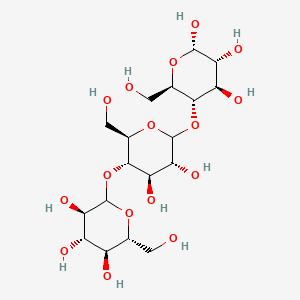
Identifiers
Functions
Where is starch dextrin used, and what role does it play in each application?
Starch dextrin functions across food, cosmetics, and industrial applications. In food, it acts as a flavoring agent, anticaking agent, drying agent, formulation aid, humectant, lubricant or release agent, nutritive sweetener, solvent, and stabilizer or thickener. In cosmetics, it serves as an absorbent, binding, bulking, and viscosity-controlling agent. Industrially, it is used in paper and textile processing, adhesives, printing, and even in matches and fireworks. It also appears in consumer products across home maintenance, personal care, and pet care categories.
Which product or formulation problem does starch dextrin address?
Starch dextrin addresses formulation challenges requiring moisture control, texture modification, and structural integrity. As an anticaking and drying agent, it prevents clumping in powders; as a stabilizer and thickener, it improves consistency in food and cosmetic products. Its binding and bulking properties help form tablets, pills, and dry extracts, while its film-forming ability supports paper sizing and textile finishing. It also acts as a humectant to retain moisture and as a release agent to prevent sticking, solving common processing and end-use performance issues.
What supports the main commercial or clinical uses of starch dextrin?
Evidence for starch dextrin's uses comes from regulatory and compendial sources. It is listed as a food additive with functional classes including stabilizer and thickener, and as a cosmetic ingredient with absorbent, binding, bulking, and viscosity-controlling functions. It is also recognized as an EPA Safer Chemical, indicating low concern for certain applications. Industrial uses are documented in paper, textile, and adhesive sectors. However, no clinical trial data or commercial product formulations were available to substantiate specific performance claims.
Which formulation trade-offs should researchers consider for starch dextrin?
Researchers should weigh starch dextrin's multifunctionality against potential trade-offs. Its humectant and drying properties may conflict in moisture-sensitive formulations, requiring careful balance. As a nutritive sweetener, it adds caloric content, which may be undesirable in low-calorie products. Its binding and bulking effects can alter texture and viscosity, necessitating dosage optimization. Regulatory status varies by region; for example, it is exempt from certain U.S. reporting but lacks individual approval in New Zealand, requiring group standard compliance. These factors influence formulation design and market access.
What are the physicochemical properties of Starch dextrin?
| Property | Value | Category |
|---|---|---|
| Physical Description | Light yellow powder; [Sigma-Aldrich MSDS], Solid | Appearance |
| XLogP3 | -6.9 | Computed Molecular Properties |
| Exact Mass | 504.16903493 | Computed Molecular Properties |
| Monoisotopic Mass | 504.16903493 | Computed Molecular Properties |
| Topological Polar Surface Area | 269.0 | Computed Molecular Properties |
| Complexity | 641.0 | Computed Molecular Properties |
| Hydrogen Bond Donor Count | 11 | Computed Molecular Properties |
| Hydrogen Bond Acceptor Count | 16 | Computed Molecular Properties |
| Rotatable Bond Count | 7 | Computed Molecular Properties |
| Heavy Atom Count | 34 | Computed Molecular Properties |
Which formulation benchmark best contextualizes starch dextrin, and what differs?
A relevant benchmark is starch itself, as dextrin is derived from starch hydrolysis. Unlike native starch, dextrin is a low-molecular-weight glucose polymer with improved solubility and film-forming properties, making it more suitable for binding and coating applications. However, it retains similar functional roles such as thickening and stabilizing. The key difference lies in its reduced viscosity and faster setting, which can be advantageous in adhesives and paper sizing but may require reformulation when substituting directly for starch.