P&G is quietly building a low-pH detergent platform that would make the enzyme systems most competitors rely on functionally incompatible. If successful, the entire industry’s enzyme stability assumptions will be obsolete within 18 months.
Meanwhile, there is simultaneous investment in fluorescent brightener optimization and non-FBA alternatives. This fragmentation is because of regulatory uncertainty in Europe and split consumer segments (clean-label sensitive vs. performance-focused) that major players are hedging against.
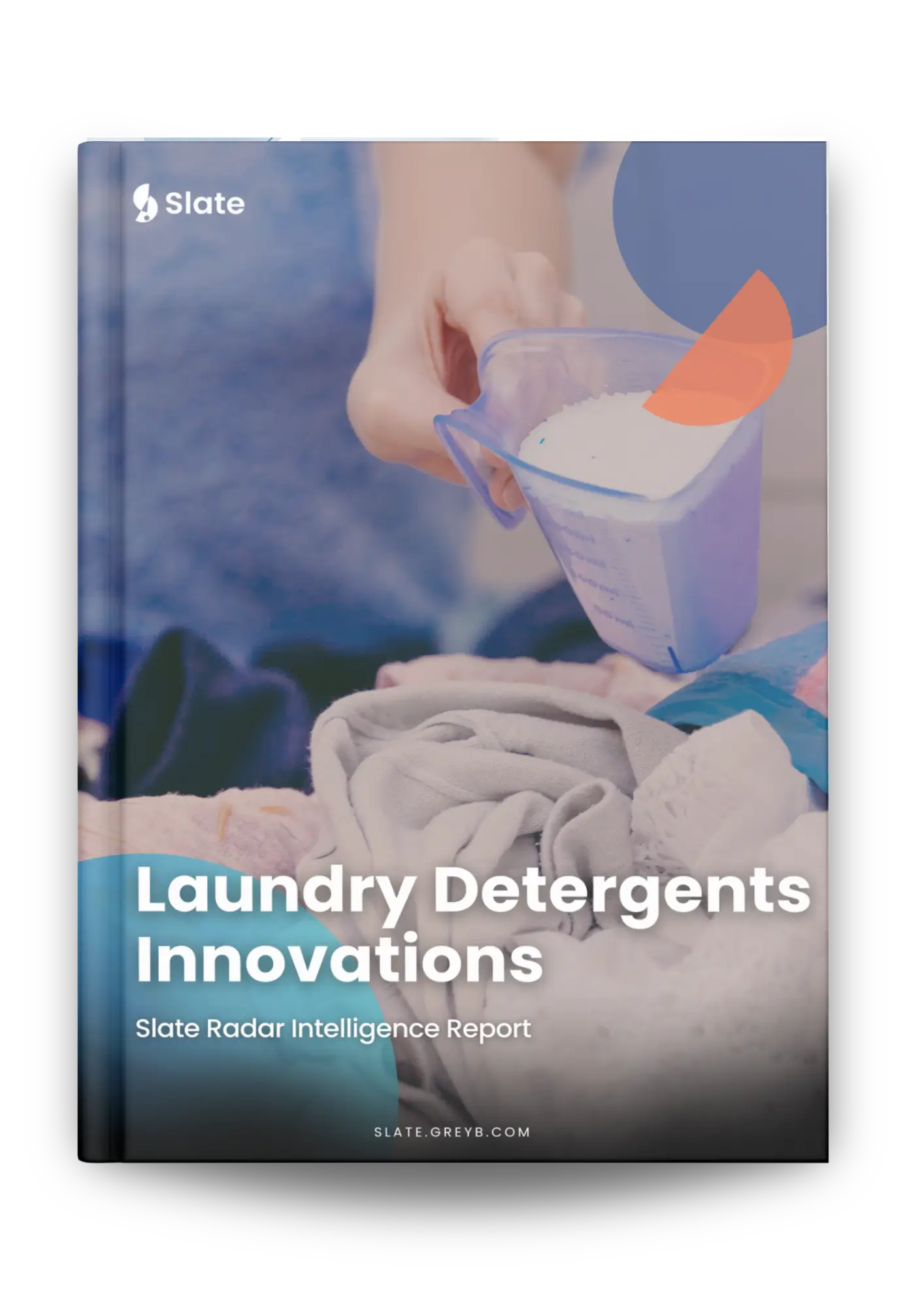
We analyzed recent innovations in 2026 to identify where detergent R&D is gaining momentum, where technical differentiation still exists, and which shifts could create long-term competitive risks for brands, ingredient suppliers, and formulation teams.
What’s Inside the Report?
Fragrance Delivery & Longevity: Advanced microcapsule stability, including amino acid-derived polyisocyanate and pH-responsive trigger systems built to survive harsh surfactant loads.
Malodor Control Beyond Fragrance: The transition from scent-masking to active biofilm polysaccharide targeting to eliminate bacterial colonization in athleisure wear.
Whiteness Maintenance: How brands are maintaining visual brightness claims without relying solely on FBAs. There are two paths: one for high-performance whiteness and another for clean-label or sensitive-skin segments.
Cold-Water Enzyme Optimization: Enzyme combinations and variants are being developed for lower temperatures, including systems designed to improve biofilm removal, organic soil removal, anti-pilling, and fabric care.
Sustainable Chemistry Migration: The gradual replacement of traditional chelators (MGDA) with citrate/PESA systems to meet tightening clean-label requirements without sacrificing parity.
Key Strategic Shifts You Can’t Ignore
Low-pH Detergents Could Force Enzyme Portfolio Realignment
If acidic detergent platforms scale, enzyme suppliers may need acid-stable variants or sequential release systems. The latter adds formulation complexity, and the former represents 18-24 months of enzyme engineering.
Fragrance Encapsulation Engineering May Overshoot Release Requirements
Consumer demands capsules that releases fragrance at the right time. That adds cost and formulation constraints. An inflection point where encapsulation investment may need to pivot from “make it survive” to “make it release when needed.”
Cold-Water Enzyme Optimization Shifting Washing Machine Design Requirements
Lower-temperature enzyme systems require longer contact time, altered agitation, and new performance benchmarks. Current 15-30 minute wash cycles may be insufficient for enzyme contact time at cold temperatures. We’re already seeing extended “eco wash” cycles (90-120 minutes) in European machines.
Format Proliferation Could Fragment Retail Distribution Economics
Sheets, tablets, pods, liquids, powders, and controlled-release formats may increase SKU complexity and force retailers to make sharper shelf-space decisions. This continues to gain trial but hasn’t achieved sustained penetration outside Asia.
Download the Full Slate Radar Intelligence Report
Access the full analysis of 170 detergent innovations, major research clusters, emerging technical signals, patent-backed examples, and downstream implications shaping the future of laundry detergent innovation.