Right now, the industry operates on the assumption that consumer experience is the primary barrier to market expansion. As a result, flavor and sensory optimization dominate the current landscape, accounting for nearly 49% of all research activity.
This concentrated focus creates an asymmetric regulatory blind spot. If flavor restrictions tighten, half of the industry’s intellectual property loses its value overnight. Companies relying on taste and sensory profiles will face sudden, unrecoverable margin compression, while those invested in alternative delivery mechanisms will retain their market relevance.
While Western brands focus on consumer experience, Chinese manufacturers are aggressively pursuing nicotine salt chemistry but have a limited presence in finished product design or manufacturing processes. Their strategy is to become dominant ingredient suppliers. Once specialized nicotine salt production becomes a commodity chemical, Western manufacturers will lose their defensive moat.
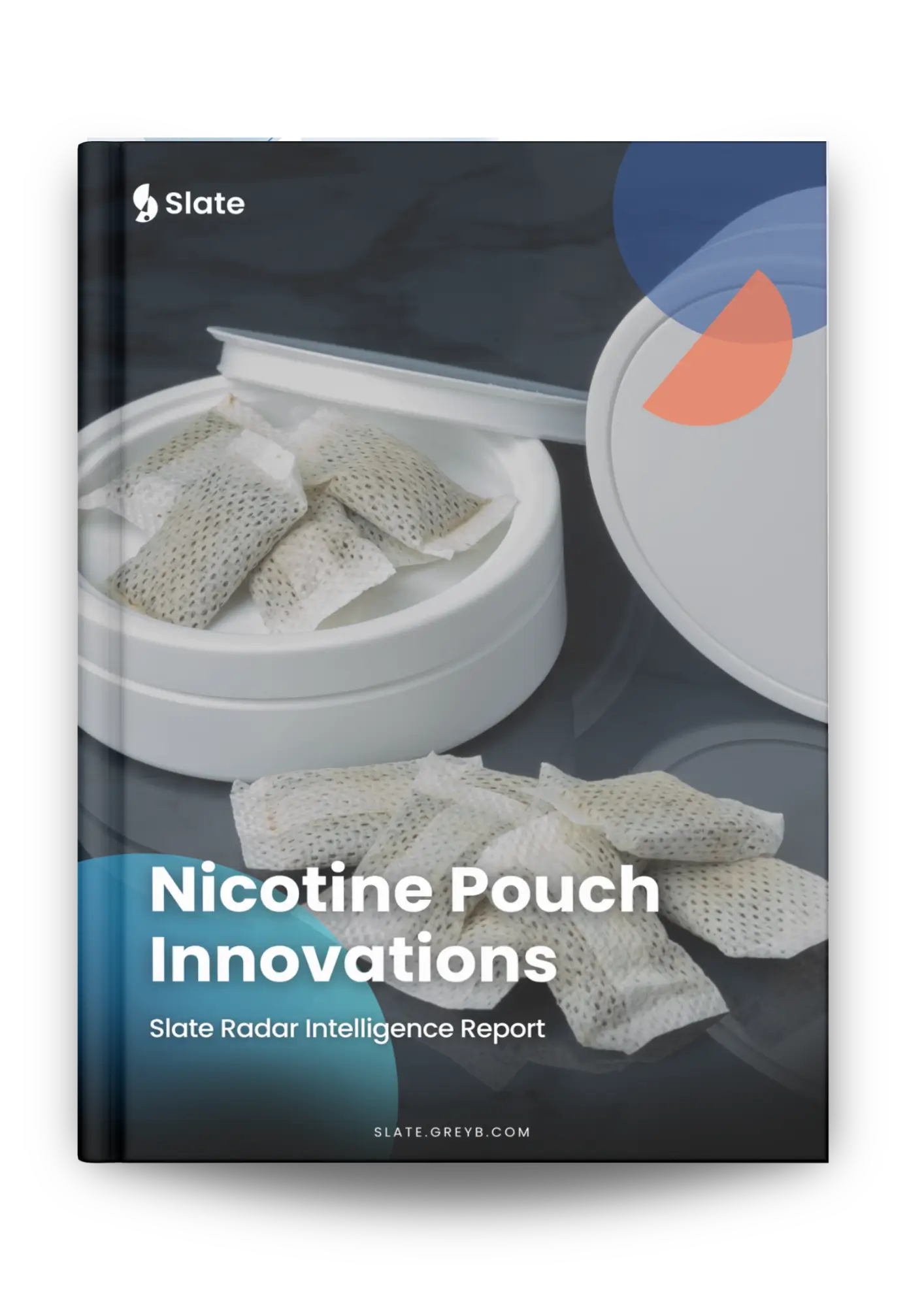
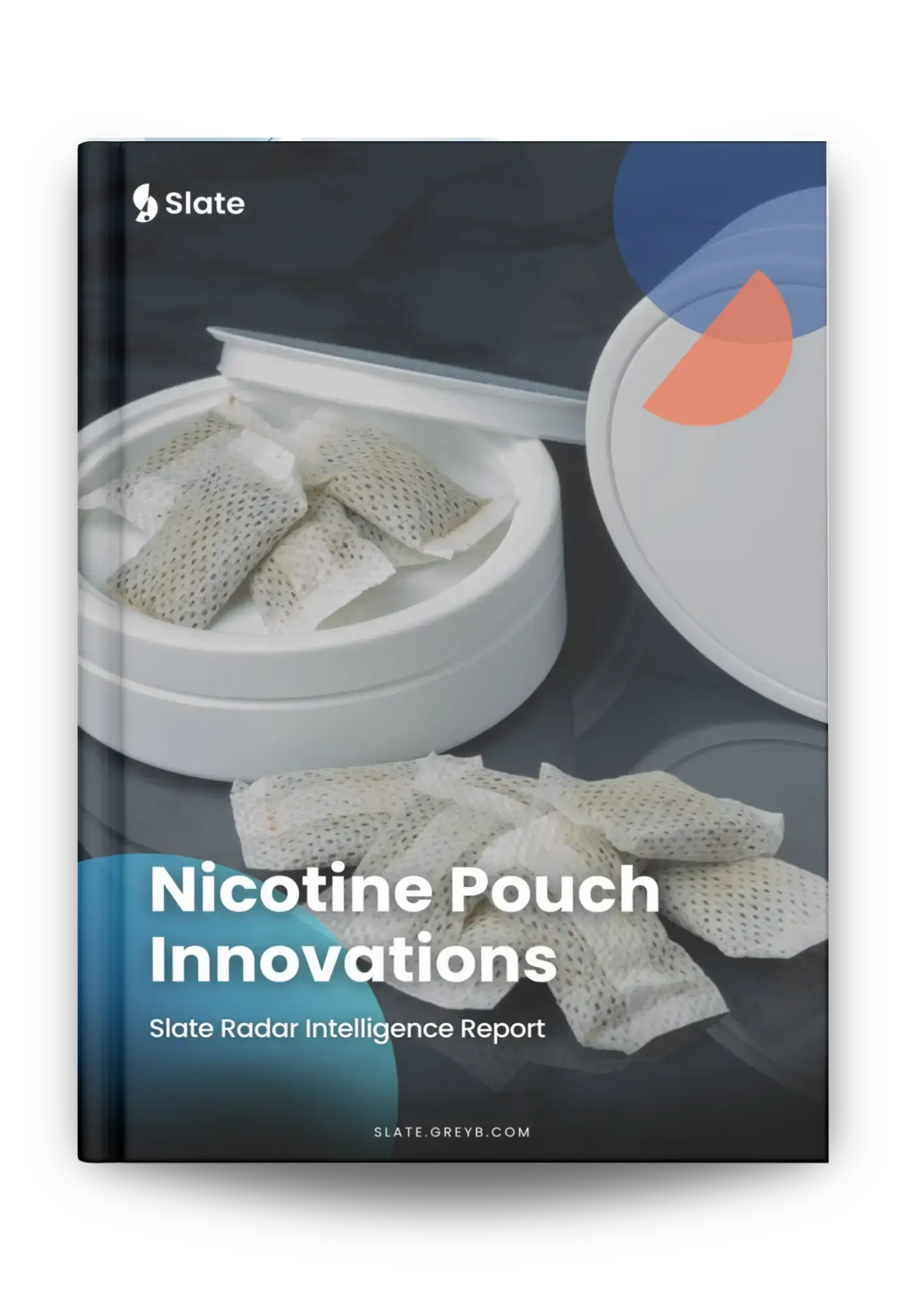
We analyzed 800+ innovations over the last 5 years to show exactly where the value is concentrating, where it’s eroding, and which white spaces remain genuinely open.
What’s Driving Change in Nicotine Pouches?
The nicotine pouch category is facing four pressures at once:
- Consumer experience is becoming the main battleground, with taste, cooling, sweetness, and mouthfeel driving repeat use.
- Nicotine delivery is becoming more pharmaceutical, with controlled release, bioavailability, and pH stability gaining importance.
- Tobacco-free and botanical formulations are creating new regulatory and positioning pathways.
- Ingredient specialization in nicotine salt chemistry could shift value from finished brands to upstream suppliers.
What’s Inside the Report?
Flavor & Sensory Experience: Why companies are investing so heavily in sensory optimization and why this creates a concentrated regulatory risk. If flavor bans expand, brands may need to shift toward texture, functional flavors, or pharmaceutical positioning.
Formulation Chemistry as a Hidden Differentiator: Filler chemistry, pH buffering, moisture control, and pouch materials now define product quality, stability, and manufacturing economics. The report covers how cellulose variants, sugar alcohols, plant fibers, humectants, buffers, and pouch materials influence release kinetics and user experience.
Regulatory Hedge Portfolios: How competitors are using pharmaceutical-grade formulations (96 innovations) and tobacco-free botanicals (186 innovations) to build revenue continuity against future tobacco restrictions.
Pharmaceutical Positioning Splitting the Market: Why companies are prioritizing known regulatory pathways over novel delivery mechanisms like effervescent foam, which currently has only 17 innovations.
Tobacco-Free Innovation Category Migration: How tobacco-free positioning allows nicotine pouches to enter adjacent categories like wellness, energy, and focus. But it also carries regulatory risk if agencies treat tobacco-free nicotine the same as tobacco-derived products.
The Personalization White Space: Why the complete absence of personalized delivery systems (zero patents on phenotype-based formulations or genetic dosing) creates an opening for new entrants to disrupt the market with precision medicine approaches.
The 18 Research Clusters We Analyzed
We mapped 800+ nicotine pouch innovations over the last 5 years across three levels of maturity:
Major Research Themes
- Flavor & sensory experience optimization: 395 innovations
- Nicotine delivery & bioavailability engineering: 352 innovations
- Filler formulation chemistry: 340 innovations
- pH stability & buffering systems: 317 innovations
- Pouch material & manufacturing process innovation: 196 innovations
- Moisture management & stability: 190 innovations
- Tobacco-free & botanical alternatives: 186 innovations
Active Development Areas
- Dissolvable & lozenge formats: 126 innovations
- Novel particle & bead delivery forms: 121 innovations
- Packaging & shelf-life engineering: 98 innovations
- Pharmaceutical & therapeutic formulations: 96 innovations
- Nicotine salt chemistry & crystal engineering: 96 innovations
- Texture, hardness & mouthfeel engineering: 62 innovations
- Oil & lipid-based delivery systems: 51 innovations
- Multi-active ingredient combinations: 50 innovations
Emerging Research Directions
- Discoloration prevention & color stability: 22 innovations
- Effervescent & foam-based delivery: 17 innovations
- Harm reduction & safety claims: 7 innovations
Download the Full Slate Radar Intelligence Report
Get the full breakdown of 806 nicotine pouch innovations, including technical clusters, active companies, representative patents, strategic implications, white spaces, and second-order consequences shaping the future of oral nicotine products.