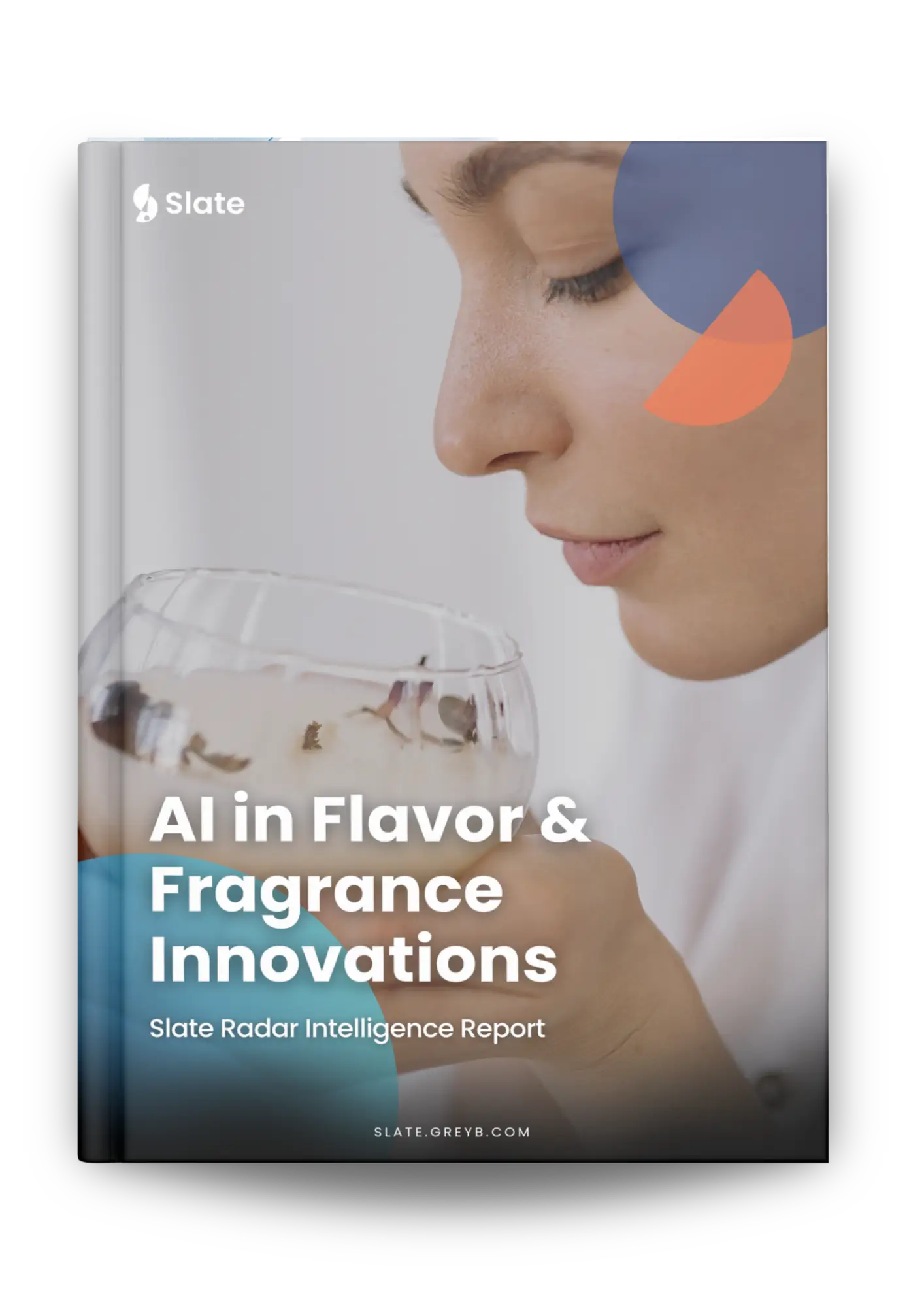
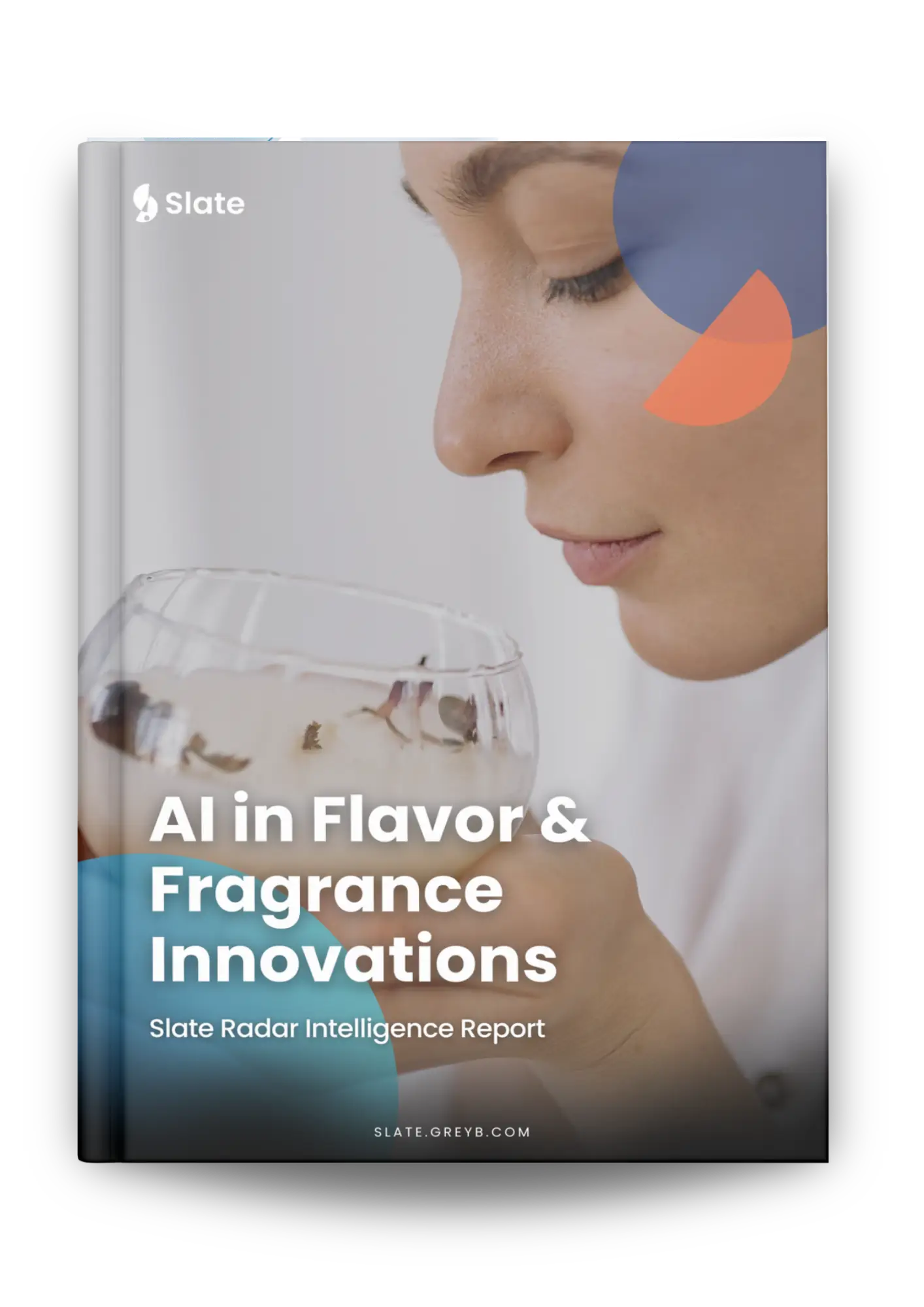
60% of all AI-related flavor and fragrance innovations came from Chinese institutions who are filing across every technical cluster simultaneously. This is infrastructure-level investment designed to set the baseline that everyone else licenses from.
The companies building advantage right now are not doing it by moving faster on known problems. They are reframing which problems are worth solving: treating olfactory data as a strategic asset, compressing reformulation cycles with reinforcement learning, and designing for modular ingredient architectures that don’t exist yet in most supplier portfolios.
We analyzed 44 innovations filed this month to show where resources are being directed and where the gap between early movers and the rest is already becoming structural.
What’s Inside the Report?
Structure-to-Smell Prediction
How ensemble and graph neural networks predict odor from molecular structure to computationally deprioritize failing candidates before synthesis. What this means for natural replacement speed and EU/IFRA compliance costs.
Shift to Inline QC and Formulation Optimization
AI is being applied to multi-objective formulation problems such as balancing cost, taste, and shelf life. Other filings focus on real-time quality control using sensor arrays, hyperspectral imaging, e-nose systems, and digital twins.
Personalized Fragrance Delivery at Scale
Personalization could move fragrance from fixed product formats to adaptive, context-aware delivery systems. This may create demand for modular ingredient palettes, base-compatible fragrance systems, and stability data across many possible blend combinations.
Olfactory Data Marketplace
A data marketplace for training olfactory AI, multimodal odor generation from text and video, and real-time media scent-sync. Why controlling high-quality, labeled olfactory data is rapidly becoming the ultimate strategic asset class.
Receptor-Targeted Malodor Inhibitors
The era of simple “odor-masking” is ending. The report details how AI-guided frameworks are now screening molecules that actively inhibit specific odorant-receptor interactions, shifting fabric care, personal care, and hygiene R&D toward hypothesis-driven screening.
Pharmaceutical Taste Masking
Neural network systems predicting how flavor and sweetener combinations suppress the bitterness of active ingredients to shorten clinical formulation cycles. Better taste prediction and tighter encapsulation control could shorten development cycles in pediatric, geriatric, and long-lasting fragrance applications.
Geography Signal
Chinese institutions are filing at high volume across all clusters simultaneously. The practical implications for how quickly the open baseline will be commoditized, and which windows are already closed.
The Strategic Question This Report Answers
- Which AI use cases are closest to practical adoption?
- Where is patent activity clustering?
- Which technical problems remain unsolved?
- How sensory datasets may become a competitive moat?
- Why formulation systems may become more modular, adaptive, and data-driven?
- Where should suppliers, brands, and manufacturers watch for new business models?
- Which AI capabilities will change where profit, differentiation, and defensibility sit in the value chain?
Download AI in Flavour and Fragrance Report
Get the complete analysis of AI-driven flavor and fragrance innovations, including patent clusters, technical themes, white spaces, saturated economic markets, and strategic implications for the next phase of sensory R&D.