L’Oréal’s latest cosmetics innovation activity points to a clear shift in beauty R&D: consumers want high-performance products, but they are no longer willing to accept harsh chemistry, poor sensory feel, or weak sustainability claims as trade-offs.
The gap is most visible in hair care. Color correction still depends heavily on bleach, peroxide, and stripping treatments that can damage hair. Hard water, which affects nearly 85% of U.S. households, continues to cause mineral buildup, dullness, and reduced product performance.
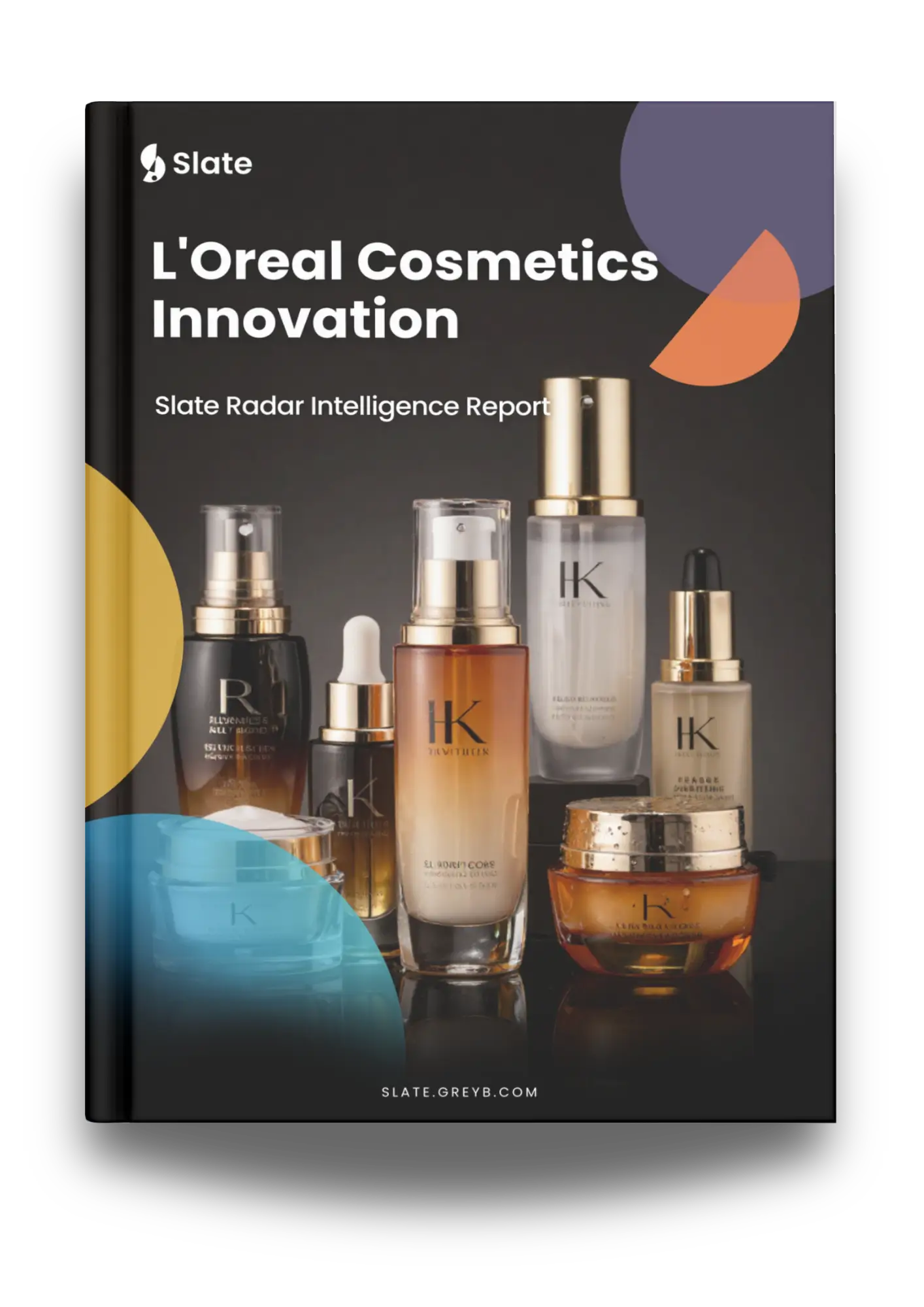
L’Oréal’s 2026 innovation portfolio addresses these gaps directly. Across 202 innovations, the company is building new formulation platforms for oxidizer-free hair color removal, mineral buildup treatment, silicone-free beauty systems, aluminum-free antiperspirants, scalp care, skin barrier support, and long-wear makeup. The filings suggest a practical direction for beauty innovation: not just cleaner labels, but cleaner systems that can still deliver visible performance.
What’s Inside the Report?
Why oxidizer-free hair color removal is a major focus
L’Oréal filed more than 10 patents on removing oxidative hair dye without bleach or peroxide. These innovations target a common salon and consumer pain point: correcting or adjusting hair color without causing the damage linked to stripping and re-dyeing.
The company is exploring thiol-based systems, clay-based dye adsorption, organic acid combinations, Lewis acid systems, and organic amine formulations. This could support a new generation of “color adjustment” services that modify existing color more gently.
How hard water is becoming a hair care innovation opportunity
Several filings address calcium and mineral buildup on hair, a growing issue in regions with hard water. L’Oréal is using amino acid chelators, hydroxylated carboxylic acids, and natural polysaccharides to bind and remove mineral deposits during washing or rinsing.
This creates room for pre-shampoo, clarifying, and “water purification for hair” products that can be positioned around local water quality concerns.
Why silicone-free and natural-origin systems matter
L’Oréal is building a broader toolkit to replace silicones and synthetic polymers across cosmetics categories. The report highlights natural polyesters, glycolipid surfactants, ethylcellulose with natural resins, and carbohydrate fatty acid esters.
These systems could support long-wear makeup, cleansing, emulsion stability, and film-forming performance while aligning with consumer demand for natural-origin and silicone-free beauty products.
Where aluminum-free antiperspirants are advancing
The company is exploring two routes for aluminum-free perspiration control. One uses magnesium chloride and dipotassium phosphate in two-step or dual-chamber systems. The other uses biosilicification with alkali metal metasilicate and phytic acid particles.
The key challenge remains efficacy. If these systems perform close to traditional aluminum-based products, they could address one of the largest unmet needs in clean personal care.
How scalp care is moving toward multi-active combinations
L’Oréal’s hair loss and scalp treatment filings focus on combinations rather than single ingredients. Examples include minoxidil-like analogs with piroctone olamine and caffeine, niacinamide with ginger root extract, and Eperua falcata bark extract.
The focus on non-greasy, residue-free formats suggests mass-market scalp care positioning rather than a pharma-style treatment route.
The Major Focus Areas We Analyzed
This report maps L’Oréal’s November 2026 cosmetics innovation activity across major technology areas, including:
- Oxidizer-free hair color removal
- Hard water and mineral buildup hair care
- Silicone-free and natural-origin formulation platforms
- Aluminum-free antiperspirant systems
- Hair loss and scalp treatment combinations
- Skin microbiome and barrier function actives
- Long-wear and transfer-resistant makeup technologies
- Ammonia-free lightening systems
- Frizz control formulations
- Skin lightening active stabilization
- Vitamin B complex anti-aging formulations
- Ultrasonic hair and scalp cleansing
- Stable ascorbic acid and niacinamide systems
Key Signals You Can’t Ignore
L’Oréal is reducing dependence on harsh hair chemistry
The activity around bleach-free and peroxide-free color removal shows a clear push toward gentler hair transformation. This could reshape salon correction services if the technology reaches commercial formats.
Hard water is becoming a premium hair care claim
By targeting mineral buildup, L’Oréal can connect hair damage, dullness, and poor product performance to a visible everyday problem. This makes hard water remediation a strong product story for shampoos, masks, and pre-wash treatments.
Clean beauty is shifting from ingredient removal to performance replacement
The silicone-free and natural-origin filings show that L’Oréal is not just removing controversial ingredients. It is developing replacement systems that aim to preserve texture, film formation, durability, and sensory performance.
Aluminum-free deodorant is still an efficacy race
Consumer demand is strong, but performance remains the key barrier. L’Oréal’s dual-system approach suggests it is testing both chemical and physical routes to reduce perspiration without aluminum salts.
Skin microbiome work is moving toward metabolites
The microbiome filings focus on S. epidermidis strains and indole derivatives for barrier function and dry skin support. A postbiotic or metabolite-based route may be easier to commercialize than live probiotic cosmetics due to stability and regulatory concerns.
Download the Full Slate Radar Intelligence Report
Get the complete analysis of L’Oréal’s 2026 cosmetics innovation activity, including patent-level focus areas, formulation strategies, emerging beauty technologies, technical signals, and strategic implications across hair care, skin care, makeup, and personal care.