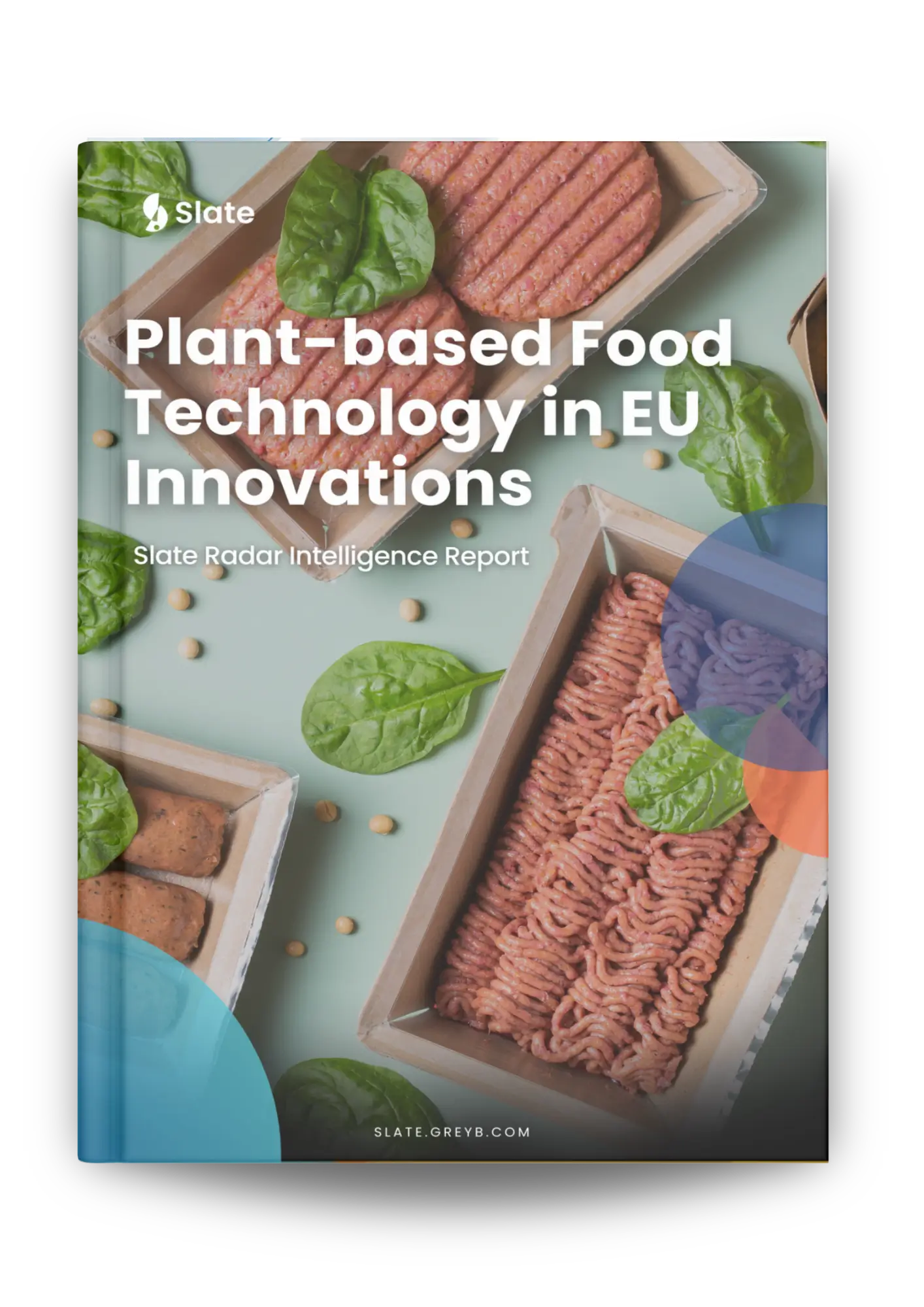
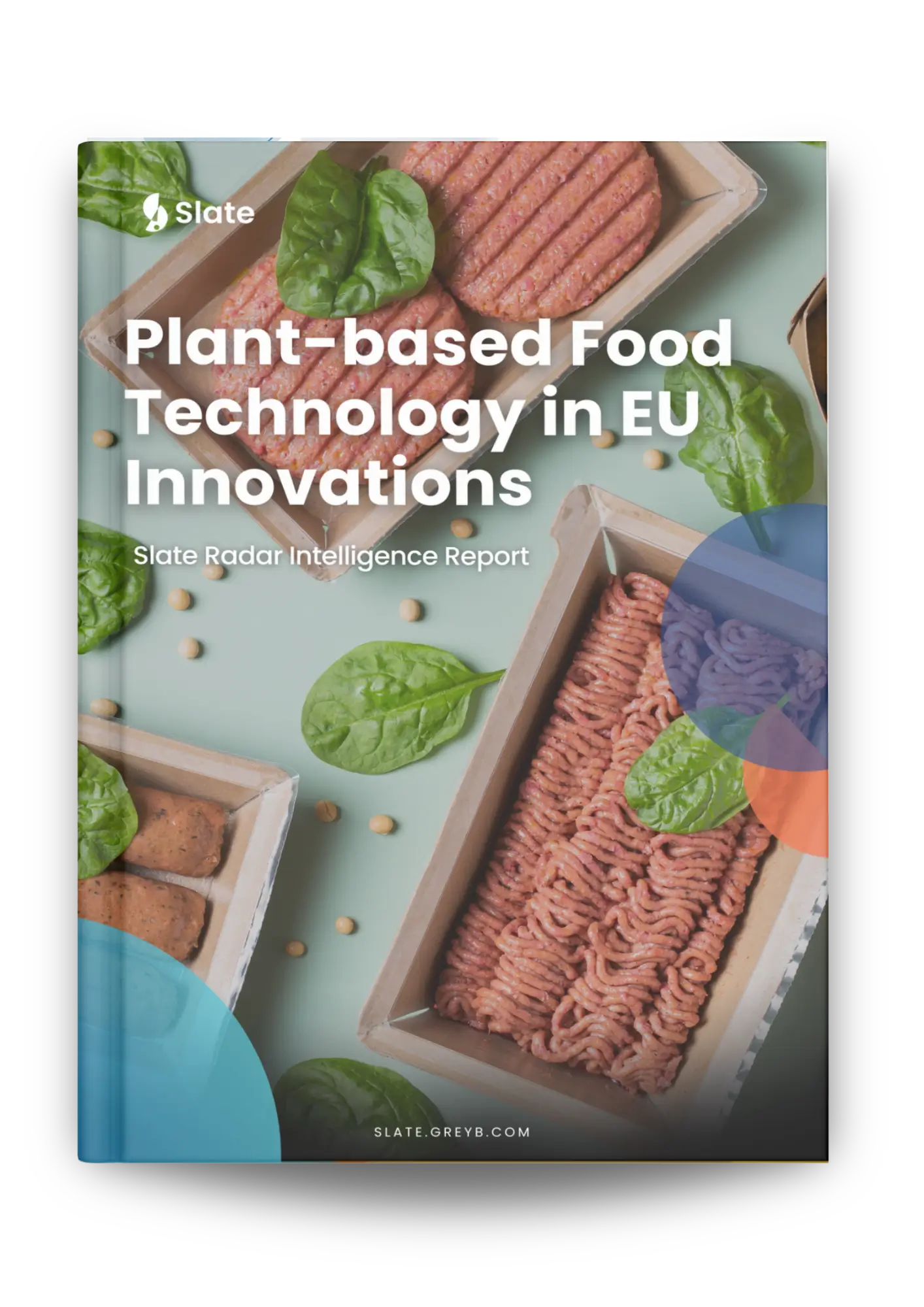
Plant-based food innovation is moving into a more complex phase. While companies continue improving protein ingredients and extrusion methods, new technologies around fermentation, enzymatic processing, and circular ingredient recovery are reshaping where future differentiation may come from.
We analyzed 972+ innovations across 7 technology clusters to identify the technologies, companies, and research areas shaping the next wave of EU plant-based food development.
What’s Driving Change in plant-based food innovation?
The next wave of plant-based products will depend on controlling the underlying technologies that improve functionality, sensory quality, and production economics.
- Sensory expectations are moving beyond extrusion limits: Companies are combining extrusion with enzymatic and microbial approaches as standalone mechanical processing struggles to deliver animal-like texture and flavor.
- IP ownership is shifting upstream: Academic institutions hold significant foundational innovation in protein architecture, extraction, and fermentation, increasing the importance of licensing and collaboration strategies.
- Scale economics depend on full crop utilization: Companies are exploring ways to recover bioactives and functional ingredients from processing by-products to create additional value streams.
What’s Inside the Report?
- Why extrusion alone may not define the next generation of plant-based products
Understand how hybrid processing approaches combining mechanical and biochemical methods are changing the competitive landscape. - Who controls the technologies improving plant protein functionality?
Explore how enzyme suppliers and academic institutions are shaping access to critical processing capabilities. - Where fermentation creates new opportunities for differentiation
Identify why microbial and fungal fermentation are emerging as alternatives to crowded texturization pathways. - How companies are building circular plant-based food systems
Learn how side-stream valorization is moving from sustainability initiatives toward commercial value creation. - Which innovation areas remain open for new entrants
Discover white spaces where corporate participation remains limited and early positioning may create advantages.
The 7 Research Clusters We Analyzed
The report maps innovation activity across major technology pathways shaping EU plant-based food development.
- Microbial fermentation of plant proteins for dairy alternative beverages (293 innovations)
- Plant protein processing via protease, protein deamidase, and lipase enzymatic treatment (286 innovations)
- Plant protein texturization via low-moisture extrusion, wet extrusion, and co-processing (160 innovations)
- High-moisture extrusion of pea, soy, and faba bean protein analogues (87 innovations)
- Legume, oilseed, and cereal protein extraction via fractionation and valorization (78 innovations)
- Bioactive compound extraction and valorization from plant food processing by-products (45 innovations)
- Fungal protein production via solid-state, submerged, and semi-solid fermentation (23 innovations)
Key Trends You Can’t Ignore
Plant-based innovation is shifting from ingredients to processing technologies
Companies are exploring new ways to improve texture, flavor, and functionality as traditional approaches reach their limits. The report maps the technologies gaining attention across the EU innovation landscape.
Fermentation is gaining ground as a route for better-performing alternatives
Microbial and fungal approaches are being explored to improve the quality of plant-based dairy and meat alternatives. The report highlights where fermentation is creating new opportunities.
The next competitive advantage may come from better protein modification
Researchers and companies are developing new methods to enhance plant proteins before they become finished products. The report uncovers the processing strategies shaping future product development.
Academic research is becoming a key part of the innovation ecosystem
Universities and research institutions are contributing important breakthroughs in plant protein technologies. The report shows where this activity is concentrated and what it means for industry players.
Waste streams are becoming sources of new ingredients
Companies are looking beyond primary crops to recover valuable compounds from processing by-products. The report explores how circular approaches could influence future plant-based food systems.
Download the Full Plant-based Food Technology in EU Innovation Landscape Report
Get complete access the complete technology map, innovation clusters, company activity analysis, competitive signals, and strategic implications shaping the next phase of plant-based food R&D.