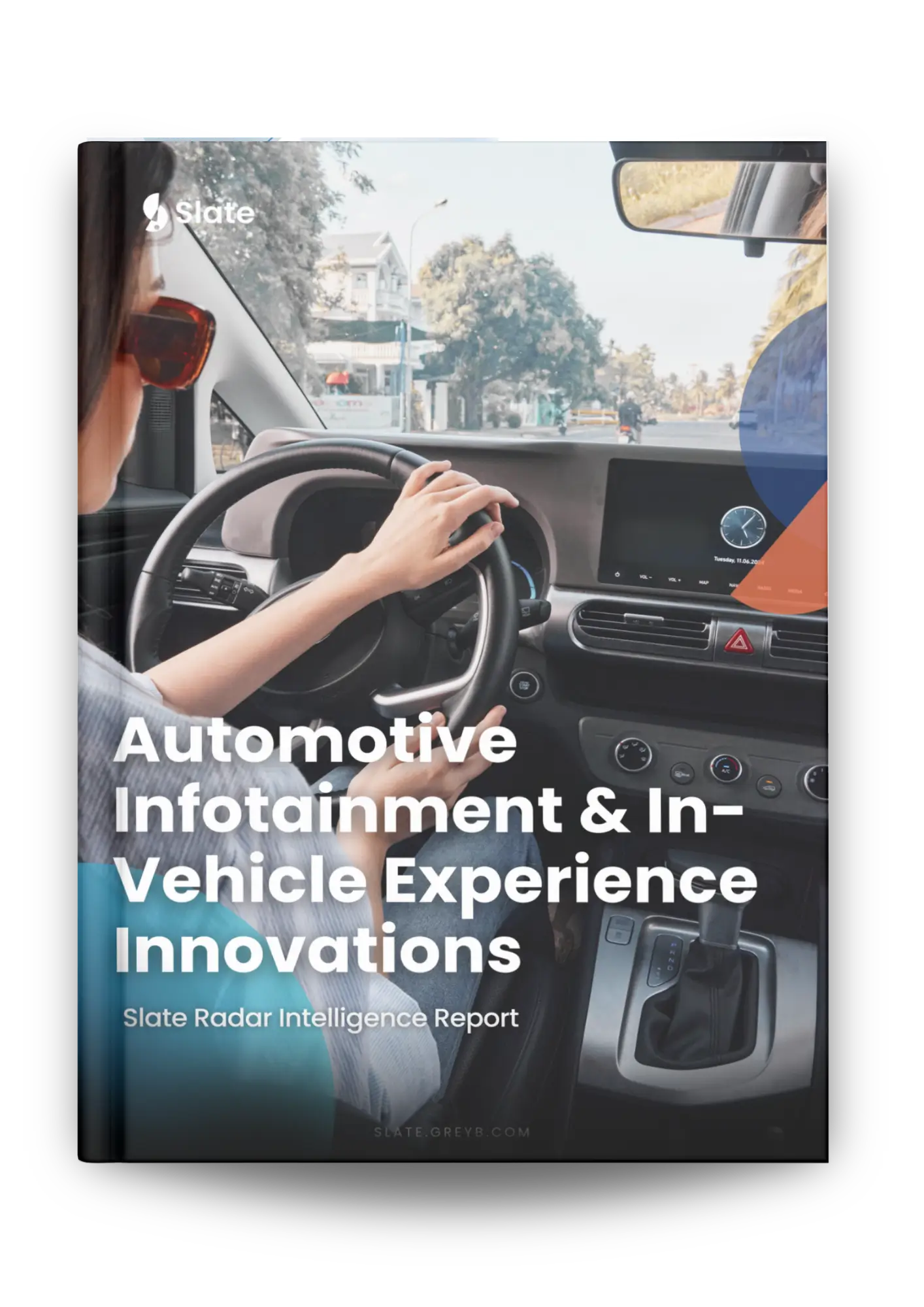
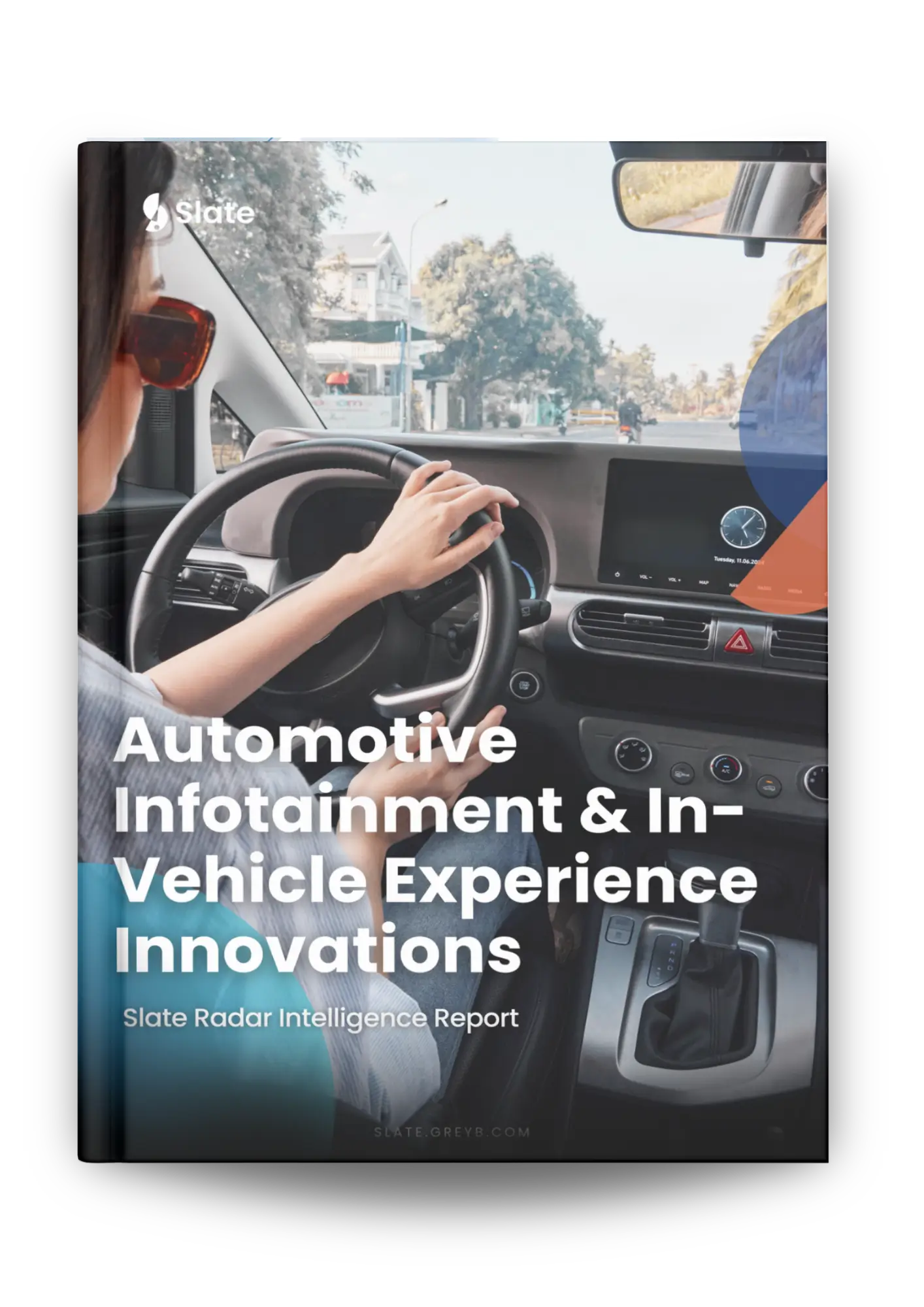
The next wave of in-vehicle innovation is not only about larger displays or more powerful infotainment hardware. Companies are moving toward centralized computing, immersive interfaces, AI-powered experiences, and connected digital ecosystems that are changing how the vehicle cabin is designed.
Our analysis of the automotive infotainment and in-vehicle experience landscape maps activity across 14 research clusters, covering cockpit computing, HMI, AI assistants, connectivity, entertainment, software platforms, and hardware integration to identify where innovation is evolving.
Key Signals Reshaping Automotive Infotainment Innovations
Automotive infotainment is being reshaped by the move toward software-defined vehicles, more immersive cabin experiences, and deeper integration with external digital ecosystems.
- Centralized computing is changing where differentiation happens: Unified computing platforms are bringing cockpit, infotainment, and other vehicle functions onto shared architectures, increasing the importance of software integration.
- HMI innovation is moving beyond static displays: AR-HUDs, virtual agents, and multimodal interfaces are expanding how information and digital experiences are delivered inside the vehicle.
- Connectivity is expanding beyond the vehicle itself: Cloud-to-car AI, standardized operating stacks, and high-bandwidth networks are connecting the cabin with a wider ecosystem of digital services.
What’s Inside the Report?
How centralized computing is changing automotive architecture
Explore how the move away from distributed ECUs is changing cockpit development and creating new requirements across hardware and software integration.
Why immersive interfaces are becoming the next HMI frontier
Understand how AR-HUDs, virtual agents, multimodal feedback, and driver-aware systems are expanding the possibilities for in-vehicle interaction.
Where standardized automotive software stacks are gaining ground
Discover how emerging platform architectures are influencing the development of software-defined vehicles and the technologies being built around them.
What unusual innovation signals reveal about competitive activity
Examine where technical activity is concentrated, where expected patent activity is missing, and what these patterns could mean for future R&D opportunities.
How connected services are expanding the role of the vehicle cabin
Explore the technologies enabling entertainment, AI interaction, connectivity, payments, and other digital experiences inside vehicles.
The Research Clusters We Analyzed
The analysis maps activity across technology areas shaping automotive infotainment and the future in-vehicle experience:
- Digital Cockpit HMI via Integrated Displays, HUDs & User Interfaces (78 innovations)
- Central Vehicle Computing via Hardware and Software Integration for Cockpits (41 articles)
- Android Automotive OS Integration for Core Vehicle Systems & Control (51 articles)
- Digital Chassis & Cockpit Platforms via Snapdragon Hardware & AI Integration (286 articles)
- Automotive Cockpit Domain Computing via Centralized Processing & Digital Display Integration (46 articles)
- Immersive In-Car Gaming Experiences via Cinemo, Dolby & SmashLabs Integration (23 articles)
- AI-Powered In-Vehicle Cockpit Systems via Integrated Digital Assistant Architectures (14 articles)
- Connected Vehicle Data Integration via Interoperable Platforms & V2X Communication (33 articles)
- In-Vehicle AI Agent Architecture via Cloud-to-Car Deployment Process Systems (2 articles)
Additional innovation areas covered include proprietary dashboard control systems for in-car advertising, connected lifestyle ecosystems, Pleos Connect software platforms, connected driving electronics, and System-on-Chip architectures for infotainment hardware integration. These clusters provide a broader view of how companies are approaching software platforms, digital services, connectivity, and vehicle computing architectures.
Key Trends You Can’t Ignore
The automotive cockpit is becoming a software battlefield
The value of the in-vehicle experience is shifting beyond hardware toward software, intelligence, and connected services. Discover how this transition is changing the areas where automotive and technology companies compete.
Immersive interfaces are moving beyond traditional displays
AR displays, virtual assistants, and adaptive interactions are creating new possibilities for the vehicle cabin. Explore the innovation directions shaping the next generation of human-machine interaction.
Centralized architectures are redefining vehicle development
The move toward unified computing platforms is changing how automotive systems are designed and integrated. Understand which technology directions are influencing the next generation of cockpit architectures.
AI-powered experiences are opening new possibilities inside the cabin
Vehicles are evolving toward more intelligent and personalized digital environments. Explore where AI-driven cockpit innovation is emerging and which areas remain comparatively underdeveloped.
Connected ecosystems are changing who controls the in-vehicle experience
Automakers, software companies, and technology providers are building different approaches to the vehicle’s digital ecosystem. Identify the forces shaping how these ecosystems could evolve.
Download the Automotive Infotainment & In-Vehicle Experience Innovation Report
Access the complete analysis of 14 technology clusters, emerging themes, competitive signals, company activity, representative innovations, market context, and strategic implications shaping the future of automotive infotainment and in-vehicle experiences.