Beta Glucan
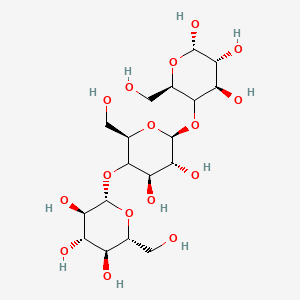
Identifiers
Functions
Where is Beta-glucan used, and what role does it play in each application?
Beta-glucan is used across cosmetics, food, and pharmaceutical applications. In cosmetics, it functions as a bulking agent and skin-conditioning ingredient, appearing in face creams, masks, lotions, and serums. It is also claimed as a skin-barrier repair active in toners and masks, and as a moisturizing active in serums. In food and beverages, it serves as a functional fiber, gelling agent, and prebiotic, with applications in dysphagia thickeners and cereal drinks. In pharmaceuticals, it is used as an active pharmaceutical ingredient for wound healing and as a matrix-forming agent in oral compositions.
Which product or formulation problem does Beta-glucan address?
Beta-glucan addresses formulation problems related to texture, stability, and skin barrier function. In cosmetics, it solves the need for skin conditioning and barrier repair, often combined with other actives like squalane to reduce transepidermal water loss. In food, it solves swallowing safety issues in dysphagia products by providing specific shear viscosity and relaxation time. It also addresses gut health by acting as a prebiotic fiber, and in pharmaceuticals, it is used to modulate immune responses, such as in sepsis or for trained immunity.
What supports the main commercial or clinical uses of Beta-glucan?
Evidence for beta-glucan's main uses comes from its presence in numerous consumer products and patent filings. In cosmetics, it is found in over 240 products across 41 brands, with functions as a filler and softener/conditioner. Patents claim its role in skin barrier repair, hydration, and anti-aging, with specific concentration ranges. In food, patents support its use as a gelling agent for dysphagia and as a prebiotic fiber for gut health. Additionally, a Cosmetic Ingredient Review found it safe in current practices, supporting its use in personal care.
Which formulation trade-offs should researchers consider for Beta-glucan?
Formulation trade-offs for beta-glucan include balancing its rheological properties, such as shear viscosity and relaxation time, which are critical for dysphagia products. In cosmetics, its concentration varies by application, from 0.2-1% in toners to 1-3% in masks, and it may require combination with other actives for synergistic effects. Molecular weight manipulation, such as depolymerization to create oligo beta-glucan, can alter its properties. Additionally, its solubility and interaction with other ingredients, like lactic acid, can affect stability and require specific processing conditions.
What are the physicochemical properties of Beta glucan?
| Property | Value | Category |
|---|---|---|
| XLogP3 | -6.9 | Computed Molecular Properties |
| Exact Mass | 504.16903493 | Computed Molecular Properties |
| Monoisotopic Mass | 504.16903493 | Computed Molecular Properties |
| Topological Polar Surface Area | 269.0 | Computed Molecular Properties |
| Complexity | 641.0 | Computed Molecular Properties |
| Hydrogen Bond Donor Count | 11 | Computed Molecular Properties |
| Hydrogen Bond Acceptor Count | 16 | Computed Molecular Properties |
| Rotatable Bond Count | 7 | Computed Molecular Properties |
| Heavy Atom Count | 34 | Computed Molecular Properties |
| Formal Charge | 0 | Computed Molecular Properties |
Which formulation benchmark best contextualizes Beta-glucan, and what differs?
A relevant formulation benchmark for beta-glucan is its use in dysphagia thickeners, where it provides specific extensional properties to ensure safe swallowing. Unlike typical thickeners that only increase viscosity, beta-glucan-based products are designed to achieve a relaxation time greater than 10 ms, balancing shear viscosity and extensional behavior. This differs from cosmetic applications, where the focus is on skin conditioning and barrier repair, and from food beverages, where it serves as a functional fiber. This benchmark highlights the need for precise rheological control in medical nutrition.