Beta Glucan Suppliers & Manufacturers
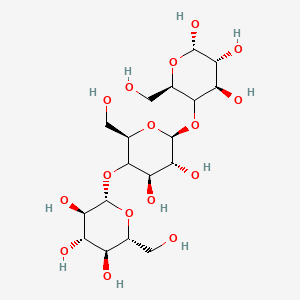
Identifiers
Functions
What does available trade activity indicate for Beta glucan?
Beta glucan is classified under HS Code 3913.90. This falls under Chapter 39: Plastics and articles thereof, specifically Heading 3913 (Natural polymers (e.g. alginic acid) and modified natural polymers (e.g. hardened proteins, chemical derivatives of natural rubber), n.e.c. or included, in primary forms), under subheading: Polymers, natural and modified natural; in primary forms (excluding alginic acid, its salts and esters).
* The data below is specific to the HS code, not the ingredient.
Suppliers
396
Across 40 countries
Shipments
5,092
from 2015 to 2026
Total weight
113.2M kg
10,679 TEU · standard 20-foot container units
Last shipment
8 months ago
Last updated at Feb 25, 2026
Growth
↑ 41%
Trade under 3913.90 has increased by 41% over the past 6 months
What does trade activity suggest about the Beta-glucan supply chain?
Trade activity under HS 3913.90 shows a large, active supply chain with 396 suppliers, 5,092 shipments, and roughly 113 million kg moved since 2015. Belgium dominates by shipment count and volume, led by Jungbunzlauer with 2,294 shipments, followed by Italy's Novamont and France's Danisco entities. Recent shipment dates into early 2026 indicate ongoing market presence. However, this HS code covers broad natural polymer categories, so the volume reflects general biopolymer trade, not confirmed beta-glucan-specific flows. The scale suggests robust infrastructure for natural polymers, but beta-glucan's share within this activity cannot be isolated from the available evidence.
What does the HS or HTS classification include, and where are its limits for Beta-glucan?
HS 3913.90 covers natural and modified natural polymers in primary forms, excluding alginic acid and its derivatives, under Chapter 39 (plastics). This is a broad category that includes vegetable-origin polymers, gums, resins, modified starches, and other biopolymers, not exclusively beta-glucan. The classification captures industrial resins, texturizers, and non-food-grade materials alongside potential beta-glucan sources. Consequently, supplier activity under this code reflects general natural polymer trade, and the presence of a company does not confirm beta-glucan manufacturing. The classification scope is a material boundary: it provides supply-chain context for the broader polymer category, but ingredient-specific conclusions require product-level verification beyond HS data.
Which suppliers are associated with Beta glucan trade?
| Supplier | Shipments | Top customer | Growth | Last shipment | |
|---|---|---|---|---|---|
No suppliers found. | |||||
How concentrated or diversified does the supplier landscape appear for Beta-glucan?
The supplier landscape appears concentrated at the top but diversified overall. Jungbunzlauer alone accounts for 2,294 of 5,092 shipments (45%), and the top five suppliers—Jungbunzlauer, Novamont, Danisco France, Neimenggu Fufeng, and Danisco USA—represent roughly 66% of total shipments. Below this tier, 396 total suppliers span 40 countries, including many smaller players with fewer than 10 shipments, indicating a long tail of regional and specialty suppliers. This structure suggests moderate concentration risk: reliance on a few large biopolymer producers for volume, but multiple alternative sources exist, particularly in China, which has 95 suppliers. However, since the data is not beta-glucan-specific, the true concentration for this ingredient remains unverified.
Which supply risks or dependencies around Beta-glucan require further diligence?
Key supply risks requiring further diligence include supplier-product verification, classification ambiguity, and dependency on a few high-volume shippers. Since HS 3913.90 includes many natural polymers, companies like Bloomage (a hyaluronic acid producer) and Jiangsu Chitin (chitin-focused) appear in the data, but their beta-glucan relevance is unconfirmed. The top-heavy structure—Jungbunzlauer and Novamont representing over half of shipments—creates potential concentration risk if these suppliers are indeed beta-glucan sources. Additionally, several suppliers show zero recent growth or stale shipment dates (e.g., Hangzhou Johncan, Danisco Landerneau), suggesting possible supply discontinuities. Product-level documentation, certificates of analysis, and direct supplier confirmation are necessary to validate beta-glucan sourcing before reliance.
Which sourcing geographies and trade lanes appear most relevant to Beta-glucan?
Belgium, Italy, and China are the most prominent sourcing geographies. Belgium accounts for the largest shipment count (2,461) and weight (58.4 million kg), driven by Jungbunzlauer and other biopolymer suppliers. Italy follows with 706 shipments and 22.9 million kg, led by Novamont. China has the highest supplier count (95) with 512 shipments and 13.1 million kg, including multiple biotechnology firms. France, India, and Germany also appear with meaningful activity. Trade lanes appear transatlantic, with top customers like Danisco USA, Novamont North America, and L'Oreal USA receiving shipments, suggesting Europe-to-North America flows are significant, alongside intra-company transfers within multinational groups.
Which countries drive Beta glucan trade activity?
By shipment count
Belgium
2,461 shipments
31 suppliers
58.4M kg total weight
Italy
706 shipments
15 suppliers
22.9M kg total weight
China
512 shipments
95 suppliers
13.1M kg total weight
France
407 shipments
34 suppliers
3.5M kg total weight
India
176 shipments
21 suppliers
3.3M kg total weight
Germany
133 shipments
23 suppliers
1M kg total weight
Spain
125 shipments
18 suppliers
1.2M kg total weight
Netherlands
83 shipments
20 suppliers
787.9K kg total weight
Japan
78 shipments
12 suppliers
802.1K kg total weight
Australia
59 shipments
3 suppliers
1.2M kg total weight