Biomimetic Peptides Environmental Fate & Ecotoxicity
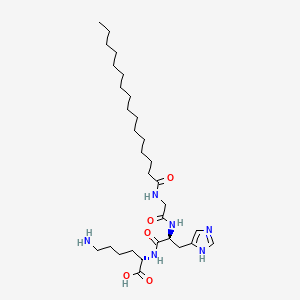
Identifiers
Functions
Where is Biomimetic Peptides used, and what role does it play in each application?
Biomimetic peptides, specifically palmitoyl oligopeptide and palmitoyl tripeptide-1, are used in personal care products, including those found inside the home. Their role is to support skin-related benefits, consistent with their inclusion in cosmetic and personal care formulations. The available evidence does not specify other application sectors, so their use appears concentrated in personal care rather than broader industrial or therapeutic contexts.
Which product or formulation problem does Biomimetic Peptides address?
Biomimetic peptides address formulation needs in personal care products by providing a peptide-based active ingredient that can be incorporated into consumer formulations. The evidence indicates their presence in products across home and personal care categories, but it does not specify the exact product or formulation problems they solve, such as stability, delivery, or efficacy challenges. Therefore, their problem-solving role is implied by their inclusion in these products rather than explicitly documented.
What supports the main commercial or clinical uses of Biomimetic Peptides?
The main commercial use of biomimetic peptides is supported by their listing as ingredients in eight consumer products across personal care and inside-the-home categories. This indicates market adoption in cosmetic formulations. However, there is no clinical or efficacy literature provided to substantiate specific performance claims. The evidence is limited to product inclusion, not demonstrated outcomes, so the basis for their use is commercial presence rather than published clinical support.
Which formulation trade-offs should researchers consider for Biomimetic Peptides?
Researchers should consider that biomimetic peptides are used in personal care formulations, but the available evidence does not detail specific trade-offs such as concentration ranges, compatibility with other ingredients, or stability requirements. The lack of formulation data means that trade-offs must be inferred from general peptide behavior, such as potential sensitivity to pH or temperature, but these are not confirmed by the evidence. Formulators should seek additional data before assuming standard peptide handling practices apply.
What are the physicochemical properties of Biomimetic peptides?
| Property | Value | Category |
|---|---|---|
| XLogP3 | 3.2 | Computed Molecular Properties |
| Exact Mass | 578.41556884 | Computed Molecular Properties |
| Monoisotopic Mass | 578.41556884 | Computed Molecular Properties |
| Topological Polar Surface Area | 179.0 | Computed Molecular Properties |
| Complexity | 738.0 | Computed Molecular Properties |
| Hydrogen Bond Donor Count | 6 | Computed Molecular Properties |
| Hydrogen Bond Acceptor Count | 7 | Computed Molecular Properties |
| Rotatable Bond Count | 26 | Computed Molecular Properties |
| Heavy Atom Count | 41 | Computed Molecular Properties |
| Formal Charge | 0 | Computed Molecular Properties |