

Bronopol: rules by market, safety and alternatives
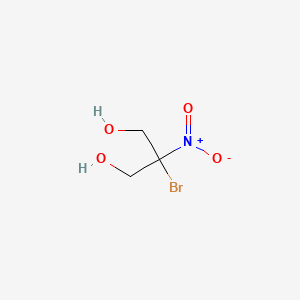
Bronopol is a preservative that stops bacteria growing in water-based products. Bronopol's INCI name is 2-Bromo-2-Nitropropane-1,3-Diol.
Does this affect your product?
Our read: any amine or amide can trigger bronopol rules, so check a shampoo with a DEA, TEA or MEA surfactant or a cocamide first.
| If you sell in... | Check this first |
|---|---|
| Washington State | Rule bronopol out before the ban starts on 1 January 2027 |
| Oregon | Rule bronopol out once Oregon adopts proposed rules that list bronopol by name. Oregon's law applies from the same day as Washington's ban |
| Japan | Whether bronopol is allowed at all. We did not find bronopol on Japan's preservative list, in the English translation we read |
| Canada or South Korea | Any product with amines or amides |
| The EU, Great Britain, ASEAN or China | Any product with amines or amides. Each of the four markets requires you to show nitrosamines do not form |
We checked each market's rule in its official list, and CIR's review history. We searched patents published from 26 November 2025 to 26 November 2026 in Slate R&D. "Our read" lines are our judgment.
What is bronopol used for?
Bronopol preserves water-based products against bacteria, and most new patents that name it are not about cosmetics. In cosmetics, bronopol's highest reported use is now 0.05%, in disposable wipes, according to CIR's 2026 report.
210 patent families published in the last 12 months name bronopol in their title, abstract or claims. 65 of the 210 families have agrochemical titles. A separate search found 24 families in cosmetic classes that also mention preservation or antimicrobial agents.
Is bronopol banned?
Bronopol is banned in cosmetics in Washington State from 1 January 2027, and in Canada and South Korea in products with amines or amides. Oregon bans formaldehyde-releasing agents from the same day as Washington State. Oregon's proposed rules, not yet adopted, list bronopol by name. The EU, Great Britain, ASEAN and China allow bronopol if nitrosamines do not form. We did not find bronopol on Japan's list of allowed preservatives, in the English translation we read.
| Answer | Market | Rule | Source |
|---|---|---|---|
| Banned | Washington State | Bans bronopol, one of 25 listed formaldehyde releasers, in cosmetics from 1 January 2027. Shops may sell existing stock until 31 December 2027 | WAC 173-339 |
| Banned with amines or amides | Canada, South Korea | Not permitted in products that contain amines or amides. Up to 0.1% in other cosmetics | Health Canada Cosmetic Ingredient Hotlist. MFDS Cosmetic Safety Standards, March 2026 |
| Class banned, rules proposed | Oregon | Oregon's law bans intentionally added formaldehyde-releasing agents from the same day, above a practical quantification limit. The Oregon Health Authority's proposed rules list bronopol by name, with a limit of 5.0 ppm for the class. The proposed rules are not yet adopted. Oregon's law covers makers, importers and domestic distributors, not retailers selling other makers' products | ORS 431A.345, Toxic-Free Cosmetics Act of 2023. Notice of Proposed Rulemaking, filed 30 October 2026, with Exhibit A to proposed OAR 333-016-4075. Notice |
| Allowed with a condition | EU, Great Britain, ASEAN, China | Up to 0.1%, and avoid formation of nitrosamines. The EU limit is for the ready-to-use product. For China we read the 2015 edition of the Safety and Technical Standards. China revised the standards in 2026, and we could not read the changes | Regulation (EC) 1223/2009, Annex V, entry 21 (EU). Annex V, entry 21 (Great Britain). ASEAN Cosmetic Directive, Annex VI, entry 21, June 2026 release. NMPA, STSC 2015, Table 4 (China) |
| Not found | Japan, US federal | Japan: not on the list of allowed preservatives, in the English translation we read. US federal: not on the FDA's list of prohibited and restricted cosmetic ingredients. We found no federal limit | Standards for Cosmetics, Appendix 3 (Japan). FDA (US federal) |
We found no cosmetic rule for bronopol in Australia's Poisons Standard. India's current standard, IS 4707 Part 3:2025, is not public, so we could not read it.
Bronopol and the 2027 US state bans
The full report as a PDF, with every source cited. Then one email a month when something new appears.
Is bronopol safe?
Bronopol is safe in cosmetics when formulated to be non-sensitizing, CIR concluded in October 2026, but not where N-nitroso compounds can form. CIR is the US industry-funded safety panel. CIR's final amended report says the sensitization case "may be based on a quantitative risk assessment (QRA) or other appropriate methodology". CIR keeps the warning that bronopol "should not be used in cosmetic products in which N-nitroso compounds can be formed".
CIR's 1980 verdict, which many pages still quote, found bronopol safe up to 0.1%.
The EU's Scientific Committee on Consumer Safety made the same point on nitrosamines. Opinion SCCS/1458/11, adopted on 27 March 2012, says in section 4.4.4 that bronopol and bronidox "have been found to be effective nitrosating agents". The opinion adds that with secondary amines "substantial nitrosamine formation is to be expected". The opinion also says "any co-formulation of these preservatives in cosmetics together with compounds having a nitrosatable nitrogen is to be avoided".
Washington State and Oregon restrict formaldehyde releasers as a class, whatever a safety panel concludes for one of them.
Does bronopol need to be on the label?
Bronopol needs a label only through its formaldehyde: the EU and Great Britain require "releases formaldehyde" above 0.001%, and ASEAN "contains formaldehyde" above 0.05%.
Bronopol is a formaldehyde releaser that can release small amounts of formaldehyde as it breaks down. The release depends mainly on pH and temperature. Release is much greater in alkaline than in acidic solution (Journal of Health Science, 2008).
Our read: the EU and British threshold is fifty times lower than ASEAN's, though the rules are worded differently. A label approved for Southeast Asia may need the warning in Europe.
| Market | Warning | Threshold |
|---|---|---|
| European Union | "Releases formaldehyde" | Total formaldehyde released by a finished product that contains an Annex V releaser exceeds 0.001%. New products since 1 August 2024, every product from 1 August 2026 |
| Great Britain | "Releases formaldehyde" | Formaldehyde in the finished product exceeds 0.001%. In force since 15 July 2026, older stock until 14 January 2027 |
| ASEAN | "Contains formaldehyde" | Above 0.05% formaldehyde in the finished product |
Asked to take Bronopol out of a product?
Tell us the product and where it sells. We send a one-page brief for your next step: what the rules say for that product and by when, the swaps the rules rule out, and the alternatives to test first. Forward it to your R&D head as it is.
Bronopol INCI name and other names
Bronopol's INCI name, printed on ingredient lists, is 2-Bromo-2-Nitropropane-1,3-Diol. Bronopol itself is the international non-proprietary name (INN), used in the EU and ASEAN annexes. Safety data sheets and regulatory filings give CAS 52-51-7 and EC 200-143-0.
What replaces bronopol?
Another formaldehyde releaser is no swap for bronopol in Washington State or Oregon. Phenoxyethanol, sodium benzoate, potassium sorbate and chlorphenesin are on neither state's list of releasers, and each has an EU limit.
Our read: the EU's preservative list is not a safe shortlist for a swap, because ten of its entries are on Washington's list. Bronopol is one of the ten.
Swaps the rules rule out
Washington State's table lists 25 formaldehyde releasers, and ten of them are preservatives that the EU allows, bronopol among them. Oregon's proposed rules list the same ten. Item numbers come from Washington's table, letters from Oregon's proposed rule and entries from the EU's Annex V.
| Releaser | Washington item, Oregon proposed rule | EU Annex V |
|---|---|---|
| DMDM hydantoin | Item 1, (A) | Allowed, entry 33 |
| Diazolidinyl urea | Item 2, (B) | Allowed, entry 46 |
| Imidazolidinyl urea | Item 3, (C) | Allowed, entry 27 |
| Sodium hydroxymethylglycinate | Item 7, (G) | Allowed with a condition on releasable formaldehyde, entry 51 |
| Bronidox | Item 10, (J) | Rinse-off products only, avoid nitrosamines, entry 20 |
| 7-Ethylbicyclo-oxazolidine | Item 11, (K) | Not in oral products or on mucous membranes, entry 49 |
| Benzylhemiformal | Item 12, (L) | Rinse-off products only, entry 55 |
| Dimethyl oxazolidine | Item 16, (P) | Allowed above pH 6, entry 45 |
| Methenamine | Item 18, (R) | Allowed, entry 30 |
Washington also restricts releasers that its table does not list. Ecology's adoption notice says Washington's rule "restricts all chemicals that release formaldehyde", and Oregon's proposed rule introduces its list with "including but not limited to". The EU prohibits quaternium-15 (entries 1385 and 1386) and paraformaldehyde (entry 1578) outright (Annex II), and Washington lists quaternium-15 and paraformaldehyde as items 4 and 20.
Bronidox carries the same nitrosamine condition as bronopol. Canada's Hotlist does not permit bronidox or bronopol in cosmetics that contain amines or amides.
Methylisothiazolinone is ruled out in leave-on products in the EU, ASEAN, Canada and South Korea, which allow methylisothiazolinone in rinse-off products only, up to 0.0015%. Japan allows methylisothiazolinone up to 0.01 g per 100 g, and China's 2015 edition up to 0.01%. China revised its limit in 2026 (NMPA Announcement No. 6 of 2026), from 1 January 2028 per secondary sources. We have not read China's new figure.
Alternatives that remain
Our read
plan for a system of two or more ingredients, not one swap. The sorbate sheet says to combine it with other preservatives, and the benzoate sheet says it is often mixed with sorbate. The boosters are described as supporting a preservative.
Four preservatives and three boosters have a use level we could source, each as a supplier's recommended range.
| Group and alternative | EU maximum | Supplier's recommended range |
|---|---|---|
| Preservative: Phenoxyethanol | 1.0% (entry 29) | 0.5 to 0.8% (Connect Chemicals) |
| Preservative: Phenoxyethanol with ethylhexylglycerin | As phenoxyethanol | 0.50 to 1.00% of the blend (Schülke sheet), which is 90% phenoxyethanol (Schülke brochure) |
| Preservative: Sodium benzoate | 2.5% rinse-off, 1.7% oral, 0.5% leave-on, as acid (entry 1) | Up to 1%, about 0.85% as acid, above the leave-on cap, best at low pH (Connect Chemicals) |
| Preservative: Potassium sorbate | 0.6% as acid (entry 4) | 0.3 to 0.5%, pH below 6 (Connect Chemicals) |
| Preservative: Chlorphenesin | 0.3% (entry 50) | 0.1 to 0.3%, pH 3.5 to 6.5 (Connect Chemicals) |
| Booster: Ethylhexylglycerin | Not on the EU list | 0.1 to 1.0% (Connect Chemicals) |
| Booster: Caprylyl glycol | Not on the EU list | 0.2 to 1.0% (Connect Chemicals) |
| Booster: 1,2-hexanediol | Not on the EU list | 0.5 to 3.0% (Connect Chemicals) |
None of the seven alternatives is on Washington's table, Oregon's proposed ban list or high-priority list, Canada's Hotlist or the FDA's list of prohibited ingredients. ASEAN's Annex VI repeats the EU limits, and Great Britain's Annex V repeats the same limits for the four preservatives. The three boosters carry no preservative limit, because ASEAN's Annex VI leaves out substances with other uses that also have antimicrobial properties. The absence of a preservative limit is no approval of any booster as a stand-alone preservative.
Annex V also lists benzyl alcohol (entry 34), dehydroacetic acid (entry 13) and parabens (entries 12 and 12a). Parabens are not on Washington's table or in Oregon's proposed ban list.
Oregon's proposed rules do list butylparaben and 4-hydroxybenzoic acid as high-priority chemicals (proposed OAR 333-016-4020, limits). A maker whose product holds 5 ppm or more of butylparaben or 4-hydroxybenzoic acid would need a notice on its website (ORS 431A.340). The notice duty applies from the same day as the ban, once the rules are adopted. Methyl-, ethyl- and propylparaben are not on that list.
A supplier's range is advice, not a limit. The Connect Chemicals sheets carry no date. Schülke's sheet is the September 2019 version, and the blend's 90:10 composition comes from a 2008 brochure. Schülke's sheet adds that the blend's efficacy is reduced with ethoxylated surfactants in rinse-off products.
Sodium benzoate's 1% is about 0.85% as benzoic acid. The supplier's range for sodium benzoate exceeds the leave-on cap of 0.5% as acid in the EU, ASEAN and South Korea, and exceeds China's total. The EU cap is about 0.59% as sodium benzoate by our conversion. Japan allows 1.0 g of benzoate per 100 g.
Two checks apply before a supplier's range holds in a product. One is the base's pH against the sheets' windows: the sorbate sheet stops at pH 6, and the chlorphenesin sheet gives pH 3.5 to 6.5. The other is a preservative challenge test of the chosen system, such as ISO 11930.
Patent counts
New cosmetic patents name the six most named preservatives 13 to 47 times as often as bronopol. The counts show what filers name, not what formulas use or what replaced bronopol.
We counted patent families in the cosmetic classes A61K8 or A61Q published in the 12 months to 26 November 2026. Each counted family names the preservative and uses a word starting with "preserv" or "antimicrobial" in the title, abstract or claims. Each preservative is searched under one to three names, such as two for DMDM hydantoin and three for bronopol. Most families name the preservative as one option in a claim list. Patents that say only "microbial attack" or "biocide" are not counted, such as Thor's two rows.
| Group | Preservative | Families, 12 months |
|---|---|---|
| Most named | Phenoxyethanol | 1,121 |
| Most named | 1,2-hexanediol | 776 |
| Most named | Ethylhexylglycerin | 681 |
| Most named | Sodium benzoate | 480 |
| Most named | Caprylyl glycol | 398 |
| Most named | Potassium sorbate | 302 |
| Less named | Chlorphenesin | 118 |
| Less named | Methylisothiazolinone | 66 |
| Releaser on Washington's list | Imidazolidinyl urea | 51 |
| Releaser on Washington's list | DMDM hydantoin | 50 |
| Releaser on Washington's list | Diazolidinyl urea | 32 |
| Releaser on Washington's list | Sodium hydroxymethylglycinate | 10 |
| For comparison | Bronopol | 24 |
Of the rows we could list, 48% to 80% of the families for each of the six most named come from China's patent office. Of bronopol's 24 families, 1 comes from China's patent office. We found no cosmetic patent in the period that names bronopol in its title or abstract.
What changed
Four markets and CIR's safety review have changed for bronopol since August 2025, newest first.
- Oregon's health authority files proposed rules that list bronopol by name (30 October 2026). The hearing on the proposed rules was on 17 November, written comments closed on 23 November, and Oregon has not yet adopted the rules (notice of proposed rulemaking, OHA notice to interested parties, 4 November 2026)
- CIR's expert panel issues its final amended report, replacing its 1980 verdict (5 to 6 October 2026, CIR announcement)
- The EU's "releases formaldehyde" label applies to every product, after sell-through of older stock ended on 31 July 2026 (1 August 2026, Regulation (EU) 2022/1181)
- Great Britain's "releases formaldehyde" warning comes into force (15 July 2026, SI 2026/23)
- Washington State adopts its ban on formaldehyde releasers in cosmetics, bronopol among them (28 August 2025, WAC 173-339)
Ask Slate R&D about bronopol
Ask what replaces it in your own product type, with a free account. Answers come from patents, papers and news, with each source linked.