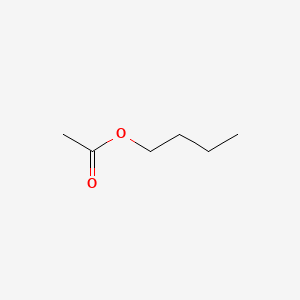


Butyl acetate: rules by market, safety and alternatives
Butyl acetate is a solvent that dissolves resins in coatings, inks and nail polish. In nail polish, butyl acetate dissolves nitrocellulose. Butyl acetate's slower evaporation gives the polish time to flow into an even film (CIR, 1989).
Does this affect your product?
Our read: on Eastman's evaporation chart, n-propyl acetate (2.3) and isobutyl acetate (1.4) sit closest to toluene (1.9) among the acetates here. Test them first.
| If you sell in... or your formula has... | Check this first |
|---|---|
| The EU, and triphenyl phosphate in a nail lacquer | Replace triphenyl phosphate (Regulation (EU) 2026/909). A lacquer with triphenyl phosphate may not be placed on the EU market from 1 January 2027 or made available from 1 July 2028 |
| Great Britain, and the same plasticiser | Check triphenyl phosphate apart from the EU: Annexes II and III as revised do not name triphenyl phosphate (Annex III, revised) |
| A "toluene-free" claim on a nail polish | Hold a test result behind the toluene-free claim |
| The US, and butyl acetate in a coating, ink or lacquer | Butyl acetate counts as a VOC. tert-Butyl acetate is exempt federally, not in California |
| A plant or salon in the EU | Plan ventilation to the EU's indicative limit, lower than OSHA's |
We read each market's cosmetic lists, the EU and US workplace and VOC rules and CIR's reports. We searched patents published in the 12 months to 27 November 2026 in Slate R&D. "Our read" lines are our judgement.
What is butyl acetate used for?
Butyl acetate is used as a solvent, and we counted its patents only in coatings, cosmetics and nail products. Of the 4,942 patent families that name butyl acetate in the 12 months searched, 1,519 (31%) are in coating classes. 116 families are in cosmetic classes, 20 of them in nail product class A61Q3. The name "butyl acetate" also catches tert- and sec-butyl acetate.
Butyl acetate's boiling range is 122 to 129 °C. Butyl acetate's flash point is 27 °C, Tag closed cup, in Eastman's chart (Eastman). NIOSH lists a butyl acetate flash point of 22 °C, method not stated (NIOSH). The EU hazard class of butyl acetate is Flam. Liq. 3. The EU and the US also allow butyl acetate as a food flavouring, and medicines treat it as a low-toxicity residual solvent.
Is butyl acetate banned?
Butyl acetate is not restricted in any cosmetic list we read (China, South Korea and India are unread), but workplace and VOC rules apply.
Our read: the EU's 50 ppm workplace limit is a third of OSHA's 150 ppm. A blend that meets OSHA's may need more ventilation in the EU. Butyl acetate's VOC status matters for coatings.
| Answer | Market and field | What we found | Source |
|---|---|---|---|
| Limited | EU, workplace | Indicative limit 241 mg/m3 (50 ppm) over 8 hours, 723 mg/m3 (150 ppm) short term | Directive (EU) 2019/1831 |
| Limited | US, workplace | OSHA limit 150 ppm over 8 hours | 29 CFR 1910.1000 |
| Limited | US, air | A VOC under the EPA definition. Acetone, methyl acetate and t-butyl acetate are exempt from it, n-butyl acetate is not | 40 CFR 51.100 |
| Limited | California, air | The consumer products rules do not exempt t-butyl acetate from the VOC definition, in CARB's consolidated order of 20 January 2023. We found no later amendment on CARB's updates page | CARB |
| Limited | EU, coatings | A VOC under the Decopaint Directive, which caps the VOC content of paints and varnishes | Directive 2004/42/EC |
| Not found | EU, Great Britain and ASEAN, cosmetics | Not named in the prohibited or restricted lists (EU: Annexes II to VI, consolidated 18 May 2026). CosIng lists butyl acetate as a solvent and fragrance, with no restriction | CosIng, Annex III, revised, Annex III, June 2026 |
| Not found | US, Canada and Japan, cosmetics | No FDA rule, and not on the FDA's prohibited and restricted list or Canada's Cosmetic Ingredient Hotlist. Not named in Japan's Standards for Cosmetics, in the English translation we read | FDA, Hotlist, modified 23 November 2026, MHLW |
| Not found | California and Australia, all fields | Not on California's Proposition 65 list of 31 July 2026. No entry in Australia's Poisons Standard | OEHHA, Poisons Standard, October 2026 |
Butyl acetate and toluene-free solvent blends
The full report as a PDF, with every source cited. Then one email a month when something new appears.
Is butyl acetate safe?
CIR found butyl acetate safe as used in cosmetics in 1989, though a mild skin irritant, and did not reopen the review in 2008.
CIR is a US industry-funded safety panel. CIR reviewed ethyl acetate and butyl acetate together and concluded they "are safe as cosmetic ingredients in the present practices of use and concentration". CIR found both mild skin irritants but not sensitizers in people. CIR's 2008 re-review confirmed both findings (CIR).
CIR's 2008 re-review has a use survey for nail polishes and enamels, in the solvents table below. The re-review notes that ethyl acetate and butyl acetate "can increase the dermal penetration of other chemicals". In 2014 Australia's chemicals regulator found the risk of acetate esters to public health not unreasonable. Australia's chemicals regulator also said workers may be at risk unless controls are used.
Does butyl acetate need to be on the label?
Butyl acetate needs only its name on a cosmetic ingredient list, but the butyl acetate raw material carries a warning label under EU chemical law.
We found no warning for butyl acetate in the EU, British or ASEAN cosmetic annexes. The EU CLP label of the butyl acetate raw material has the signal word "Warning" and three statements. H226: flammable liquid and vapour. H336: may cause drowsiness or dizziness. EUH066: repeated exposure may cause skin dryness or cracking. A nail product with toluene must say "Keep out of reach of children" and "To be used by adults only" in the EU, Great Britain and ASEAN.
Asked to take Butyl acetate out of a product?
Tell us the product and where it sells. We send a one-page brief for your next step: what the rules say for that product and by when, the swaps the rules rule out, and the alternatives to test first. Forward it to your R&D head as it is.
Butyl acetate INCI name and other names
Butyl acetate's INCI name is Butyl Acetate, and safety data sheets list the same substance as n-butyl acetate, CAS 123-86-4 and EC 204-658-1. Other names for butyl acetate are butyl ethanoate and acetic acid butyl ester. Flavouring lists in the EU and the US use FL-No 09.004 and FEMA 2174 for butyl acetate.
Not the same chemical: tert-butyl acetate (CAS 540-88-5), isobutyl acetate and sec-butyl acetate are separate solvents with their own entries.
What replaces butyl acetate?
Nothing here replaces butyl acetate itself, and the swaps for toluene beside it are narrower than a solvent chart shows. Methyl isobutyl ketone evaporates close to toluene. EU, British and ASEAN cosmetic lists prohibit methyl isobutyl ketone, while the acetates that remain are not restricted in those lists.
Searchers compare butyl acetate most with toluene and ethyl acetate, mostly for nail polish, and Google suggests acetone.
Our read: read the cosmetic lists before the evaporation chart. Methyl isobutyl ketone evaporates at 1.6 on Eastman's chart, against toluene's 1.9, and the EU, British and ASEAN cosmetic lists close that swap. Among the acetates here, n-propyl and isobutyl acetate evaporate closest to toluene.
Swaps the rules rule out
| Answer | Solvent | Rule that catches it | Source |
|---|---|---|---|
| Banned | Methyl isobutyl ketone | Annex II, entry 1689, in the EU, added by Regulation (EU) 2022/1531 and applying from 17 December 2022. Great Britain lists methyl isobutyl ketone as entry 1691 and ASEAN as entry 1689. California lists methyl isobutyl ketone on Proposition 65 for cancer (4 November 2011) and developmental toxicity (28 March 2014). Eastman's chart marks methyl isobutyl ketone a US hazardous air pollutant. CIR found methyl isobutyl ketone safe as used in nail polish removers, which says nothing about lacquers. | EU, Great Britain, ASEAN, OEHHA, Eastman, CIR |
| Banned | Hexane | Annex II, entry 999, in the EU, Great Britain and ASEAN. ECHA added n-hexane to the REACH Candidate List on 4 February 2026 for toxicity after repeated exposure. California lists hexane on Proposition 65 for male reproductive toxicity (15 December 2017) | EU, Great Britain, ASEAN, ECHA, OEHHA |
| Banned | Tetrahydrofuran, N-methylpyrrolidone, dimethylformamide and dichloromethane | Annex II, entries 1547, 1393, 355 and 1389, in the EU and Great Britain. ASEAN's Annex II lists all four | EU, Great Britain, ASEAN |
| Banned | Benzene, which a toluene grade may carry as an impurity | Annex II, entry 47, lists benzene as a substance in the EU, Great Britain and ASEAN, and Canada's Hotlist prohibits it. Article 17 of the EU cosmetics regulation permits a technically unavoidable trace of a prohibited substance, so the benzene ban sets no trace limit. CIR notes that commercial toluene may contain benzene. CIR's panel is concerned about impurities such as benzene | EU, Great Britain, ASEAN, Hotlist, CIR |
| Limited | Toluene | Annex III, entry 185, caps toluene at 25% in nail products in the EU, Great Britain and ASEAN, with two label warnings. California treats nail products with toluene as a Priority Product, with a 100 ppm threshold in CIR's account, and lists toluene on Proposition 65. The FDA has no rule and says its use is being phased out. CIR found toluene safe in nail products up to 20%. CIR is a US panel, and its finding is not a law | EU, Great Britain, ASEAN, CIR, OEHHA, FDA |
CIR's toluene report quotes a 2011 California test in which 83% of the nail products claiming to be toluene-free contained toluene.
Entry numbers come from the EU consolidated text of 18 May 2026, Great Britain's revised text and ASEAN's Annexes of 22 June 2026. ASEAN's annexes are a model list. Each member state puts ASEAN's list into its own law, so check the national list.
Alternatives that remain
The acetates and acetone below have no entry in the cosmetic annexes of the EU, Great Britain or ASEAN, and no listing on Proposition 65 (EU, OEHHA). Workplace and VOC rules still apply to each solvent.
| Against toluene | Solvent | Relative evaporation rate | EU workplace limit, 8 hours | US VOC | Reported maximum use in nail polish, CIR survey |
|---|---|---|---|---|---|
| Faster | Acetone | 6.3 | 500 ppm | Exempt federally | No CIR report |
| Faster | Ethyl acetate | 4.1 | 200 ppm | VOC | 21% to 68%, 2006 |
| Faster | Isopropyl acetate | 3.0 | None found | VOC | 2%, 2007 to 2010 |
| Faster | tert-Butyl acetate | 2.8 | None found | Exempt federally | 10% in removers only, 2007 to 2010 |
| Faster | n-Propyl acetate | 2.3 | None found | VOC | 1% to 39%, 2007 to 2010 |
| Reference | Toluene | 1.9 | 50 ppm, skin notation | VOC | 20%, 2023 and 2024 |
| Slower | Isobutyl acetate | 1.4 | 50 ppm | VOC | 45%, 2007 to 2010 |
| Slower | n-Butyl acetate | 1.0 | 50 ppm | VOC | 25% to 72%, 2006 |
Rates are Eastman's, where n-butyl acetate is 1 and a higher number evaporates faster. Other suppliers give different numbers, so compare only within one chart. The use column is the highest level each reporting company gave, in the survey years shown (CIR, 2006, CIR, 2012, CIR, 2024).
Two suppliers publish nail lacquer formulas without toluene. Jungbunzlauer's nitrocellulose polish holds 32% butyl acetate, 25% ethyl acetate and 6% isopropyl alcohol (Jungbunzlauer). Eastman's cellulose acetate butyrate topcoat holds 37.31% n-butyl acetate, 14.19% isobutyl acetate and 14.10% isopropanol (Eastman). The two formulas are the suppliers' own examples, so test them in your resin system.
Patent counts
Nail patents name these solvents in 0 to 29 families each, so counts cannot choose among them. Each count is the families published from 27 November 2025 to 27 November 2026. A family counts when its title, abstract or claims name the solvent and it sits in nail product class A61Q3. A family that lists several solvents counts in each row.
| Solvent | Nail patent families | Names searched |
|---|---|---|
| Acetone | 23 | acetone |
| Ethyl acetate | 29 | ethyl acetate, ethyl ethanoate |
| Isopropyl acetate | 4 | isopropyl acetate |
| tert-Butyl acetate | 0 | tert-butyl acetate, t-butyl acetate |
| n-Propyl acetate | 12 | n-propyl acetate, propyl acetate |
| Toluene | 13 | toluene |
| Isobutyl acetate | 2 | isobutyl acetate |
| Butyl acetate | 20, any isomer written so | butyl acetate, n-butyl acetate, butyl ethanoate |
Counts this small say little about a trend, and patents do not measure use. The zero for tert-butyl acetate holds only for the names searched. One 2026 Wella family claims a lacquer solvent system by weight. The claimed system holds 20 to 50% ethyl acetate, 10 to 40% butyl acetate and 2 to 15% isopropyl alcohol (WO2026185176A1). Wella's ranges are claimed ranges, not tested formulas.
What changed
We found no change to butyl acetate's own rules since late November 2024. Five decisions around it in nail products changed, newest first, each with its kind of date.
- CIR's panel tentatively finds three phosphine oxides, TPO among them, safe as used in nail products, with insufficient data for other uses. The EU and Great Britain prohibit TPO regardless (panel meeting, 5 to 6 October 2026, CIR)
- The EU bans triphenyl phosphate, a nail lacquer plasticiser, in cosmetics, with deadlines in the first table (adopted 27 April 2026, Regulation (EU) 2026/909)
- Great Britain adds TPO, a gel nail photoinitiator, to its prohibited list (made 12 January 2026, in force 15 August 2026, SI 2026/23)
- The EU bans TPO in cosmetics (applies from 1 September 2025, Regulation (EU) 2025/877)
- CIR finalises its amended report on toluene in nail products (released 21 November 2024, panel met 30 September to 1 October 2024, CIR)
Ask Slate R&D about butyl acetate
Ask which solvent blend suits your own lacquer, with a free account. Answers come from patents, papers and news, with each source linked.