H302
Warning
Harmful if swallowed
Acute Toxicity · Warning · Reported by 67.4%
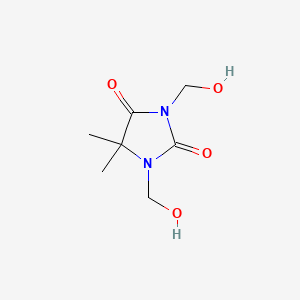
Identifiers
Functions
Hazards


GHS statements, classifications and precautions
H302
Warning
Harmful if swallowed
Acute Toxicity · Warning · Reported by 67.4%
H315
Warning
Causes skin irritation
Skin And Eye Irritation · Warning · Reported by 11.1%
H317
Warning
May cause an allergic skin reaction
Sensitization · Warning · Reported by 14.7%
H319
Warning
Causes serious eye irritation
Skin And Eye Irritation · Warning · Reported by 30%
H334
Warning
May cause allergy or asthma symptoms or breathing difficulties if inhaled
Sensitization · Warning · Reported by 13.8%
Acute toxicity
Category 4
67.4%
Skin Irrit. 2
—
11.1%
Skin Sens. 1
—
14.7%
Eye irritation
Category 2
30%
Resp. Sens. 1
—
13.8%
Not Classified
—
—
Eye irritation
Category 2A
—
Skin irritation
Category 2
—
Skin sensitisation
Category 1
—
This chemical does not meet GHS hazard criteria for 11.3% (83 of 737) of reports
Aggregated GHS information provided per 737 reports by companies from 21 notifications to the C&L Inventory. Each notification may be associated with multiple companies
Reported as not meeting GHS hazard criteria per 83 of 737 reports by companies
There are 19 notifications provided by 654 of 737 reports by companies with hazard statement code(s)
A formaldehyde releaser used in cosmetics; It can cause allergic contact dermatitis; Rinse off products in general will have a low risk of causing allergic contact dermatitis. [Kanerva, p. 398-404] Reports of positive results for skin sensitization patch testing; A formaldehyde releasing agent present in combination with MDM hydantoin (CAS# 116-25-6) in the commercial product 2,4 Imidazolidinedione; Likely hydrolyzes/degrades to 5,5-dimethylhydantoin (DMH); [Reference #1] See 5,5-Dimethylhydantoin and Formaldehyde
Safe in the present practices of use and concentration. Ingredient, concentration, and use information are available in documents discoverable at
IDENTIFICATION AND USE: DMDM hydantoin is a cosmetic preservative. It is described as being a broad-spectrum antimicrobial agent, effective against fungi, yeast, and gram-positive and gram-negative bacteria. HUMAN EXPOSURE AND TOXICITY: DMDM Hydantoin is a formaldehyde releaser, which means that the substance can release a formaldehyde. Formaldehyde is classified as carcinogenic and allergenic. A 1-year study was conducted to examine the frequency of sensitization to a series of 13 common preservatives. A group of 2,295 consecutive outpatients with suspected allergic contact dermatitis was tested in this study. The rates of positive reactions to the preservatives studied are as follows: formaldehyde 5.7%, and DMDM hydantoin 1.7%. DMDH hydantoin also causes irreversible eye damage. ANIMAL STUDIES: From the dermal study in rabbits it was concluded that the test material was practically nonirritating to the skins of rabbits receiving the 0.008 g/kg dose and mildly to moderately irritating to those receiving the 0.8 g/kg dose. In a developmental study a 55% DMDM Hydantoin solution was administered orally via gavage to rabbits. Only one test substance-related death was reported. There were no significant differences between control (positive and negative) and experimental groups concerning the incidence of necropsy findings. The results of external and skeletal fetal examinations were not significantly different between negative control and experimental groups. The test substance did not induce strand breaks or cross-links in rat testicular DNA after oral administration to rats. A 55% DMDM Hydantoin solution was tested in the Salmonella/mammalian-microsome preincubation mutagenicity assay using the following strains of S. typhimurium with and without metabolic activation: TA-98, TA-100, TA-1535, TA-1537, and TA-1538. A positive response (3.2 fold increase in average number of revertants) was noted for strain TA-98, without metabolic activation; with metabolic activation, a 1.9-fold increase was noted. Additionally, increases of 2.2-fold and 1.7-fold were noted for strain TA-100 with and without activation, respectively. A 55% DMDM Hydantoin solution was tested in the L5178Y TK+/- mouse lymphoma assay, with and without metabolic activation. Under the conditions of testing, the test substance caused a significant dose-dependent increase in the mutant frequency of cultures treated in both the presence and absence of metabolic activation
DMDM hydantoin is a formaldehyde releaser. It is likely that formaldehyde toxicity occurs when intracellular levels saturate formaldehyde dehydrogenase activity, allowing the unmetabolized intact molecule to exert its effects. Formaldehyde is known to form cross links between protein and DNA and undergo metabolic incorporation into macromolecules (DNA, RNA, and proteins). (L962, L1896)
Oral (L962) ; inhalation (L962) ; dermal (L962)
DMDM hydantoin releases formaldehyde, a known human carcinogen. (L962, L1896)
DMDM hydantoin may cause contact dermatitis. (A2882)
Skin Sensitizer - An agent that can induce an allergic reaction in the skin
Reported endpoints by species, route and conditions
| Endpoint | Species | Route | Reported value |
|---|---|---|---|
| Toxicity | Rat | Dermal | 0.008 g/kg |
| Toxicity | Rat | Oral | 5 g/kg |
| Toxicity | Rat | Oral | 0.5 g/kg |
| Toxicity | Rat | Inhalation | 126.8 mg/L |
| Toxicity | Rat | Dermal | 0.8 g/kg |
| LD50 | Rat | Oral | 2.0-3.65 g/kg (Oral |
| LD50 | Rat | Oral | Sprague-Dawley Rat (male) oral 3-5 g/kg |
| LD50 | Rat | Oral | Sprague-Dawley Rat (female) oral; 2.0-3.65 g/kg |
| LD50 | Rat | Oral | Rat oral 3.72 +/- 0.5 g/kg |
| Toxicity Data | LD50: 2.0-3.65 g/kg (Oral, Rat) (A718) | ||
| Non-Human Toxicity Values | LD50 Sprague-Dawley Rat (male) oral 3-5 g/kg | ||
| Non-Human Toxicity Values | LD50 Sprague-Dawley Rat (female) oral; 2.0-3.65 g/kg | ||
| Non-Human Toxicity Values | LD50 Rat oral 3.72 +/- 0.5 g/kg |
Human, animal and classification evidence
1, carcinogenic to humans (for formaldehyde). (L135)
Operational controls and handling requirements
Corrosive. Causes irreversible eye damage. Harmful if swallowed, inhaled or absorbed through the skin. Do not get in eyes or on skin or on clothing. Wear goggles or face shield and chemical resistant gloves when handling. /Dantogard XL-1000/
Keep container closed. Store in a dry place. Do not store at elevated temperatures. Keep from freezing. Do not reuse empty container. /Dantogard XL-1000/
Safe Storage of Pesticides. Always store pesticides in their original containers, complete with labels that list ingredients, directions for use, and first aid steps in case of accidental poisoning. Never store pesticides in cabinets with or near food, animal feed, or medical supplies. Do not store pesticides in places where flooding is possible or in places where they might spill or leak into wells, drains, ground water, or surface water
Immediate response and first-aid evidence
If a spill occurs, clean it up promptly. Don't wash it away. Instead, sprinkle the spill with sawdust, vermiculite, or kitty litter. Sweep it into a plastic garbage bag, and dispose of it as directed on the pesticide product label
After Applying a Pesticide, Indoors or Outdoors. To remove pesticide residues, use a bucket to rinse tools or equipment three times, including any containers or utensils that you used when mixing the pesticide. Then pour the rinsewater into the pesticide sprayer and reuse the solution by applying it according to the pesticide product label directions. After applying any pesticide wash your hands and any other parts of your body that may have come in contact with the pesticide. To prevent tracking pesticides inside, remove or rinse your boots or shoes before entering your home. Wash any clothes that have been exposed to a lot of pesticide separately from your regular wash
SRP: The most favorable course of action is to use an alternative chemical product with less inherent propensity for occupational harm/injury/toxicity or environmental contamination. Recycle any unused portion of the material for its approved use or return it to the manufacturer or supplier. Ultimate disposal of the chemical must consider: the material's impact on air quality; potential migration in soil or water; effects on animal and plant life; and conformance with environmental and public health regulations
Do not discharge effluent containing this product into lakes, streams, ponds, estuaries, oceans or other waters unless in accordance with the requirements of a National Pollutant Discharge Elimination System (NPDES) permit and the permitting authority has been notified in writing prior to discharge. Do not discharge effluent containing this product to sewer systems without previously notifying the local sewage treatment plant authority...Do not discharge effluent containing this product into lakes, streams, ponds, estuaries, oceans or other waters unless in accordance with the requirements of a National Pollutant Discharge Elimination System (NPDES) permit and the permitting authority has been notified in writing prior to discharge. Do not discharge effluent containing this product to sewer systems without previously notifying the local sewage treatment plant authority.../Dantogard XL-1000/
Safe Disposal of Pesticides. The best way to dispose of small amounts of excess pesticides is to use them - apply them - according to the directions on the label. If you cannot use them, ask your neighbors whether they have a similar pest control problem and can use them. If all of the remaining pesticide cannot be properly used, check with your local solid waste management authority, environmental agency, or health department to find out whether your community has a household hazardous waste collection program or a similar program for getting rid of unwanted, leftover pesticides. These authorities can also inform you of any local requirements for pesticide waste disposal
Safe Disposal of Pesticides. An empty pesticide container can be as hazardous as a full one because of residues left inside. Never reuse such a container. When empty, a pesticide container should be rinsed carefully three times and the rinsewater thoroughly drained back onto the sprayer or the container previously used to mix the pesticide. Use the rinsewater as a pesticide, following label directions. Replace the cap or closure securely. Dispose of the container according to label instructions. Do not puncture or burn a pressurized container like an aerosol - it could explode. Do cut or puncture other empty pesticide containers made of metal or plastic to prevent someone from reusing them. Wrap the empty container and put it in the trash after you have rinsed it
SRP: Wastewater from contaminant suppression, cleaning of protective clothing/equipment, or contaminated sites should be contained and evaluated for subject chemical or decomposition product concentrations. Concentrations shall be lower than applicable environmental discharge or disposal criteria. Alternatively, pretreatment and/or discharge to a permitted wastewater treatment facility is acceptable only after review by the governing authority and assurance that "pass through" violations will not occur. Due consideration shall be given to remediation worker exposure (inhalation, dermal and ingestion) as well as fate during treatment, transfer and disposal. If it is not practicable to manage the chemical in this fashion, it must be evaluated in accordance with EPA 40 CFR Part 261, specifically Subpart B, in order to determine the appropriate local, state and federal requirements for disposal
/HUMAN EXPOSURE STUDIES/ From April 2001 to December 2002, a group of 514 patients (178 men, 336 women, average age 42.8 years) suffering from chronic eczema were tested by means of epicutaneous tests for contact hypersensitivity to selected auxiliary substances of dermatological external and cosmetic preparations. In 194 patients, the principal diagnosis was atopic eczema. Of the preservatives, the most frequently sensitizing agents were thiomersal in 13.6%, phenylmercuric acetate in 7.8%, formaldehyde in 5.6%, bronopol in 5.1%, chlorohexidine in 3.3%, dibromodicyanobutane/phenoxyethanol in 2.9%, chloroacetamide in 2.1%, Kathon CG and parabenes in 1.9%, imidazolidinyl urea and diazolidinyl urea in 1.4%, glutaraldehyde in 1.2%, DMDM-hydantoin in 1.0%, dichlorophen in 0.8%, sorbic acid, phenoxyethanol and triclosan in 0.6%, benzalkonium chloride, Quaternium-15 and chlorocresol in 0.4% and chloroquinaldol in 0.2% of the group of patients. Of antioxidizing agents, it was dodecyl gallate in 2.3%, butylhydroxyanisol in 1.2%, propyl gallate in 0.6%, butylhydroxytoluen in 0.4% of the group of patients and of emulsifiers, alcohols lanae in 5.1%, triethanolamine in 1.6% and propylene glycol in 0.4% of the group of patients
/HUMAN EXPOSURE STUDIES/ ... 35 formaldehyde-allergic patients were patch tested with serial dilutions of formaldehyde (0.1%-0.3%-1.0% aq.) and DM hydantoin (the non-formaldehyde-containing parent compound of DMDM hydantoin). 21 were also patch tested with MDM hydantoin (1 molecule formaldehyde) in serial dilutions: 7 (33%) reacted to 1 or more concentrations. The other 14 were also tested with DMDM hydantoin (2 molecules formaldehyde) in serial dilutions: 8 (57%) reacted to 1 or more concentrations. Patients patch-test-positive to formaldehyde 0.1% and/or 0.3% tended to show more patch test reactivity to DMDM hydantoin than those who reacted only to 1%. Aqueous solutions of DMDM hydantoin in concentrations as used in cosmetic products therefore contain enough free formaldehyde to cause dermatitis in a patch test system in some formaldehyde-allergic patients: 12 such patients applied a cream containing 1% DMDM hydantoin to the flexor aspect of the lower arm twice daily for 1 week; 4 (33%) developed dermatitis. The use of a cream containing 0.25% DMDM hydantoin in these 4 patients still caused dermatitis in 1 and provoked itching in another
/HUMAN EXPOSURE STUDIES/ Results of patch testing with standard screening allergens (32 chemicals) in 1199 patients, 19 vehicle and preservative allergens in 707 patients, and 10 special studies allergens in 613 patients by 10 dermatologists of the North American Contact Dermatitis Group (NACDG) over a 4 month period are presented. The most common standard allergens were, in order of frequency, nickel, p-phenylenediamine, quaternium-15, neomycin, thimerosal, formaldehyde, cinnamic aldehyde, ethylenediamine, chromate, and thiuram mix. The most common vehicle and preservative allergens were ammoniated mercury, 2-bromo-2-nitropropane-1,3-diol (Bronopol), diazolidinyl urea, captan, chloxylenol, and DMDM hydantoin. There were few (7/661, 1.06%) paraben mix reactions in spite of the attention they have received as potential sensitizers
/EPIDEMIOLOGY STUDIES/ From February 1989 to January 1990, the Swiss Contact Dermatitis Research Group conducted a 1-year study to examine the frequency of sensitization to a series of 13 common preservatives. A group of 2,295 consecutive outpatients with suspected allergic contact dermatitis (age range 7-90 years, with a mean age of 42; 911 males, 1384 females) was tested. The %s of positive reactions to the preservatives studied are as follows, in descending order: formaldehyde 5.7%, benzalkonium chloride 5.5%, Kathon CG 5.5%, thimerosal 4.2%, chlorhexidine digluconate 2.0%, DMDM hydantoin 1.7%, paraben mix 1.7%, chloroacetamide 1.5%, Bronopol 1.2%, imidazolidinyl urea 1.0%, quaternium 15 1.0%, triclosan 0.8%, 2,4-dichlorobenzyl alcohol 0.4%
/LABORATORY ANIMALS: Acute Exposure/ Four groups of 10 Sprague-Dawley rats ( 5 males, 5 females per group) were exposed to a liquid droplet aerosol comprising a 55% DMDM Hydantoin solution for 4 hr. Each of the 4 groups was exposed to concentrations of 0.0, 13.7, 126.8 and 377.8 mg/L, respectively, in a 309-L inhalation chamber. The animals were observed for signs of toxicity during the 4-hour exposure period and for 14 days thereafter; all animals survived. Dry pigmented material was noted around the noses of 3 middose (126.8 mg/L) and 5 high dose (377.8 mg/L) animals on the second day of exposure; no nasal discharge was apparent on the third day. ... At microscopic examinations of tissues from the nasal passages, trachea, bronchi, lungs, liver, and kidneys, no remarkable dose-related effects were found
/LABORATORY ANIMALS: Acute Exposure/ Ten young adult Sprague-Dawley rats (male) were exposed for 1 hr to 55% DMDM Hydantoin at a concentration of 204 mg/L...The animals were killed after a 14-day holding period. Observations during exposure included immediate signs of discomforts, such as gasping for breath and eyes closed throughout the exposure period. There were no remarkable gross or microscopic tissue alterations in the control and test groups
/LABORATORY ANIMALS: Subchronic or Prechronic Exposure/ A 55% DMDM Hydantoin solution was administered via gastric intubation to 240 Sprague-Dawley rats (6 weeks old) for 13 consecutive weeks. Four groups of the rats (30 males, 30 females/group) received 0, 0.1, 0.2, and 0.4 g/kg/day, respectively. ... At gross and microscopic examination of the liver, heart, skeletal muscle, brain, and kidneys, no treatment-related lesions were found
/LABORATORY ANIMALS: Subchronic or Prechronic Exposure/ A dermal toxicity study of 55% DMDM Hydantoin was conducted with 12 young adult New Zealand albino rabbits (10-13 weeks old), ranging in weight from 2.46 to 3.06 kg. One group of rabbits (3 males, 3 females) received a dose of 0.008 g/kg, and the other group (3 males, 3 females) received 0.8 g/kg/. The 0.008 and 0.8 g/kg doses were applied in the form of 0.4 and 40% (w/v) aqueous solutions, respectively, to the clipped skin (2 animals per group) and clipped and abraded skin (4 animals per group) of the back. Doses were administered 5 days/wk for 4 wks (20 applications). A control group of rabbits (3 males, 3 females) received 20 dermal applications of tap water and were treated in a manner identical to that of test animals. None of the rabbits had any pharmacotoxic signs at any time during the study. All animals were killed, and tissues were subjected to gross and microscopic examinations at the end of the investigational period. Treatment-related lesions identified were limited to the skin of the test sites in the 0.8 g/kg dose group. It was concluded that the test material was practically nonirritating to the skins of rabbits receiving the 0.008 g/kg dose and mildly to moderately irritating to those receiving the 0.8 g/kg dose
/SRP:/ Immediate first aid: Ensure that adequate decontamination has been carried out. If patient is not breathing, start artificial respiration, preferably with a demand valve resuscitator, bag-valve-mask device, or pocket mask, as trained. Perform CPR if necessary. Immediately flush contaminated eyes with gently flowing water. Do not induce vomiting. If vomiting occurs, lean patient forward or place on the left side (head-down position, if possible) to maintain an open airway and prevent aspiration. Keep patient quiet and maintain normal body temperature. Obtain medical attention. /Poisons A and B/
/SRP:/ Basic treatment: Establish a patent airway (oropharyngeal or nasopharyngeal airway, if needed). Suction if necessary. Watch for signs of respiratory insufficiency and assist ventilations if needed. Administer oxygen by nonrebreather mask at 10 to 15 L/min. Monitor for pulmonary edema and treat if necessary ... . Monitor for shock and treat if necessary ... . Anticipate seizures and treat if necessary ... . For eye contamination, flush eyes immediately with water. Irrigate each eye continuously with 0.9% saline (NS) during transport ... . Do not use emetics. For ingestion, rinse mouth and administer 5 mL/kg up to 200 mL of water for dilution if the patient can swallow, has a strong gag reflex, and does not drool ... . Cover skin burns with dry sterile dressings after decontamination ... . /Poisons A and B/
/SRP:/ Advanced treatment: Consider orotracheal or nasotracheal intubation for airway control in the patient who is unconscious, has severe pulmonary edema, or is in severe respiratory distress. Positive-pressure ventilation techniques with a bag valve mask device may be beneficial. Consider drug therapy for pulmonary edema ... . Consider administering a beta agonist such as albuterol for severe bronchospasm ... . Monitor cardiac rhythm and treat arrhythmias as necessary ... . Start IV administration of D5W TKO /SRP: "To keep open", minimal flow rate/. Use 0.9% saline (NS) or lactated Ringer's (LR) if signs of hypovolemia are present. For hypotension with signs of hypovolemia, administer fluid cautiously. Watch for signs of fluid overload ... . Treat seizures with diazepam or lorazepam ... . Use proparacaine hydrochloride to assist eye irrigation ... . /Poisons A and B/