Regulations of Green Tea Extract
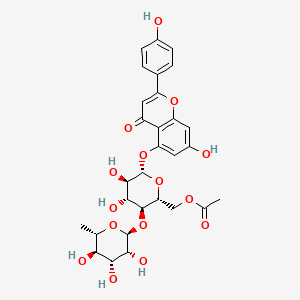
Identifiers
Functions
Where is green tea extract used, and what role does it play in each application?
Green tea extract functions across food, beverage, cosmetic, and packaging applications. In food and beverages, it acts as a natural preservative, antioxidant, and colorant, often combined with other plant extracts to inhibit microbial growth and oxidation. In cosmetics, it serves as an antioxidant, skin-conditioning, moisturizing, anti-wrinkle, whitening, and antimicrobial agent, and is used in shampoos for dyeing and scalp benefits. It also appears in food preservation films and edible oils as a bioactive additive. Its role is primarily driven by polyphenol content, particularly catechins like EGCG, which provide antioxidant and antimicrobial activity.
Which product or formulation problem does green tea extract address?
Green tea extract addresses formulation challenges related to oxidation, microbial spoilage, and sensory or functional deficiencies. In food products, it prevents lipid oxidation and extends shelf life, as seen in preservation films and beverages. In cosmetics, it provides antioxidant protection, skin barrier strengthening, and anti-inflammatory benefits, solving issues like moisture loss and irritation. It also enables natural color development in foods and hair dyeing in shampoos, replacing synthetic additives. Its polyphenolic content, especially catechins, underpins these multifunctional benefits, making it a versatile solution for clean-label and natural product formulations.
What supports the main commercial or clinical uses of green tea extract?
Evidence for green tea extract's main uses comes from its established biological activities and regulatory safety assessments. The CIR Expert Panel concluded that Camellia sinensis leaf-derived ingredients are safe in cosmetics when formulated to be non-sensitizing. In cosmetics, its functions as an antioxidant, antimicrobial, astringent, and skin-conditioning agent are recognized. Patent filings demonstrate claimed uses in food preservation, antioxidant beverages, skin health, and sleep improvement, often leveraging catechins like EGCG. However, these patents represent proposed applications, not proof of commercial adoption or clinical efficacy.
Which formulation trade-offs should researchers consider for green tea extract?
Formulation trade-offs for green tea extract center on balancing efficacy with stability and sensory impact. Its polyphenols, particularly catechins, are prone to oxidation, which can reduce antioxidant activity and cause color changes. In food applications, it may impart bitterness or astringency, requiring flavor masking. In cosmetics, it must be formulated to be non-sensitizing, as per CIR safety qualifications. Concentration and ratio with co-ingredients are critical; for example, in a moisturizer, a weight ratio of 3-5 parts green tea extract is claimed for optimal radical scavenging. Compatibility with other actives and processing conditions (e.g., temperature, pH) also affects performance.
What are the physicochemical properties of Green tea extract?
| Property | Value | Category |
|---|---|---|
| XLogP3 | -0.8 | Computed Molecular Properties |
| Exact Mass | 620.17412031 | Computed Molecular Properties |
| Monoisotopic Mass | 620.17412031 | Computed Molecular Properties |
| Topological Polar Surface Area | 231.0 | Computed Molecular Properties |
| Complexity | 1050.0 | Computed Molecular Properties |
| Hydrogen Bond Donor Count | 7 | Computed Molecular Properties |
| Hydrogen Bond Acceptor Count | 15 | Computed Molecular Properties |
| Rotatable Bond Count | 8 | Computed Molecular Properties |
| Heavy Atom Count | 44 | Computed Molecular Properties |
| Formal Charge | 0 | Computed Molecular Properties |
Which formulation benchmark best contextualizes green tea extract, and what differs?
A useful formulation benchmark is the use of green tea extract in combination with other polyphenol-rich extracts, such as rosemary, to achieve synergistic antioxidant and colorant effects. For example, a patent claims a natural food-grade red color using rosemary and green tea extracts, with a composition concentration of 0.2% to 2% in water. This differs from standalone use by highlighting the need for co-ingredient synergy to enhance stability and functionality. In cosmetics, fermented green tea extract is benchmarked for improved moisturizing and antioxidant activity, suggesting that fermentation can modify its efficacy profile compared to unfermented extracts.