Human Milk Oligosaccharides
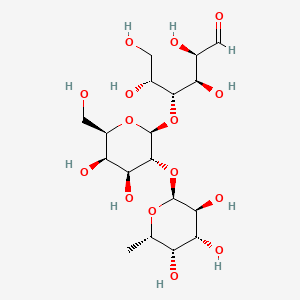
Identifiers
Where is Human Milk Oligosaccharides used, and what role does it play in each application?
Human Milk Oligosaccharides, specifically 2'-Fucosyllactose, is used primarily in infant and toddler nutrition, including non-exempt and hypoallergenic formulas, as well as in a wide range of foods and beverages. In infant formula, it serves as an ingredient to mimic the composition of human milk, which naturally contains this compound. In broader food applications, it functions as a food additive, appearing in categories such as baked goods, beverages, dairy products, cereals, and processed fruits. Its role is to provide a human milk-like component in products for infants and young children, and to serve as a supplemental ingredient in general food products.
Which product or formulation problem does Human Milk Oligosaccharides address?
Human Milk Oligosaccharides address the formulation challenge of creating infant and toddler nutrition products that more closely replicate the composition of human milk. For infant formulas, particularly those for term infants and hypoallergenic varieties, the ingredient helps bridge the gap between formula and breast milk. In the broader food supply, it solves the problem of adding a human milk-derived component to products where it is not naturally present, such as baked goods, beverages, and dairy analogs. The regulatory filings indicate that it is intended to solve this problem across a wide range of product categories, from infant foods to sports drinks and meal replacements.
What supports the main commercial or clinical uses of Human Milk Oligosaccharides?
The main commercial uses are supported by regulatory submissions to the FDA, which have received 'no questions' responses for use in infant formula and other foods. These submissions, from multiple manufacturers, specify intended use levels and product categories, indicating a recognized path for market entry. Additionally, a clinical trial is investigating 2'-fucosyllactose as a dietary supplement in IBD patients, suggesting potential therapeutic interest. However, the evidence is primarily regulatory and compositional, not clinical efficacy for the general population. The presence of multiple FDA notices with 'no questions' indicates a regulatory consensus on safety for the proposed uses.
Which formulation trade-offs should researchers consider for Human Milk Oligosaccharides?
Formulation trade-offs for Human Milk Oligosaccharides center on dosage and product category. In infant formula, the maximum level is typically 2.4 g/L, but some notices propose lower levels (2.0 g/L) for specific populations like preterm infants or hypoallergenic formulas. For other foods, levels vary widely, from 0.084 g/serving in some categories to 20 g/L in enteral nutrition. Researchers must balance the intended functional benefit against the regulatory maximum, which differs by product type. Additionally, the ingredient's use in hypoallergenic formulas suggests compatibility with extensively hydrolyzed proteins, but this may require formulation adjustments to maintain stability and sensory qualities.
What are the physicochemical properties of Human milk oligosaccharides?
| Property | Value | Category |
|---|---|---|
| Physical Description | Solid | Appearance |
| XLogP3 | -6.1 | Computed Molecular Properties |
| Exact Mass | 488.17412031 | Computed Molecular Properties |
| Monoisotopic Mass | 488.17412031 | Computed Molecular Properties |
| Topological Polar Surface Area | 256.0 | Computed Molecular Properties |
| Complexity | 609.0 | Computed Molecular Properties |
| Hydrogen Bond Donor Count | 10 | Computed Molecular Properties |
| Hydrogen Bond Acceptor Count | 15 | Computed Molecular Properties |
| Rotatable Bond Count | 10 | Computed Molecular Properties |
| Heavy Atom Count | 33 | Computed Molecular Properties |
Which formulation benchmark best contextualizes Human Milk Oligosaccharides, and what differs?
The most relevant formulation benchmark is infant formula, where 2'-fucosyllactose is consistently used at a maximum of 2.4 g/L across multiple FDA notices. This level appears to be a de facto standard for term infant formulas, whether milk-based, soy-based, or hypoallergenic. What differs is the range of other applications, such as toddler foods (up to 57 g/kg in dry snacks) and medical nutrition (20 g/L in enteral formulas), which use much higher concentrations. This suggests that infant formula is the reference point for safety and efficacy, while other categories are extensions with different dosage considerations.