Mycelium Environmental Fate & Ecotoxicity
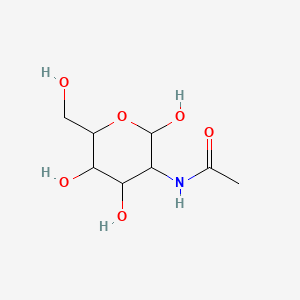
Identifiers
Where is Mycelium used, and what role does it play in each application?
Mycelium functions primarily as a structural binder and matrix across diverse applications. In food, it serves as a base for meat substitutes and health supplement extracts. In materials, it acts as an active biological binder in packaging, automotive interior trim, textiles, leather alternatives, building materials, and insulation. It also enables advanced applications like triboelectric nanofiber films and crystalline thin films. Its role is to provide structural integrity, binding, and functional properties such as water repellency or thermal insulation, often replacing synthetic polymers or binders.
Which product or formulation problem does Mycelium address?
Mycelium addresses formulation problems related to sustainability, structural integrity, and functionality. It provides a renewable, biodegradable alternative to synthetic binders and polymers in packaging, textiles, and building materials. It solves the problem of creating durable, flexible materials like leather substitutes and elastomers through crosslinking and surface modification. In food, it helps mimic meat texture and structure. It also imparts water repellency to fiber foams and acts as a thermal insulator, solving performance challenges in packaging and construction.
What supports the main commercial or clinical uses of Mycelium?
The main uses of mycelium are supported by patent applications describing methods for its incorporation into various products. These include meat substitutes, leather alternatives, packaging materials, automotive interior trim, and building biomaterials. The patents detail specific processes such as fermentation, crosslinking, and molding, indicating a claimed approach for achieving structural and functional properties. However, patent applications are evidence of claimed approaches, not proof of commercial or clinical adoption. No clinical or commercial use data is available in the supplied evidence.
Which formulation trade-offs should researchers consider for Mycelium?
Formulation trade-offs for mycelium involve balancing its natural binding properties with the need for chemical modification to achieve desired durability and functionality. For example, crosslinking with isocyanates or metal ions can enhance strength but introduces synthetic components. Alkali pretreatment and deacetylation are used to expose reactive groups, but these steps add complexity. In food applications, mycelium must be combined with texture improvers and flavor regulators to mimic meat, requiring careful formulation. The trade-off is between maintaining bio-based credentials and achieving performance comparable to conventional materials.
What are the physicochemical properties of Mycelium?
| Property | Value | Category |
|---|---|---|
| Solubility | >33.2 [ug/mL] (The mean of the results at pH 7.4) | Formulation Relevant Properties |
| XLogP3 | -1.7 | Computed Molecular Properties |
| Exact Mass | 221.0899372 | Computed Molecular Properties |
| Monoisotopic Mass | 221.0899372 | Computed Molecular Properties |
| Topological Polar Surface Area | 119.0 | Computed Molecular Properties |
| Complexity | 235.0 | Computed Molecular Properties |
| Hydrogen Bond Donor Count | 5 | Computed Molecular Properties |
| Hydrogen Bond Acceptor Count | 6 | Computed Molecular Properties |
| Rotatable Bond Count | 2 | Computed Molecular Properties |
| Heavy Atom Count | 15 | Computed Molecular Properties |
Which formulation benchmark best contextualizes Mycelium, and what differs?
A relevant formulation benchmark for mycelium is synthetic polymer composites, such as polystyrene insulation boards or polyurethane-based leather alternatives. Mycelium offers a renewable, biodegradable alternative, but differs in that it requires biological growth and post-processing steps like crosslinking and heat pressing to achieve similar structural properties. Unlike synthetic polymers, mycelium's performance is highly dependent on cultivation conditions and strain selection, which introduces variability. This benchmark highlights the need for robust process control to ensure consistent material properties.