Mycelium Suppliers & Manufacturers
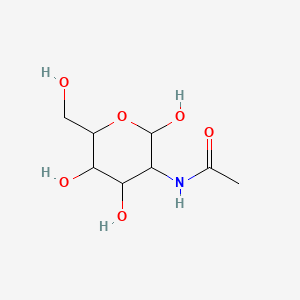
Identifiers
What does available trade activity indicate for Mycelium?
Mycelium is classified under HS Code 0602.90. This falls under Chapter 06: Trees and other plants, live; bulbs, roots and the like; cut flowers and ornamental foliage, specifically Heading 0602 (Plants, live; n.e.c. in heading no. 0601, (including their roots) cuttings and slips; mushroom spawn), under subheading: Plants, live; n.e.c. in heading no. 0602.
* The data below is specific to the HS code, not the ingredient.
Suppliers
2,083
Across 73 countries
Shipments
30,106
from 2015 to 2026
Total weight
578.7M kg
55,596 TEU · standard 20-foot container units
Last shipment
8 months ago
Last updated at Feb 25, 2026
Growth
↑ 51%
Trade under 0602.90 has increased by 51% over the past 6 months
What does trade activity suggest about the Mycelium supply chain?
Trade activity under HS 0602.90 is substantial, with over 30,000 shipments and 2,000 suppliers, but it is not ingredient-specific to mycelium. The data reflects a broad horticultural supply chain, including live plants, cuttings, and mushroom spawn. For mycelium, this suggests a fragmented and indirect supply signal: while some suppliers with 'Mushroom' or 'Biotechnology' in their names appear, the volume is dominated by general plant trade. Business implication: treat this as a proxy for live fungal material availability, not as a direct mycelium ingredient market. Further verification of shipment contents is required before relying on this data for sourcing decisions.
What does the HS or HTS classification include, and where are its limits for Mycelium?
HS 0602.90 covers 'Other live plants' under Chapter 6, which includes live trees, plants, bulbs, roots, cuttings, slips, and mushroom spawn. This classification is broad and does not distinguish mycelium from other live plant or fungal materials. The limits are significant: shipments under this code may include ornamental plants, cuttings, or mushroom fruiting bodies, not just mycelium. For research and formulation, this means the classification cannot confirm the presence of mycelium as an ingredient. Regulatory or sourcing decisions based on this code alone would be unreliable. A more specific HS code or direct supplier documentation is needed to isolate mycelium-specific trade.
Which suppliers are associated with Mycelium trade?
| Supplier | Shipments | Top customer | Growth | Last shipment | |
|---|---|---|---|---|---|
No suppliers found. | |||||
How concentrated or diversified does the supplier landscape appear for Mycelium?
The supplier landscape appears highly fragmented, with over 2,000 suppliers under HS 0602.90, but the top suppliers are concentrated in China, with several showing high shipment counts. However, many listed suppliers are trading companies, logistics providers, or orchid growers, indicating that the landscape is not specialized for mycelium. A few suppliers with 'Mushroom' or 'Biotechnology' in their names, such as Shandong Qihe Bio Technology and Zibo Juli Mushroom Industrial, show significant shipment volumes, but their product mix is unverified. This suggests a mix of a few potentially relevant suppliers amid a broad, non-specialized base. For sourcing, this means identifying true mycelium suppliers requires deeper vetting beyond HS code association.
Which supply risks or dependencies around Mycelium require further diligence?
Key supply risks include the lack of ingredient-specific shipment data, potential misclassification of mycelium under a broad live-plant code, and the presence of many non-specialized intermediaries. Specific dependencies: China is the dominant source, creating geographic concentration risk. Also, some suppliers show zero recent growth or old shipment dates, indicating possible inactivity. For example, Zibo Futai Edible Mush last shipped in 2020, and Korea Mushroom Council in 2019. Further diligence should verify product type, confirm supplier production capabilities, and assess continuity of supply. Regulatory and safety risks are not evident from trade data alone, but ingredient identity must be confirmed before any formulation use.
Which sourcing geographies and trade lanes appear most relevant to Mycelium?
China dominates the trade activity under HS 0602.90, accounting for the majority of suppliers and shipments, followed by Taiwan, Costa Rica, Guatemala, and South Korea. This suggests that East Asia and Central America are key sourcing regions for live plant and fungal material. For mycelium, this implies that China is a primary potential source, but the data does not confirm mycelium-specific lanes. The presence of European suppliers like the Netherlands and Belgium, though smaller in volume, may indicate specialized spawn or culture trade. Business implication: prioritize China for further supplier diligence, but verify that shipments are mycelium rather than other plant products.
Which countries drive Mycelium trade activity?
By shipment count
China
16,940 shipments
860 suppliers
399M kg total weight
Taiwan
3,619 shipments
148 suppliers
30.7M kg total weight
Costa Rica
2,846 shipments
69 suppliers
34.5M kg total weight
Guatemala
1,147 shipments
54 suppliers
13.9M kg total weight
South Korea
919 shipments
60 suppliers
9.2M kg total weight
Belgium
571 shipments
40 suppliers
14M kg total weight
Japan
513 shipments
102 suppliers
6.7M kg total weight
Hong Kong SAR China
482 shipments
80 suppliers
4.6M kg total weight
Thailand
426 shipments
88 suppliers
6.6M kg total weight
Philippines
256 shipments
4 suppliers
1.8M kg total weight