Nisin
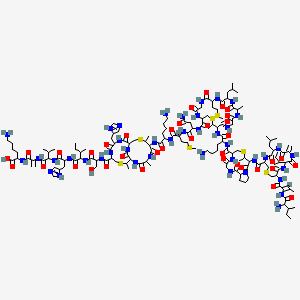
Identifiers
Functions
Where is nisin used, and what role does it play in each application?
Nisin functions primarily as an antimicrobial preservative across food, beverage, and cosmetic applications. In food, it preserves canned fruits and vegetables, cheese, and cooked meat and poultry products, including use on frankfurter casings. Patent filings extend this to milk and dairy quality improvement via plasmin inhibition, yak meat preservation through surface application, and controlled-release systems using nanoliposomes or aerogels. In cosmetics, nisin appears in toothpaste formulations as an antibacterial agent for breath freshening. Its role is consistently antimicrobial, whether as a direct preservative, an encapsulated active for sustained release, or a component of multi-enzyme systems.
Which product or formulation problem does nisin address?
Nisin addresses microbial spoilage and contamination in perishable products, serving as a preservative in canned fruits and vegetables, cheese, and cooked meat and poultry. It also solves enzyme-driven quality degradation in dairy by inhibiting plasmin activity, which can improve heat-sterilized milk and dairy product quality. In meat preservation, it forms a biological barrier against surface contamination when sprayed. For oral care, it contributes to antimicrobial action that supports breath freshening. The common problem is controlling unwanted biological activity—whether microbial growth or enzymatic breakdown—to extend shelf life and maintain product integrity.
What supports the main commercial or clinical uses of nisin?
Regulatory and compositional data support nisin's preservative use. It is listed as a food additive with the function 'PRESERVATIVE' and has an FDA 'no questions' response for use on casings for frankfurters and cooked meat and poultry as an antimicrobial agent. JECFA reaffirmed an acceptable daily intake of 0–2 mg/kg body weight for nisin A, concluding low risk for antimicrobial resistance induction and low gastrointestinal microbiome disruption. In cosmetics, nisin is an active ingredient with the function 'ANTIMICROBIAL' in the EU inventory. Patent filings further demonstrate claimed applications in dairy quality, meat preservation, and toothpaste, though these represent proposed approaches rather than established commercial use.
Which formulation trade-offs should researchers consider for nisin?
Researchers should weigh nisin's antimicrobial activity against its delivery and stability requirements. Patent filings show encapsulation strategies—nanoliposomes with curcumin as stabilizer, chitosan-nanocellulose aerogels for controlled release, and microcapsules with pectin and calcium chloride—indicating that free nisin may require protection or sustained-release design for efficacy. Concentration ranges in applications vary (e.g., 0.02–0.08% in meat preservation, 0.02–0.05% in toothpaste), suggesting dose optimization is formulation-specific. The JECFA ADI of 0–2 mg/kg body weight for nisin A sets an intake boundary for food use. No restriction or maximum concentration is listed for cosmetic use, but regulatory status varies by region.
What are the physicochemical properties of Nisin?
| Property | Value | Category |
|---|---|---|
| XLogP3 | -6.1 | Computed Molecular Properties |
| Exact Mass | 3352.5485595 | Computed Molecular Properties |
| Monoisotopic Mass | 3351.5452046 | Computed Molecular Properties |
| Topological Polar Surface Area | 1390.0 | Computed Molecular Properties |
| Complexity | 7840.0 | Computed Molecular Properties |
| Hydrogen Bond Donor Count | 41 | Computed Molecular Properties |
| Hydrogen Bond Acceptor Count | 50 | Computed Molecular Properties |
| Rotatable Bond Count | 67 | Computed Molecular Properties |
| Heavy Atom Count | 229 | Computed Molecular Properties |
| Formal Charge | 0 | Computed Molecular Properties |
Which formulation benchmark best contextualizes nisin, and what differs?
The most relevant benchmark is nisin's established role as a food preservative in canned fruits and vegetables, cheese, and cooked meat and poultry, where regulatory acceptance and ADI are well-defined. What differs in newer applications is the delivery format: rather than direct addition, patent filings describe encapsulation in nanoliposomes, composite aerogels, or microcapsules for controlled release, and combination with other antimicrobials like lysozyme and lysostaphin in toothpaste. These approaches aim to extend nisin's activity duration or broaden its spectrum, but they introduce formulation complexity—stabilizer selection, loading efficiency, and release kinetics—that is absent in conventional direct-preservative use.