Nisin Patent Landscape
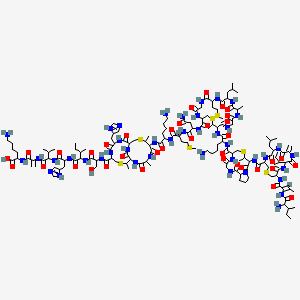
Identifiers
Functions
Which organizations and claims shape current development around nisin?
Academic and research institutions dominate current patent activity. Tibet Academy of Agricultural and Animal Husbandry Sciences claims plasmin inhibition in dairy (CN121569847A), while Tibet Yuyuan Food Co. claims a pulsed electric field preservation method for yak meat (CN121549397A). Guangdong Ocean University claims nanoliposome encapsulation (CN117481286B), and Henan Institute of Animal Husbandry Economics claims aerogel-based controlled release (CN117304558B). Beijing Academy of Agriculture and Forestry Sciences claims engineered Lactococcus lactis for bacteriocin production (CN120399983A), and Guangdong Kelong Biological Science & Tech Co. claims a production method (CN119371497A).
How is Nisin innovation changing in Food & Beverage?
Monthly patent filings by domain
Which technical problems do recent patents address with nisin?
Recent patents address two primary technical problems: enzymatic spoilage in dairy and microbial spoilage in meat. CN121569847A targets plasmin activity in milk and dairy products, aiming to improve quality during heat sterilization at 60–150°C. CN121549397A tackles preservation of yak meat by combining high-voltage pulsed electric fields with a sprayed nisin suspension to form a biological barrier. These patents claim nisin as a solution to specific spoilage mechanisms, not just general preservation.
How do recent patents change the role or application of nisin?
Nisin's role is shifting from a standalone preservative to an active component in advanced delivery and production systems. Patents show nisin encapsulated in nanoliposomes (CN117481286B) and composite aerogels for controlled release (CN117304558B), indicating a focus on sustained activity. Additionally, CN120399983A positions nisin as a bacteriocin produced by engineered Lactococcus lactis, expanding its role from an additive to a biologically produced antimicrobial. This suggests a move toward integrated, controlled-delivery applications.
How is Nisin used in Food & Beverage patents?
Which Food & Beverage product categories feature Nisin in recent patents?
Which product categories and formulation strategies emerge in recent work on nisin?
Emerging formulation strategies include nanoliposome encapsulation using curcumin as a stabilizer (CN117481286B) and composite aerogels with chitosan nanoparticles and nanocellulose for dual loading and sustained release (CN117304558B). Product categories span dairy, preserved meat, and broader antibacterial products for feed, food, cosmetics, and pharmaceuticals (CN120399983A). A production patent (CN119371497A) combines nisin microcapsules with essential oil capsules, indicating a trend toward multi-component preservative systems.
Where is the evidence-backed white space for further development of nisin?
Evidence-backed white space exists in combining nisin with other natural antimicrobials or functional ingredients beyond curcumin and essential oils. Current patents focus on encapsulation and controlled release, but no claims address synergistic blends with other peptides or plant extracts. Additionally, applications in non-food sectors like cosmetics and pharmaceuticals are mentioned only in one patent (CN120399983A), suggesting room for exploration. However, the evidence is limited to patent claims, so actual market gaps remain unverified.