Polydeoxyribonucleotide Environmental Fate & Ecotoxicity
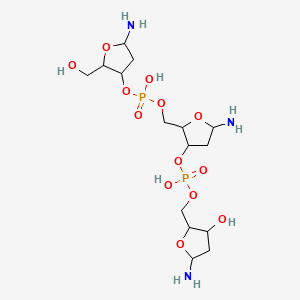
Identifiers
Functions
Where is Polydeoxyribonucleotide used, and what role does it play in each application?
Polydeoxyribonucleotide (PDRN) is used across cosmetics and pharmaceuticals as a skin-conditioning, anti-aging, anti-inflammatory, and skin-repair active. In topical skin preparations, it is formulated for wrinkle improvement, elasticity, whitening, and soothing, often in serums, creams, toners, and masks. It also appears in specialized applications such as dermal fillers, microneedle patches, hair-growth treatments, and acne or atopic dermatitis compositions. Its role is typically as a primary active ingredient, frequently combined with delivery systems like exosomes, liposomes, or nanoparticles to enhance penetration and stability. Regulatory inventories list it as deoxyribonucleic acids, with no individual approvals noted in the provided evidence.
Which product or formulation problem does Polydeoxyribonucleotide address?
PDRN addresses formulation problems related to skin barrier repair, anti-aging, and inflammation. It is claimed to promote collagen production, inhibit inflammatory cytokines, and support wound healing, which helps in products targeting wrinkles, elasticity loss, and skin regeneration. In specific formulations, it mitigates irritation induced by actives like retinol, and it is used to improve skin moisturization and barrier function. The ingredient also solves delivery challenges by being encapsulated in various systems to improve transdermal permeability and thermal stability. However, the evidence is primarily from patent applications, not clinical or commercial validation.
What supports the main commercial or clinical uses of Polydeoxyribonucleotide?
Evidence for PDRN's main uses comes from patent applications claiming specific mechanisms, such as adenosine A2A receptor activation for collagen production, inhibition of IL-6 and TNF-α, and promotion of fibroblast proliferation. These patents cover applications in anti-aging, skin regeneration, anti-inflammatory, and hair-growth compositions. The ingredient is also listed in cosmetic inventories as a skin-conditioning agent. However, no clinical trial data, regulatory approvals, or commercial product evidence were provided. The support is therefore mechanistic and patent-based, not from established clinical or market outcomes.
Which formulation trade-offs should researchers consider for Polydeoxyribonucleotide?
Formulation trade-offs for PDRN center on stability and delivery. Patents describe encapsulating PDRN in exosomes, liposomes, nanoparticles, or microspheres to improve transdermal permeability and thermal stability, indicating that naked PDRN may be unstable or poorly penetrating. Molecular weight is a key variable: low-molecular-weight fragments (e.g., 1-50 kDa) are used for acne and atopic dermatitis, while higher molecular weights (50-300 kDa) appear in skin boosters. Source selection (animal vs. plant-derived) is another trade-off, with plant-derived options developed as non-animal alternatives. These choices affect efficacy, safety, and regulatory positioning, but comparative performance data are not provided.
What are the physicochemical properties of Polydeoxyribonucleotide?
| Property | Value | Category |
|---|---|---|
| Physical Description | Solid; [Sigma-Aldrich MSDS] | Appearance |
| XLogP3 | -10.2 | Computed Molecular Properties |
| Exact Mass | 523.13321205 | Computed Molecular Properties |
| Monoisotopic Mass | 523.13321205 | Computed Molecular Properties |
| Topological Polar Surface Area | 258.0 | Computed Molecular Properties |
| Complexity | 750.0 | Computed Molecular Properties |
| Hydrogen Bond Donor Count | 7 | Computed Molecular Properties |
| Hydrogen Bond Acceptor Count | 16 | Computed Molecular Properties |
| Rotatable Bond Count | 11 | Computed Molecular Properties |
| Heavy Atom Count | 33 | Computed Molecular Properties |
Which formulation benchmark best contextualizes Polydeoxyribonucleotide, and what differs?
A relevant formulation benchmark is the use of PDRN in skin booster or dermal filler compositions, where it is combined with hyaluronic acid and hydroxyapatite. In this context, PDRN is included at up to 1% by weight, serving as a DNA fragment to support skin regeneration alongside structural fillers. This differs from topical cosmetic uses, where PDRN is often encapsulated in delivery systems and used at varying concentrations (e.g., 0.001-30%) for anti-aging or repair. The benchmark highlights the ingredient's versatility but also shows that its role and concentration depend heavily on the application format and delivery strategy.