Polydeoxyribonucleotide Suppliers & Manufacturers
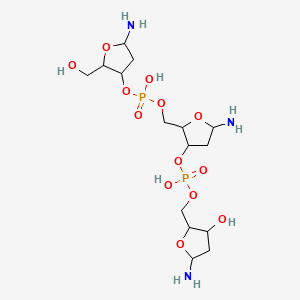
Identifiers
Functions
What does available trade activity indicate for Polydeoxyribonucleotide?
Polydeoxyribonucleotide is classified under HS Code 2934.99. This falls under Chapter 29: Organic chemicals, specifically Heading 2934 (Nucleic acids and their salts, whether or not chemically defined; other heterocyclic compounds), under subheading: Nucleic acids and their salts, other heterocyclic compounds, n.e.c. in heading number 2934.
* The data below is specific to the HS code, not the ingredient.
Suppliers
7,640
Across 123 countries
Shipments
25,069
from 2015 to 2026
Total weight
4.7B kg
53,678 TEU · standard 20-foot container units
Last shipment
8 months ago
Last updated at Feb 25, 2026
Growth
↑ 50%
Trade under 2934.99 has increased by 50% over the past 6 months
What does trade activity suggest about the Polydeoxyribonucleotide supply chain?
Trade activity under HS 2934.99 indicates a large, active supply chain with 7,640 suppliers and 25,069 shipments, but this is not ingredient-specific. The data reflects a broad category of nucleic acids and heterocyclic compounds, so the volume cannot be attributed to polydeoxyribonucleotide alone. For formulation planning, this suggests a mature market with many potential suppliers, but further verification is needed to confirm which entities actually handle PDRN. The presence of major chemical firms like BASF and Ajinomoto implies that large-scale manufacturers are active in this space, yet their involvement may span unrelated products.
What does the HS or HTS classification include, and where are its limits for Polydeoxyribonucleotide?
HS code 2934.99 covers nucleic acids and their salts, other heterocyclic compounds not elsewhere specified. This is a broad category that includes pharmaceutical intermediates, agrochemicals, and dyes, so it is not limited to polydeoxyribonucleotide. The classification scope means that trade data under this code captures a wide range of chemical activity, and any supplier or shipment evidence cannot be assumed to involve PDRN. For research, this limits the ability to draw direct supply-chain conclusions; ingredient-specific verification is required before relying on this data for sourcing decisions.
Which suppliers are associated with Polydeoxyribonucleotide trade?
| Supplier | Shipments | Top customer | Growth | Last shipment | |
|---|---|---|---|---|---|
No suppliers found. | |||||
How concentrated or diversified does the supplier landscape appear for Polydeoxyribonucleotide?
The supplier landscape appears highly diversified, with 7,640 suppliers across 123 countries, but this reflects the broad HS code, not PDRN-specific concentration. Selected suppliers include major chemical manufacturers like Taiwan Hopax, Synchem, BASF, and Kyowa Hakko, but their shipments may include unrelated heterocyclic compounds. The diversity suggests a competitive market for nucleic acid derivatives, yet it also means that identifying true PDRN suppliers requires additional screening. For procurement, this indicates multiple potential sources, but verification of each supplier's PDRN capability is essential.
Which supply risks or dependencies around Polydeoxyribonucleotide require further diligence?
Key supply risks include the lack of ingredient-specific shipment evidence, which means that any supplier identified under HS 2934.99 may not actually produce polydeoxyribonucleotide. The broad classification also introduces the risk of misidentifying suppliers of other heterocyclic compounds as PDRN sources. Additionally, the presence of large chemical firms and diverse industries (e.g., electronics, footwear) in the data suggests that many listed entities are unrelated to nucleic acid production. Further diligence should focus on confirming each supplier's product portfolio, manufacturing capabilities, and regulatory compliance for PDRN specifically.
Which sourcing geographies and trade lanes appear most relevant to Polydeoxyribonucleotide?
China, Japan, South Korea, and Vietnam are the most prominent sourcing geographies by supplier count and shipment volume, with China alone accounting for 2,001 suppliers and 7,426 shipments. Vietnam shows a high weight (346 million kg) but likely includes non-PDRN products. Brazil and the UK also appear with significant weights, but these are likely driven by other chemicals under the same HS code. For PDRN sourcing, East Asia appears as a key region, but the data does not confirm ingredient-specific lanes. Further diligence is needed to identify actual PDRN trade routes.
Which countries drive Polydeoxyribonucleotide trade activity?
By shipment count
China
7,426 shipments
2,001 suppliers
118M kg total weight
Japan
3,154 shipments
1,211 suppliers
35.9M kg total weight
India
1,656 shipments
255 suppliers
12.6M kg total weight
South Korea
1,345 shipments
616 suppliers
66M kg total weight
Vietnam
1,096 shipments
284 suppliers
346.3M kg total weight
Belgium
923 shipments
295 suppliers
16.3M kg total weight
Germany
916 shipments
290 suppliers
18.9M kg total weight
Indonesia
894 shipments
68 suppliers
22.7M kg total weight
United Kingdom
742 shipments
293 suppliers
131.4M kg total weight
Netherlands
735 shipments
84 suppliers
14M kg total weight