Rebaudioside M
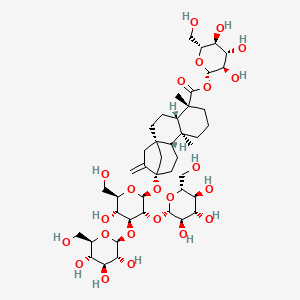
Identifiers
Functions
Where is rebaudioside M used, and what role does it play in each application?
Rebaudioside M is used as a high-intensity sweetener in food and beverage applications, primarily in confectionery and beverages. In confectionery, it is used in agglomerated form to provide sweetness and coating properties. In beverages, it is combined with sucrose or high-fructose corn syrup to reduce sweetness linger. It also appears in sweetener compositions and as a target product in enzymatic production methods. Its role is consistently as a sweetener, with specific forms (agglomerated, crystalline, disordered crystalline) tailored to application needs.
Which product or formulation problem does rebaudioside M address?
Rebaudioside M addresses formulation challenges related to solubility, dissolution rate, and sweetness profile. Its poor solubility and crystallinity are mitigated through disordered crystalline compositions with rebaudioside D or by combining with caffeoylquinic acids to achieve rapid dissolution. In beverages, it solves the problem of sweetness linger when used with sucrose or HFCS. These approaches enable its use in applications where standard rebaudioside M forms would be impractical.
What supports the main commercial or clinical uses of rebaudioside M?
Evidence for rebaudioside M's uses comes from patent applications describing specific formulations and methods. These include confectionery compositions with agglomerated rebaudioside M, beverage compositions with sucrose or HFCS to reduce linger, and solubility-enhancing methods using caffeoylquinic acids or disordered crystalline forms. Additionally, a clinical trial for rebaudioside A (a related compound) suggests potential metabolic effects, but no clinical evidence for rebaudioside M itself is provided. Regulatory approvals for rebaudioside A as a sweetener exist, but not specifically for rebaudioside M.
How is Rebaudioside m used clinically?
TRADITIONAL MEDICINE: A number of studies have suggested that, beside sweetness, stevioside along with related compounds, which include rebaudioside A (second most abundant component of S. rebaudiana leaf), steviol and isosteviol (metabolic components of stevioside) may also offer therapeutic benefits, as they have anti-hyperglycemic, anti-hypertensive, anti-inflammatory, anti-tumor, anti-diarrheal, diuretic, and immunomodulatory actions. It is of interest to note that their effects on plasma glucose level and blood pressure are only observed when these parameters are higher than normal. As steviol can interact with drug transporters, its role as a drug modulator is proposed
Which formulation trade-offs should researchers consider for rebaudioside M?
Key trade-offs for rebaudioside M include its poor solubility and slow dissolution, which require additional processing or co-ingredients. Disordered crystalline compositions with rebaudioside D improve solubility but involve high-temperature processing. Combining with caffeoylquinic acids accelerates dissolution but adds complexity and potential flavor impacts. In beverages, using rebaudioside M with sucrose or HFCS reduces linger but increases caloric content. These trade-offs must be balanced against desired sweetness intensity and application requirements.
What are the physicochemical properties of Rebaudioside m?
| Property | Value | Category |
|---|---|---|
| Physical Description | Solid | Appearance |
| Taste | The sweetness is tainted with a bitter and undesirable aftertaste. The time-intensity profile is characteristic of naturally occurring sweeteners: slow onset, but lingering. ... enzymatically glycosylated blend of stevioside and rebaudioside A, ... appears to impart a cleaner taste profile | Appearance |
| Melting Point | 242 - 244 °C | Handling Relevant Properties |
| Collision Cross Section | 299.48 Ų [M+H]+ [CCS Type: TW] | Analytical Properties |
| Other Experimental Properties | Stevioside and rebaudioside A are diterpene glycosides. The aglycone moiety, steviol ... which is the principal metabolite, has been reported to be mutagenic. Wide use of stevia in Japan for > 30 years did not produce any known deleterious side effects | Analytical Properties |
| XLogP3 | -2.8 | Computed Molecular Properties |
| Exact Mass | 966.43078848 | Computed Molecular Properties |
| Monoisotopic Mass | 966.43078848 | Computed Molecular Properties |
| Topological Polar Surface Area | 374.0 | Computed Molecular Properties |
| Complexity | 1760.0 | Computed Molecular Properties |
Which formulation benchmark best contextualizes rebaudioside M, and what differs?
Rebaudioside A serves as a relevant benchmark, as it is a well-established sweetener with regulatory approvals and clinical trial data. Rebaudioside M differs in its solubility challenges, which are more pronounced, and its potential to reduce sweetness linger in blends. While rebaudioside A has a JECFA specification and FDA no-questions letter, rebaudioside M lacks such regulatory clarity. Formulators may use rebaudioside A as a baseline but must address rebaudioside M's unique solubility and dissolution issues.