Rebaudioside M Toxicity
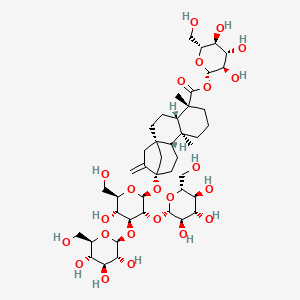
Identifiers
Functions
Which hazards are associated with Rebaudioside m?
GHS statements, classifications and precautions
Primary Hazards
Not Classified
Note
This chemical does not meet GHS hazard criteria for 100% (188 of 188) of all reports
ECHA C&L Notifications Summary
Aggregated GHS information provided per 188 reports by companies from 1 notifications to the C&L Inventory
Reported as not meeting GHS hazard criteria per 188 of 188 reports by companies
There are 0 notifications provided by 0 of 188 reports by companies with hazard statement code(s)
Hazard Classes and Categories
Not Classified
How should incidents involving Rebaudioside m be managed?
Immediate response and first-aid evidence
Disposal Methods
SRP: The most favorable course of action is to use an alternative chemical product with less inherent propensity for occupational harm/injury/toxicity or environmental contamination. Recycle any unused portion of the material for its approved use or return it to the manufacturer or supplier. Ultimate disposal of the chemical must consider: the material's impact on air quality; potential migration in soil or water; effects on animal and plant life; and conformance with environmental and public health regulations
What human and animal evidence is reported for Rebaudioside m?
Human Toxicity Excerpts
/HUMAN EXPOSURE STUDIES/ ... Beneficial effects of high doses of steviol glycosides on hyperglycemia and hypertension have been previously described when these abnormalities are present. This study was designed to evaluate the effects of steviol glycosides on blood glucose and on blood pressure (BP) in 3 groups of individuals. This was a randomized, double-blind, placebo-controlled, long-term study in three groups of patients: Group 1: subjects with Type 1 diabetes; Group 2: subjects with Type 2 diabetes; and Group 3: subjects without diabetes and with normal/low-normal BP levels. The subjects in each group were randomly allocated to active treatment (the steviol glycoside stevioside: 250 mg three times a day) or to placebo treatment and followed-up for 3 months. Post-treatment systolic BP, diastolic BP, glucose and glycated hemoglobin (HbA1c) were not significantly different from baseline measurements, except for the placebo Type 1 diabetics group where a significant difference was observed for systolic BP and glucose. No side effects were observed in the two treatment groups. This study shows that oral steviol glycosides, taken as sweetener are well tolerated and have no pharmacological effect. /Steviol glycosides/
/HUMAN EXPOSURE STUDIES/ ... This randomized, double-blind trial evaluated the hemodynamic effects of 4 weeks consumption of 1000 mg/day rebaudioside A vs. placebo in 100 individuals with normal and low-normal systolic blood pressure (SBP) and diastolic blood pressure (DBP). Subjects were predominantly female (76%, rebaudioside A and 82%, placebo) with a mean age of approximately 41 (range 18-73) years. At baseline, mean resting, seated SBP/DBP was 110.0/70.3mmHg and 110.7/71.2 mm Hg for the rebaudioside A and placebo groups, respectively. Compared with placebo, rebaudioside A did not significantly alter resting, seated SBP, DBP, mean arterial pressure (MAP), heart rate (HR) or 24-hr ambulatory blood pressures responses. These results indicate that consumption of as much as 1000 mg/day of rebaudioside A produced no clinically important changes in blood pressure in healthy adults with normal and low-normal blood pressure. /Rebaudioside A/
/HUMAN EXPOSURE STUDIES/ Four male and five female healthy volunteers (aged 21-29 years) were provided with capsules containing 250 mg stevioside (97% purity) to be taken 3 times per day for 3 days. Doses, expressed as steviol, were 288 mg/day or 4.4 mg/kg bw per day for females and 3.9 mg/kg bw per day for males. Twenty-four hour urine samples were taken before dosing on day 1 and after dosing on day 3. Fasting blood samples were taken before dosing on day 1, and six samples were taken at different time points on day 3 after dosing. Fasting blood pressure measurements were taken before the first capsule and at six different time intervals after the first dose. Urine was analysed for creatinine, sodium, potassium, calcium and urea. Blood was analyzed for plasma glucose, plasma insulin, alkaline phosphatase, ALT, GPT, creatine kinase and lactate dehydrogenase. The clinical analyses of blood, blood pressure and urine showed no differences between samples taken before or after dosing. /Stevioside/
/HUMAN EXPOSURE STUDIES/ A study of skin prick allergy testing with 10% stevioside conducted in infants (50 per group, aged 4 months to 2 years) indicated a higher prevalence of sensitization to stevioside in infants with allergic diseases compared with healthy infants. /Stevioside/
Non-Human Toxicity Excerpts
/LABORATORY ANIMALS: Acute Exposure/ To evaluate the effect of crude extract of Stevia rebaudiana on renal water, Na+ and K+ excretion, male Wistar rats (250-350 g each) under antidiuresis or water diuresis conditions, were evaluated. During intravenous infusion of the extract (0.05 mg/min/100 g) no significant differences were detected in mean arterial pressure or renal hemodynamics parameters. In contrast, fractional water and sodium excretion and solute clearance increased significantly, in both groups of animals. In antidiuresis rats the extract significantly increased reabsorption of water by the collecting duct and in water diuresis animals the extract significantly increased free water clearance. The data suggest preferential action of the extract in the proximal tubular cells involved with salt transport mechanism
/LABORATORY ANIMALS: Acute Exposure/ The present experiment was undertaken to evaluate the renal excretion of steviol, the aglycone of several natural products extracted from the leaves of Stevia rebaudiana, and to clarify the actual participation of this compound on the renal excretion of glucose in rats, which has been previously suggested as the preferential action of steviol on the Na+-glucose renal tubular transport system. Steviol was obtained by enzymatic hydrolysis of stevioside with pectinase. Thirty normal male Wistar rats weighing 345 g were used. After a control period, steviol was infused iv at three doses (0.5, 1.0 and 3.0 mg/kg/hr), according to classical clearance techniques. During all the experiments no significant changes in inulin clearance (Cin) and p-aminohipuric acid clearance (C PAH) were observed. Administration of steviol resulted in a statistically significant increase in the fractional sodium excretion (FeNa+), fractional potassium excretion (FeK+), urinary flow as percent of glomerular filtration rate (V/GFR) and glucose clearance (C G) when compared to controls, but these effects were absent with the dose of 0.5 mg/kg/hr. The steviol clearance (C S) was higher than the Cin and lower than the C PAH at all the doses employed in this study. The data suggest that steviol is secreted by renal tubular epithelium, causing diuresis, natriuresis, kaliuresis and a fall in renal tubular reabsorption of glucose. /Steviol/
/LABORATORY ANIMALS: Subchronic or Prechronic Exposure/ ... The present study ... evaluated the safety of this sweetener when administered as a dietary admix at target exposure levels of 500, 1000, and 2000 mg/kg/day to Sprague-Dawley rats for 90 days. There were no treatment-related effects on the general condition and behavior of the animals as determined by clinical observations, functional observational battery, and locomotor activity assessments. Evaluation of clinical pathology parameters revealed no toxicologically relevant, treatment-related effects on hematology, serum chemistry, or urinalysis. Macroscopic and microscopic findings revealed no treatment-related effects on any organ evaluated. Lower mean body weight gains were noted in males in the 2000 mg/kg/day group throughout the study, which was considered to be test article related; however, given the small magnitude of the difference as compared to controls, this effect was not considered to be adverse. Results of this study ... demonstrate that dietary administration of high concentrations of rebaudioside A for 90 consecutive days to Sprague-Dawley rats was not associated with any signs of toxicity. /Rebaudioside A/
/LABORATORY ANIMALS: Subchronic or Prechronic Exposure/ Three groups of 20 female and 20 male HsdRcc Han Wistar rats received a diet containing 0, 12,500, 25,000 or 50,000 mg rebaudioside A (97% purity)/kg for 13 weeks (mean doses equal to 0, 970, 2003 and 4161 mg/kg bw per day in males and 0, 1141, 2328 and 4645 mg/kg bw per day in females, or 0, 319, 660 and 1370 mg steviol/kg bw per day in males and 0, 376, 767 and 1530 mg steviol/kg bw per day in females). ... Before and during the treatment period, sensory reactivity and motor activity were tested and an ophthalmic examination was carried out. Blood and urine samples were taken on days 10, 46 and 89 of the study. Blood and urine samples were analyzed for a complete range of clinical chemistry parameters, and blood was analyzed for a complete range of hematological parameters. Bone marrow samples were obtained at necropsy. Animals were sacrificed at the end of the treatment period, and several organs were weighed. Examination with a light microscope or histological testing was carried out on a range of organs in the control and highest dose groups. Two animals were killed for welfare reasons during the treatment period as a result of damage incurred during the blood collection process. Forelimb grip strength was low for males in the high-dose group in weeks 4, 8 and 12, and hindlimb grip strength in males for all treatment groups was low in weeks 8 and 12, although no dose-response relationship or histopathological changes in muscle or nervous system were found. This was attributed ... to the slightly smaller size of the animals in the group and was not considered to be treatment related. In the high-dose group, females showed statistically significantly reduced cage floor activity scores in week 8 only. Rearing activity was lower in females in week 8 of treatment, but no differences between test and control groups were seen in week 12. There was a dose-related decrease in body weight gains, which was significantly different from control at all doses in the males and at 25,000 and 50,000 mg/kg in the females. Terminal body weights did not differ significantly from controls in either sex. After day 4, no differences were seen in food consumption between test and control animals in all groups. Hemoglobin concentrations and reticulocyte counts were found to be statistically significantly lower in the 50,000 mg/kg diet group compared with controls on days 46 and 89. No dose-response was observed. Compared with controls, females receiving 25,000 mg/kg or above showed significantly elevated prothrombin times. This was not considered to be treatment related. Plasma urea concentrations were significantly elevated in both sexes in the high-dose group compared with controls. Non-significant elevations were seen in the two lowest dose groups, and there was no apparent dose-response relationship. Absolute epididymal weights for males, ovary weights for females and heart and kidney weights for both sexes in the high-dose group were statistically significantly reduced compared with controls. Macropathology and histopathology revealed no apparent treatment-related effects. /It was/ considered that the decreased body weight gain was due to taste aversion and decreased caloric density of the diet. The NOEL in this study was 50,000 mg rebaudioside A/kg in the feed or 1370 mg/kg bw per day in males and 1530 mg/kg bw per day in females when expressed as steviol. /Rebaudioside A/
What treatment evidence and interactions are reported for Rebaudioside m?
Antidote and Emergency Treatment
/SRP:/ Immediate first aid: Ensure that adequate decontamination has been carried out. If patient is not breathing, start artificial respiration, preferably with a demand valve resuscitator, bag-valve-mask device, or pocket mask, as trained. Perform CPR if necessary. Immediately flush contaminated eyes with gently flowing water. Do not induce vomiting. If vomiting occurs, lean patient forward or place on the left side (head-down position, if possible) to maintain an open airway and prevent aspiration. Keep patient quiet and maintain normal body temperature. Obtain medical attention. /Poisons A and B/
/SRP:/ Basic treatment: Establish a patent airway (oropharyngeal or nasopharyngeal airway, if needed). Suction if necessary. Watch for signs of respiratory insufficiency and assist ventilations if needed. Administer oxygen by nonrebreather mask at 10 to 15 L/min. Monitor for pulmonary edema and treat if necessary ... . Monitor for shock and treat if necessary ... . Anticipate seizures and treat if necessary ... . For eye contamination, flush eyes immediately with water. Irrigate each eye continuously with 0.9% saline (NS) during transport ... . Do not use emetics. For ingestion, rinse mouth and administer 5 mL/kg up to 200 mL of water for dilution if the patient can swallow, has a strong gag reflex, and does not drool ... . Cover skin burns with dry sterile dressings after decontamination ... . /Poisons A and B/
/SRP:/ Advanced treatment: Consider orotracheal or nasotracheal intubation for airway control in the patient who is unconscious, has severe pulmonary edema, or is in severe respiratory distress. Positive-pressure ventilation techniques with a bag valve mask device may be beneficial. Consider drug therapy for pulmonary edema ... . Consider administering a beta agonist such as albuterol for severe bronchospasm ... . Monitor cardiac rhythm and treat arrhythmias as necessary ... . Start IV administration of D5W /SRP: "To keep open", minimal flow rate/. Use 0.9% saline (NS) or lactated Ringer's if signs of hypovolemia are present. For hypotension with signs of hypovolemia, administer fluid cautiously. Watch for signs of fluid overload ... . Treat seizures with diazepam or lorazepam ... . Use proparacaine hydrochloride to assist eye irrigation ... . /Poisons A and B/
Interactions
The aim of this study was to elucidate the anti-inflammatory and immunomodulatory activities of stevioside and its metabolite, steviol. Stevioside at 1 mM significantly suppressed lipopolysaccharide (LPS)-induced release of TNF-alpha and IL-1beta and slightly suppressed nitric oxide release in THP-1 cells without exerting any direct toxic effect, whereas steviol at 100 uM did not. Activation of IKKbeta and transcription factor NF-kappaB were suppressed by stevioside, as demonstrated by Western blotting. Furthermore, only stevioside induced TNF-alpha, IL-1beta, and nitric oxide release in unstimulated THP-1 cells. Release of TNF-alpha could be partially neutralized by anti-TLR4 antibody. This study suggested that stevioside attenuates synthesis of inflammatory mediators in LPS-stimulated THP-1 cells by interfering with the IKKbeta and NF-kappaB signaling pathway, and stevioside-induced TNF-alpha secretion is partially mediated through TLR4
In a study to investigate chemoprevention, the effect of rebaudioside A (purity >99.5%) on azoxymethane-induced aberrant crypt foci was studied in groups of male F344 rats. One group of 16 rats was given three weekly subcutaneous injections of azoxymethane for 2 weeks and a diet containing 200 mg rebaudioside A/kg for 5 weeks, from 1 week before to 2 weeks after azoxymethane administration, and was then sacrificed. The dose expressed as steviol was 6.6 ug/kg bw per day. Other groups received a diet containing rebaudioside A with no azoxymethane injections (6 rats), a basal diet with no azoxymethane (6 rats) or azoxymethane injections and a basal diet only (16 rats). At the end of the study, the colons were removed from eight animals in the test group and from one in each of the control groups and examined for aberrant crypt foci. The colonic mucosa of the remaining animals from each group were pooled and examined for ornithine decarboxylase activity. Silver-stained nucleolar organizer region (AgNOR) protein count was also determined for each group. Both ornithine decarboxylase and AgNOR number are biomarkers for cell proliferation. The average body weights and mean liver weights of the animals receiving the test compound and the azoxymethane injections were significantly lower than those of the animals receiving azoxymethane alone. No signs of toxicity were observed, and food consumption was unaffected by treatment. There was a non-significant trend for rebaudioside A to reduce the number of azoxymethane-induced aberrant crypt foci, mucosal ornithine decarboxylase activity and the number of AgNORs. /Rebaudioside A/
Stevioside inhibits the action of atractyloside on energy metabolism in the isolated perfused rat liver. The effects of atractyloside on glycolysis, glycogenolysis, gluconeogenesis and oxygen uptake are decreased by stevioside. The concentration for half-maximal action is 0.5 mM. The site of the action is located on the outside of the cell. Possibly, stevioside affects the transport of atractyloside across the cell membrane. /Stevioside/