“Retinal is the strongest version of the derivative vitamin A that you can get over the counter... Retinal can work up to 11 times faster than traditional retinol...”
Retinal Consumer Sentiment
CtrlK
Identifiers
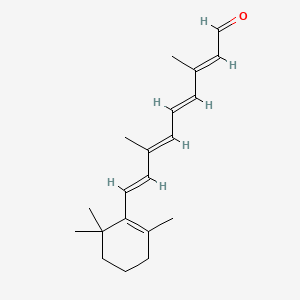
FormulaC20H28O·CAS116-31-4·EC204-135-8
Functions
SKIN Conditioning
Hazards


How do consumers feel about products containing Retinal?
Positive
Mixed
Negative
Consumers view Retinal as a highly effective, faster-acting alternative to retinol that delivers visible anti-aging and acne results with potentially less irritation, though some caution is advised for sensitive skin.
Which consumer needs, benefits, and objections are associated with retinal?
Consumers primarily associate retinal with superior anti-aging efficacy, citing its one-step conversion to retinoic acid as making it faster-acting and more potent than retinol. Benefits sought include reduced fine lines, wrinkles, improved skin smoothness, brightness, and even tone, with some users noting benefits for acne and pores. A key stated benefit is gentleness, with consumers reporting less irritation than retinol, especially in encapsulated forms suitable for sensitive skin. No explicit objections were captured in the evidence, but the emphasis on gentleness and encapsulation suggests irritation and tolerability are implicit concerns.
What do consumers discuss about Retinal?
Speed and Efficacy vs Retinol
Consumers consistently highlight that Retinal converts to retinoic acid faster than retinol, offering quicker visible results for wrinkles and texture.
instagram
lemon8-app
tiktok
youtube
pinterest
Gentleness and Tolerance
Many users report Retinal is gentler than prescription retinoids and traditional retinol, though some still experience initial irritation or sensitivity.
instagram
facebook
lemon8-app
tiktok
pinterest
Anti-Aging and Acne Benefits
Retinal is praised for reducing fine lines, improving skin texture, and treating acne simultaneously without the harshness of stronger prescriptions.
instagram
facebook
lemon8-app
tiktok
youtube
Product Recommendations and Brands
Specific brands like Celimax, Beauty of Joseon, Paula's Choice, and Purito are frequently recommended by consumers for their effective Retinal formulations.
instagram
facebook
lemon8-app
tiktok
Usage and Layering Advice
Consumers share tips on starting slowly, using moisturizers to buffer irritation, and avoiding mixing with other strong actives like acids initially.
instagram
lemon8-app
How are current products and patent claims responding to consumer concerns about retinal?
Commercial products and recent patent claims are responding to consumer interest in retinal's potency by focusing on delivery systems that enhance stability and reduce irritation. Product examples include serums and eye creams featuring retinal liposomes or triple encapsulation, often combined with soothing ingredients like ginseng. Patent claims describe lipid nanoparticle encapsulation for improved stability and skin delivery, and derivatives designed to covalently bind to skin for controlled release. These claims represent proposed approaches, not evidence of market adoption, but they indicate a formulation focus on mitigating irritation while leveraging retinal's efficacy.
What concerns do consumers raise about Retinal?
Potential for irritation and sensitivity, especially when first starting or if used incorrectly
instagram
lemon8-app
tiktok
pinterest
Confusion about how it differs from retinol and tretinoin
instagram
lemon8-app
youtube
Need for strict sun protection due to increased photosensitivity
lemon8-app
Where is the gap between consumer expectations and the current retinal offering?
The primary gap lies between consumer expectations of rapid, visible results and the reality of retinal's potency, which necessitates careful formulation to avoid irritation. While consumers praise retinal for being less irritating than retinol, the market response focuses heavily on encapsulation to manage this risk, indicating a perceived fragility. Furthermore, the evidence shows a strong consumer preference for multi-functional products combining retinal with ingredients like ginseng and niacinamide for brightening and depuffing, yet the commercial product data shows a historical focus on simpler anti-aging creams, suggesting a potential lag in meeting these combined benefit expectations.
Which formulation approaches are being used to address those concerns around retinal?
Formulation approaches are directly addressing tolerability and stability concerns through encapsulation technologies. Evidence shows consumer appreciation for triple-encapsulated retinal eye creams that minimize irritation, and brand claims of stable, safe formulas using retinal liposomes. Patent claims detail specific approaches: lipid nanoparticle compositions with lecithin, cholesterol, and lauric acid for improved delivery, and phospholipid encapsulation of retinaldehyde in serums. These methods aim to balance retinal's high potency with skin compatibility, a critical factor for sensitive-skin users and for maintaining efficacy in finished products.
What consumer-led opportunity or risk should researchers consider for retinal?
A distinct consumer-led opportunity exists in positioning retinal for sensitive-skin users and for multifunctional benefits beyond anti-aging. Consumer evidence highlights successful use around the delicate eye area and for improving skin brightness and evenness, often in combination with ingredients like ginseng. This suggests a market opening for formulations that explicitly target sensitive skin with encapsulated retinal while also addressing concerns like dark circles and milia. The risk is that over-emphasizing gentleness could undermine consumer perception of retinal's superior potency, so messaging must balance efficacy with tolerability.