Retinal Toxicity
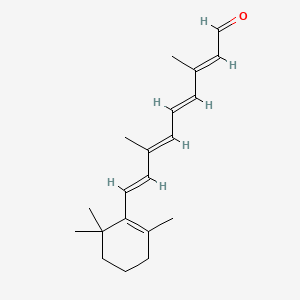
Identifiers
Functions
Hazards


What are the material safety considerations for retinal?
Retinal presents material safety concerns including acute oral toxicity (H302, harmful if swallowed), skin irritation (H315), reproductive toxicity (H360, may damage fertility or the unborn child), and long-term aquatic hazard (H413). The reproductive toxicity classification carries the highest severity and a 72.1% notification ratio, indicating strong regulatory consensus. These hazards require attention in formulation, labeling, and handling. The skin conditioning function in cosmetics does not negate these risks, and the absence of exposure limits or toxicity test data means quantitative risk assessment is not possible from current evidence.
How should hazard classifications and toxicology findings for retinal be interpreted together?
The GHS classifications should be interpreted as a set of distinct hazard endpoints rather than a single risk profile. The reproductive toxicity (H360) and aquatic hazard (H413) both carry 72.1% notification ratios, suggesting broad agreement among notifiers, while oral toxicity (H302) and skin irritation (H315) have lower ratios (28.6% and 29.3%), indicating less consensus. For formulation decisions, the reproductive toxicity signal is the most critical, warranting precautionary labeling and restricted use, especially in products for women of childbearing age. The skin irritation hazard supports the need for dermal compatibility testing, but the lack of dose-response data limits interpretation of actual risk levels.
Which exposure routes, dose contexts, or effects are material for retinal?
Material exposure routes for retinal include oral ingestion (H302) and dermal contact (H315), with reproductive toxicity (H360) indicating a potential systemic effect after exposure. The aquatic hazard (H413) points to environmental exposure via disposal or manufacturing effluents. In cosmetic use, dermal application is the primary route, making skin irritation and potential systemic absorption relevant. However, no exposure limits, toxicity test results, or concentration restrictions are available, so the dose-response relationship and safe exposure thresholds cannot be established. This gap is critical for assessing occupational and consumer risk.
Which handling and risk-management measures are relevant for retinal?
Relevant risk-management measures include using personal protective equipment to prevent skin contact and ingestion, given the H302 and H315 hazards. For reproductive toxicity (H360), engineering controls and handling protocols should minimize exposure, particularly for pregnant workers. Environmental controls should prevent release to aquatic systems due to H413. In formulation, the absence of cosmetic restrictions or maximum concentration limits means companies must rely on internal safety assessments and possibly precautionary labeling. However, without exposure limits or toxicity data, specific occupational exposure controls cannot be quantified, so a conservative approach is advised.
Which safety evidence gaps should be resolved before making decisions about retinal?
Before making decisions about retinal, the most critical evidence gaps are the absence of toxicity test data (e.g., LD50, reproductive toxicity studies) and exposure limits (e.g., PEL, TLV). These are essential for quantifying acute and chronic risks, establishing safe handling thresholds, and determining whether the reproductive toxicity hazard translates to actual risk at cosmetic use concentrations. Additionally, the lack of cosmetic restrictions or maximum concentration limits means regulatory guidance is absent, leaving formulators without a benchmark for safe use. Resolving these gaps would enable a robust risk assessment and informed product development.