Retinal Patent Landscape
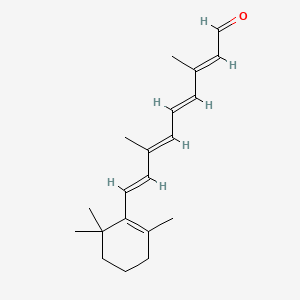
Identifiers
Functions
Hazards


Which organizations and claims shape current development around retinal?
Key organizations include Bic Inc, which claims retinal derivatives that covalently bind to skin for controlled release (WO2026123131A1); Pure Enterprise Co., Ltd., which claims lipid nanoparticle compositions with retinal for improved stability (KR102956243B1); and Prima Derm S L, which claims a rejuvenating composition with encapsulated retinaldehyde as a retinoic acid precursor (EP4744645A1). These organizations focus on delivery systems, encapsulation, and chemical modification to enhance retinal's anti-aging benefits. The claims emphasize stability, controlled release, and synergistic combinations with peptides and growth factors. This suggests a competitive landscape where formulation innovation is central. A boundary: assignees are from patent filings, not confirmed commercial entities.
How is Retinal innovation changing in Cosmetics?
Monthly patent filings by domain
Which technical problems do recent patents address with retinal?
Recent patents address retinal's instability and delivery challenges. Lipid nanoparticle encapsulation (KR102956243B1) targets improved stability and skin delivery, while phospholipid encapsulation (EP4744645A1) protects retinal as a retinoic acid precursor. A novel approach (WO2026123131A1) solves controlled release by covalently binding retinal derivatives to keratinous tissues via 1,5-dicarbonyl moieties, enabling gradual release after topical application. These technical problems—stability, delivery, and controlled release—are central to maximizing retinal's anti-aging efficacy. The business implication is that formulation technology, not just active concentration, drives competitive advantage. A boundary: these are claimed approaches, not proof of commercial products.
How do recent patents change the role or application of retinal?
Recent patents shift retinal from a simple active ingredient to a component within sophisticated delivery systems. In KR102956243B1, retinal is encapsulated in lipid nanoparticles with lecithin, cholesterol, and lauric acid, positioning it as a stabilized anti-aging active. EP4744645A1 redefines retinal as a retinoic acid precursor, combined with peptides and growth factors for skin rejuvenation. WO2026123131A1 changes its role to a covalently bound prodrug-like derivative that releases retinal after binding to skin. These changes imply that retinal's function now depends on its formulation context, enabling more controlled and potentially safer delivery. A boundary: the covalent approach is a claimed chemical strategy, not yet a commercial product.
How is Retinal used in Cosmetics patents?
Which Cosmetics product categories feature Retinal in recent patents?
Which product categories and formulation strategies emerge in recent work on retinal?
Emerging product categories include serums and skin care formulations. Formulation strategies focus on lipid nanoparticle encapsulation (KR102956243B1) with concentrations of 0.5% to 5.0% retinal, combined with tocopherol and surfactants. Another strategy uses phospholipid encapsulation (EP4744645A1) at lower retinal concentrations (0.01% to 0.5%) alongside peptides and growth factors. A third strategy involves chemically modifying retinal to bind covalently to keratinous tissues (WO2026123131A1), enabling sustained release. These strategies indicate a trend toward multi-component formulations that enhance stability and controlled delivery. The business implication is that formulation complexity and ingredient synergy are key differentiators. A boundary: these are patent claims, not evidence of market availability.
Where is the evidence-backed white space for further development of retinal?
Evidence-backed white space exists in combining retinal with specific peptide and growth factor combinations, as only one patent (EP4744645A1) explores this synergy. Additionally, the covalent binding approach (WO2026123131A1) opens opportunities for targeted delivery to keratinous tissues, but no other patents in this set explore similar chemistry. Fermentative production methods (noted in EP4626260A2) suggest potential for alternative retinoid compositions with specific isomer profiles, which could be further developed. These areas are underexplored in the current patent landscape, offering room for innovation. A boundary: this white space is based on limited patent evidence and may not reflect broader industry activity.