Sodium Alginate
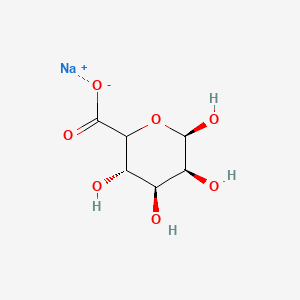
Identifiers
Functions
Where is sodium alginate used, and what role does it play in each application?
Sodium alginate functions primarily as a gelling, thickening, binding, and film-forming agent across food, cosmetics, pharmaceuticals, and advanced materials. In food, it creates textures in jellies, plant-based meats, noodles, and frozen desserts, and stabilizes emulsions and whipped cream. In cosmetics, it appears in lotions, masks, makeup, and oral care as a viscosity controller, binder, and film former. In pharma, it forms hydrogels, scaffolds, dressings, and controlled-release systems. It also serves as a structural polymer in aerogels, films, and agricultural coatings. Its role is defined by ionic crosslinking with calcium or other cations to form gels.
Which product or formulation problem does sodium alginate address?
Sodium alginate solves formulation problems requiring structure, stability, and controlled release. It provides texture and shape to foods like jellies and plant-based meats, prevents syneresis in whipped cream, and improves freeze-thaw stability in shrimp paste. In cosmetics, it enables film formation for peel-off masks and makeup longevity, and in oral care, it prolongs residence time. In pharma, it creates hydrogels for wound exudate absorption, scaffolds for cell growth, and encapsulation for sustained drug or probiotic delivery. It also addresses moisture retention in noodles and meat marinades, and acts as a barrier in edible films.
What supports the main commercial or clinical uses of sodium alginate?
Evidence for sodium alginate's main uses comes from its regulatory status as an active cosmetic ingredient with functions including binding, fragrance, and viscosity control, and from its presence in 76 commercial products across 13 brands, including lotions, adhesives, and masks. Patent applications further support its roles in food gelling, pharmaceutical scaffolds, and cosmetic film-forming. However, these patents represent claimed approaches, not proof of market adoption. The ingredient's role as a hematologic agent is noted, but no clinical or commercial evidence is provided. Overall, the evidence is strong for its functional versatility but limited for specific clinical efficacy.
Which formulation trade-offs should researchers consider for sodium alginate?
Key trade-offs for sodium alginate involve balancing gel strength with release kinetics and mechanical integrity. Ionic crosslinking with calcium provides robust gels, but the crosslink density must be tuned to avoid brittleness or uncontrolled release. In food, it often requires co-ingredients like carrageenan or konjac to achieve desired textures, and in cosmetics, it may need plasticizers to prevent film cracking. In pharma, its use in scaffolds and dressings requires careful control of porosity and degradation. Additionally, its viscosity and molecular weight affect processing, and it may need modification for specific properties like water solubility or pH responsiveness.
What are the physicochemical properties of Sodium alginate?
| Property | Value | Category |
|---|---|---|
| Exact Mass | 216.0245969 | Computed Molecular Properties |
| Monoisotopic Mass | 216.0245969 | Computed Molecular Properties |
| Topological Polar Surface Area | 130.0 | Computed Molecular Properties |
| Complexity | 210.0 | Computed Molecular Properties |
| Hydrogen Bond Donor Count | 4 | Computed Molecular Properties |
| Hydrogen Bond Acceptor Count | 7 | Computed Molecular Properties |
| Rotatable Bond Count | 1 | Computed Molecular Properties |
| Heavy Atom Count | 14 | Computed Molecular Properties |
| Formal Charge | 0 | Computed Molecular Properties |
Which formulation benchmark best contextualizes sodium alginate, and what differs?
A useful benchmark for sodium alginate is its role as a gelling agent in food products, where it is often compared to other polysaccharides like carrageenan, gellan gum, and konjac. Unlike these, sodium alginate gels ionically with calcium, enabling cold-set gelation and encapsulation of heat-sensitive actives. This makes it distinct for applications like plant-based meat fiber locking and probiotic encapsulation. However, its gels can be less thermally stable than carrageenan, and it often requires calcium sources or chelators to control gelation rate. This benchmark highlights its unique cold-gelling capability but also the need for careful crosslink management.