Renewable monomer synthesis jumped from 2 innovations in 2023–2024 to 14 in 2025–2026, while biomass-derived flame-retardant systems increased from 4 to 14 over the same period. Bio-based binder R&D is moving beyond replacing fossil feedstocks and toward engineering the thermal stability, durability, processing characteristics, and circularity required for demanding coatings.
We analyzed 700 innovations across 26 technology clusters to identify which chemistries are gaining momentum, where commercialization could happen first, and where R&D teams may still have room to build a differentiated position.
What’s Driving Change in Sustainable Coatings?
The transition is being shaped by several pressures at once: restrictions around hazardous chemistry, demand for lower-carbon materials, performance requirements, and increasing attention to what happens to thermosets after use.
- Performance parity is changing the basis of competition. Research is moving from crude biomass additives toward lignin-derived vanillin, eugenol, FDCA, and other engineered aromatic building blocks designed to reproduce the rigidity and cross-link density of fossil-derived thermosets.
- Circularity is becoming part of binder design. Covalent Adaptable Networks, vitrimers, dynamic imine bonds, and disulfide linkages are being explored to make thermosets repairable, reprocessable, or chemically recyclable rather than permanently cross-linked.
- Specialty markets are moving faster than general coatings. Battery electrodes, agricultural coatings, packaging, and high-value composites can justify new binder systems when non-toxicity, aqueous processing, recyclability, or another functional advantage outweighs the initial cost premium.
What’s Inside the Report?
Where are bio-based binders actually reaching fossil-resin performance?
See which molecular routes are being used to close gaps in thermal stability, mechanical strength, coating hardness, chemical resistance, and processing performance.
Why is R&D moving from biomass sourcing to molecular engineering?
Understand why FDCA, lignin-derived aromatics, vanillin, eugenol, and purified lignin fractions are becoming more strategically important than simply increasing renewable content.
Which applications could reach commercial scale first?
Compare activity across battery binders, paper packaging, agricultural coatings, industrial thermosets, composites, corrosion protection, photocurable systems, and other applications.
Where could the next IP bottlenecks emerge?
Track the acceleration in renewable monomer synthesis, recyclable thermosets, self-healing chemistry, and high-performance bio-aromatics before these technical spaces become more crowded.
Which organizations are establishing broad technical positions?
Review activity from companies, universities, and research organizations including Evonik, CNRS, Fraunhofer, VTT, Synthomer, Helios, BASF, Argonne National Laboratory, and others.
What still stands between promising chemistry and industrial adoption?
Assess the unresolved issues around purification cost, feedstock consistency, processing changes, scale-up, curing requirements, application equipment, and end-of-life infrastructure.
26 Technology Clusters Across 700 Innovations
- Biomass-derived renewable feedstocks for sustainable polymer and biodegradable resin synthesis (146 innovations)
- Lignin, cellulose & polysaccharide biopolymer coatings for paper packaging substrates (74 innovations)
- Epoxy, phenolic & unsaturated polyester thermosetting resin systems via bio-feedstocks (51 innovations)
- Chitosan, alginate, starch & protein edible coatings for fruit preservation (45 innovations)
- Polyurethane coatings via renewable polyols & non-isocyanate polyhydroxyurethane synthesis (40 innovations)
- Bio-based epoxy resin synthesis via renewable biomass & plant feedstocks (37 innovations)
- Bio-polymer & vegetable oil binders for metallic corrosion protection (33 innovations)
- Alkyd resin synthesis via plant oils, recycled PET & FDCA (32 innovations)
- Bio-based binder formulations & sustainable chemical solutions for paints & coatings (26 innovations)
- Polyurethane & non-toxic seed coating formulations for agricultural nutrient delivery (23 innovations)
- Bio-based unsaturated polyester & epoxy thermoset resins for fiber-reinforced composites (23 innovations)
- Bio-derived photocurable resins for vat photopolymerization & digital light processing (21 innovations)
The report also covers smaller but strategically important clusters across biomass-derived flame-retardant thermosets, waterborne battery binders, self-healing polyurethane and polyurea coatings, polybenzoxazine resins, renewable monomer synthesis, protective coatings, lignin fractionation, recyclable vitrimers, covalent adaptable networks, and other bio-based resin and composite pathways.
Key Trends You Can’t Ignore
High-performance bio-aromatics are becoming the next competitive battleground.
Activity around renewable monomers and flame-retardant thermosets is rising quickly, suggesting that some of the most valuable chemistry spaces may become harder to enter. The report identifies where this acceleration is happening and which routes are attracting the strongest R&D attention.
Circularity is starting to change what counts as a sustainable binder.
Research is moving beyond renewable feedstocks toward self-healing, reprocessable, and chemically recyclable thermosets. The report shows which dynamic chemistries are emerging and where they could alter material-selection criteria.
Some applications are moving much faster than the broader coatings market.
Battery electrodes, agriculture, packaging, and high-value composites are becoming important proving grounds for bio-based binder technologies. The report maps where adoption appears closest and what could enable these chemistries to move into larger markets.
The source of competitive advantage is shifting.
Access to biomass alone may matter less as the industry moves toward purified intermediates, lignin fractionation, and tightly controlled molecular structures. The report examines where value could migrate across the binder supply chain.
The innovation landscape is becoming more difficult to track through one resin family alone.
Research activity now spans epoxies, polyurethanes, alkyds, vitrimers, photocurable resins, battery binders, and several adjacent applications. The report connects these clusters to show where technologies, organizations, and potential opportunities overlap.
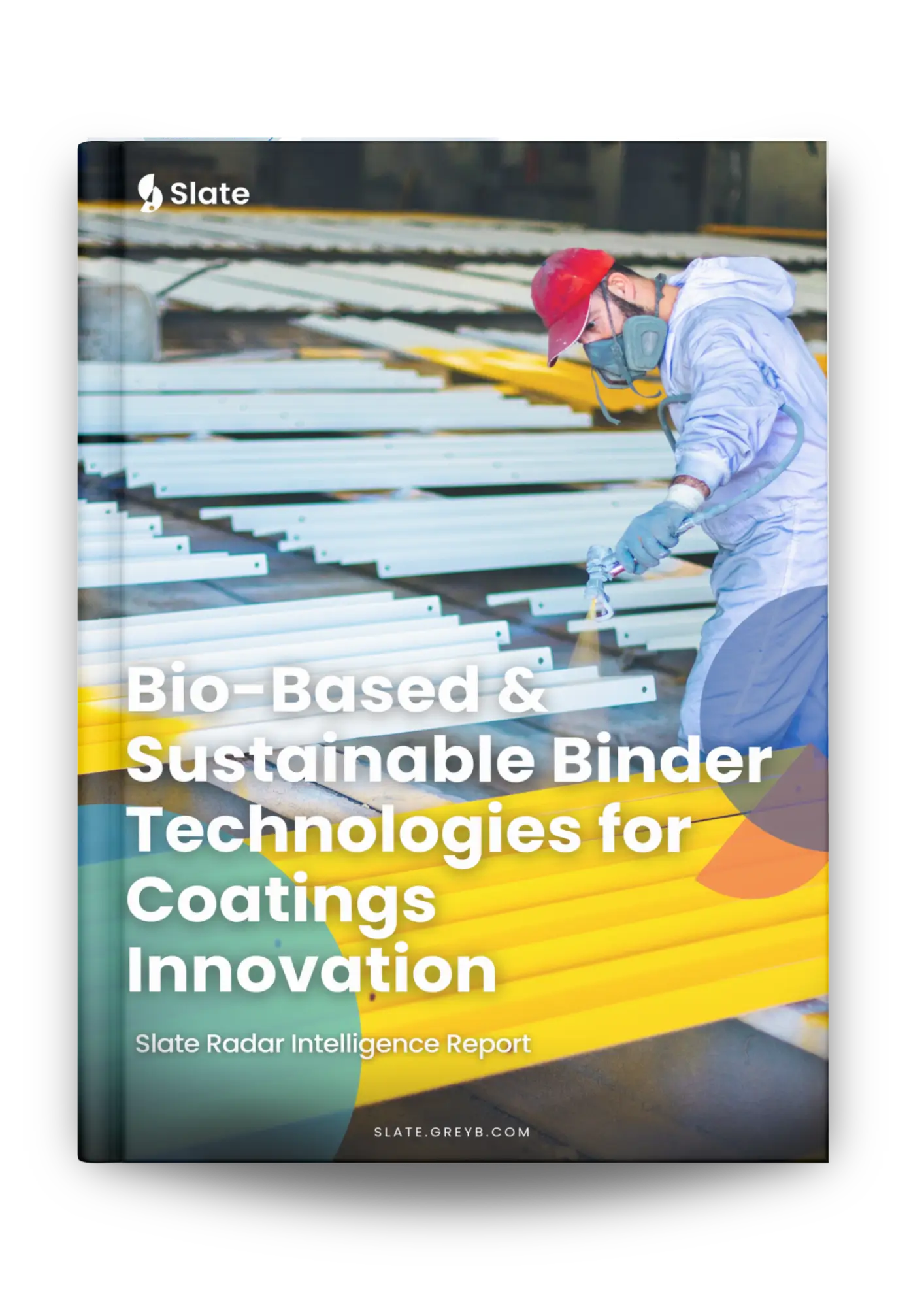
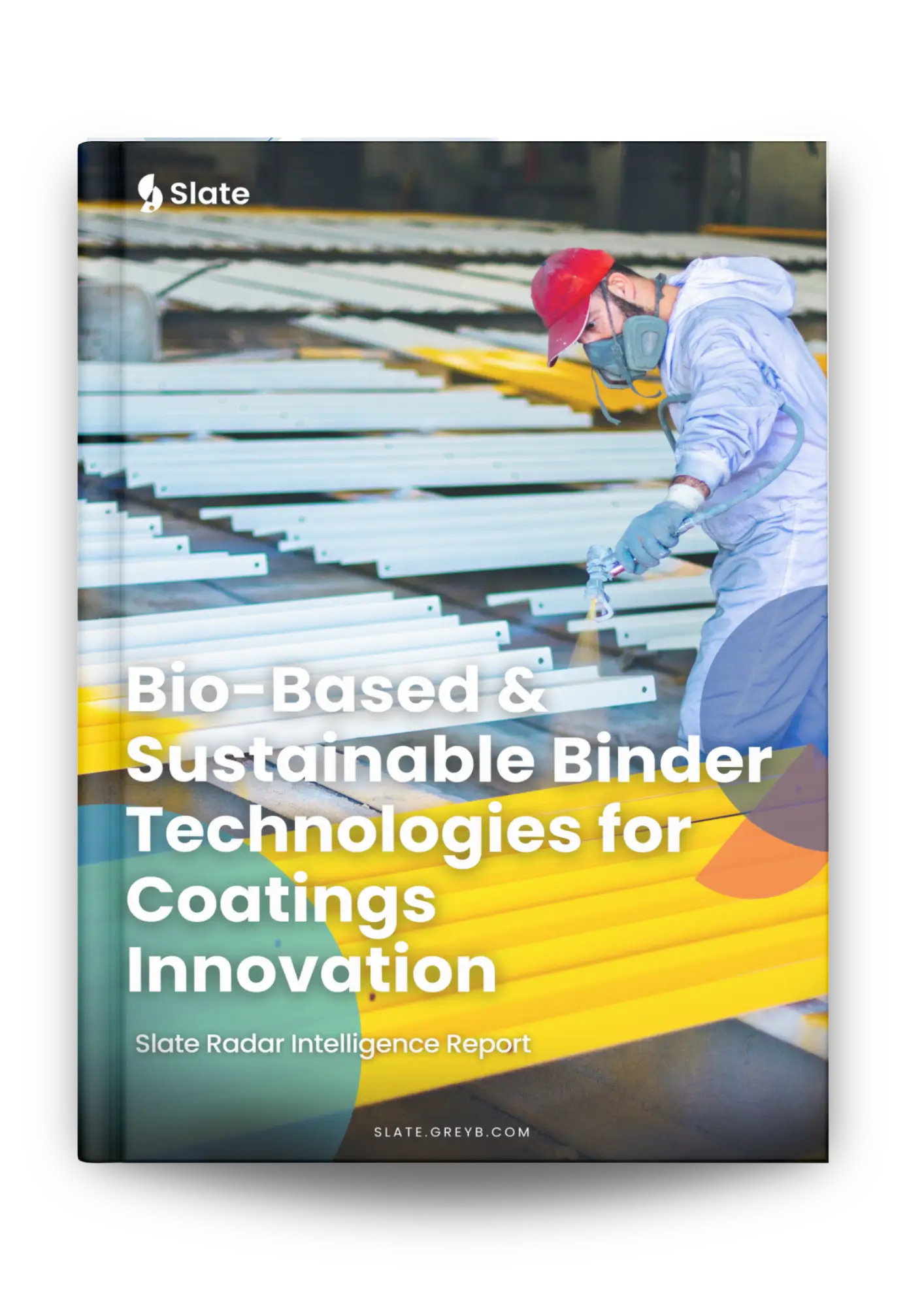
Download the full Bio-Based & Sustainable Binder Technologies for Coatings Innovation Report
Get detailed access to the complete 26-cluster technology map, 700 analyzed innovations, organization and competitive signals, representative technologies, market context, and strategic implications for each major binder route.