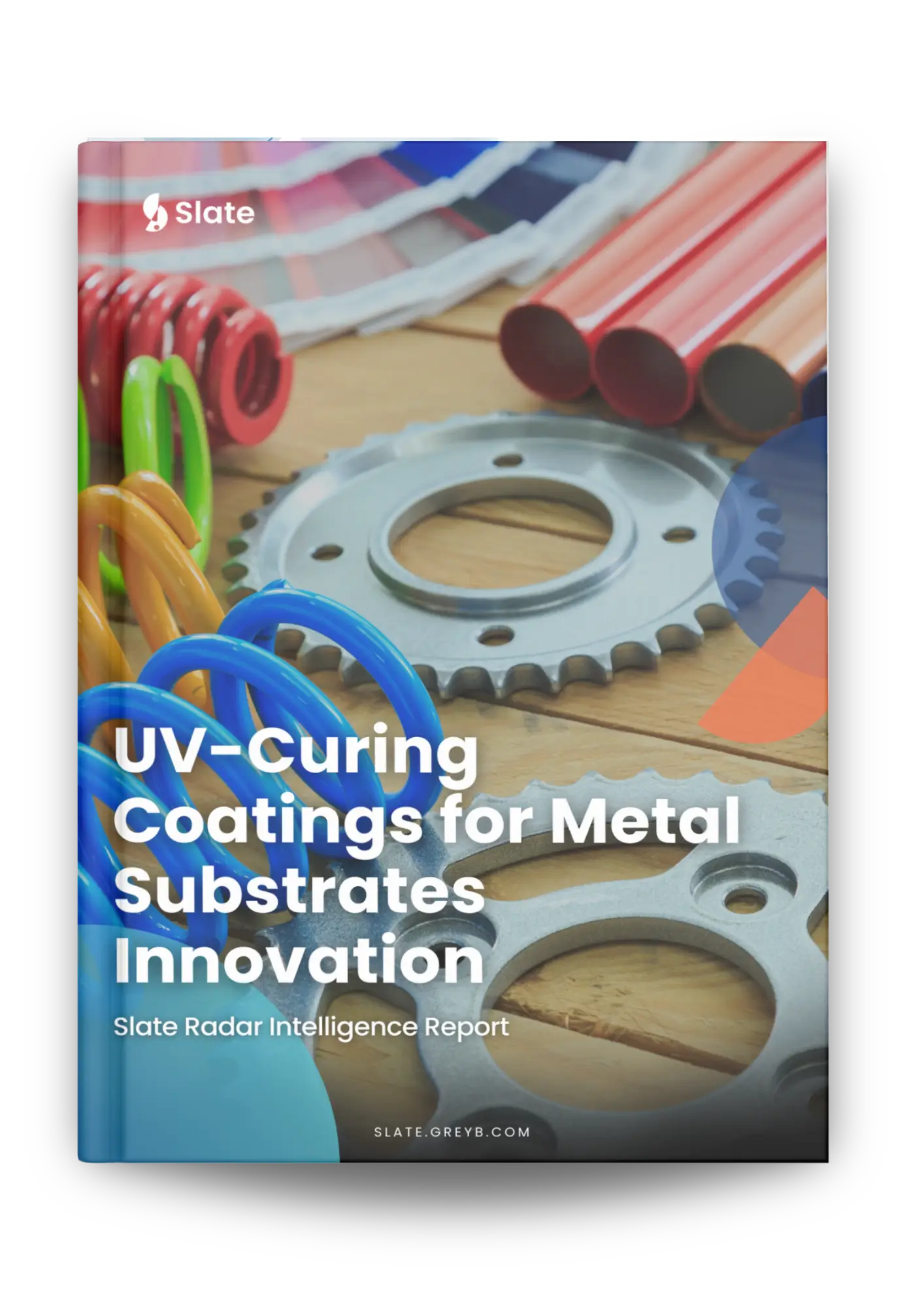
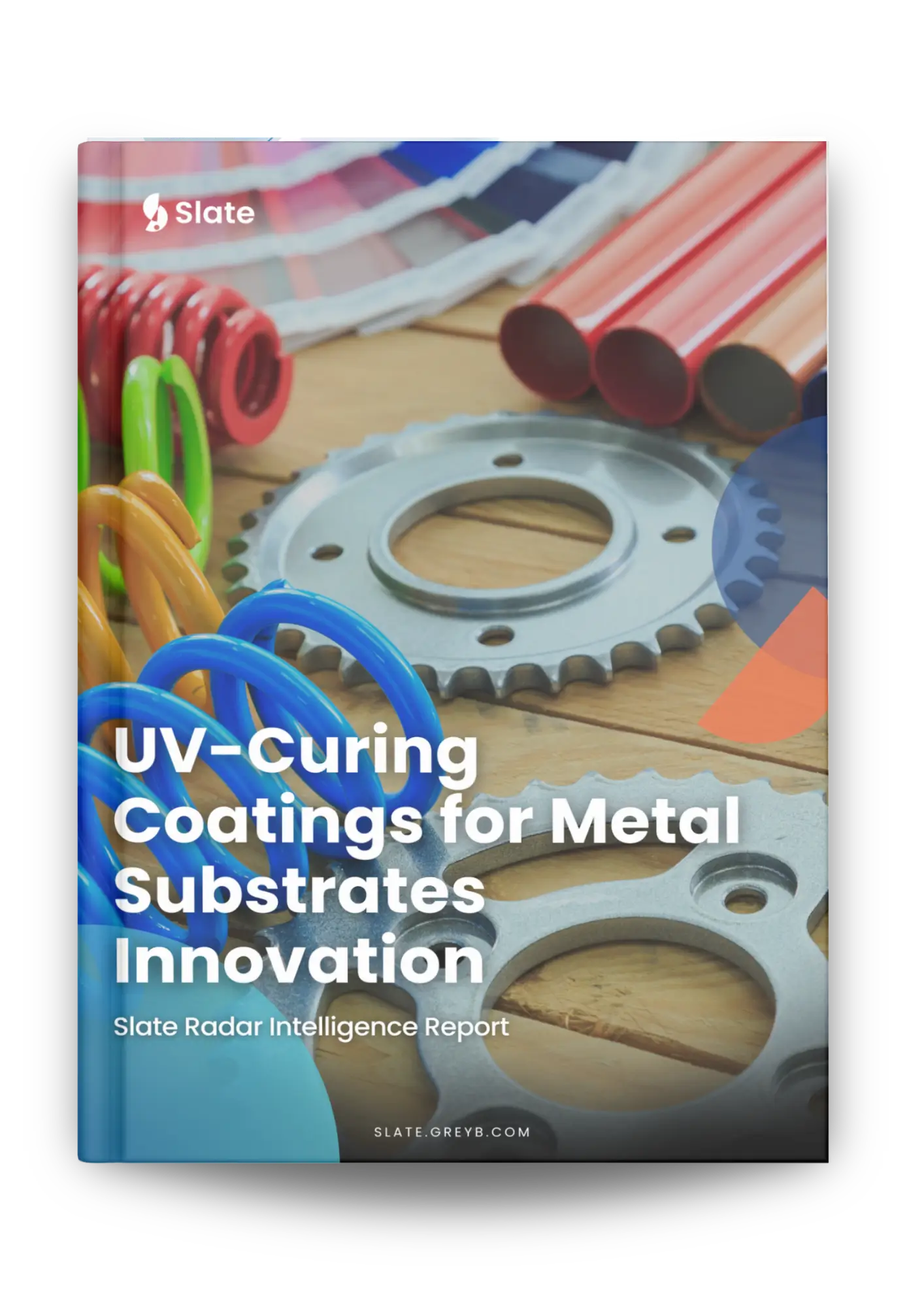
UV-curing coatings for metal substrates are moving beyond traditional protective applications toward functional coating systems that support high-performance industrial and automotive applications. Innovation activity is shifting toward hybrid resin architectures, sensor-compatible metal interfaces, and coatings designed for high-speed manufacturing environments.
We analyzed 262 innovations across the UV-curable metal coating landscape to show where chemistry is evolving, which performance challenges are driving R&D, and how the competitive value of coatings is changing.
Key Signals Reshaping UV-Curing Coatings
Metal coating systems are being pushed to deliver faster processing, stronger adhesion, and additional functionality while meeting the demands of advanced industrial applications.
- Coatings are becoming functional interfaces, not just protective layers: UV-curable systems are being developed to support emerging applications where coatings must interact with sensors, electronics, and advanced hardware requirements.
- Performance barriers are moving from curing speed to material architecture: Adhesion, flexibility, chemical resistance, and durability on metal surfaces are driving the development of more complex resin systems.
- High-speed manufacturing is changing coating requirements: Industrial applications are demanding coatings that can maintain performance through forming, processing, and other mechanical stresses without relying on traditional thermal curing methods.
What’s Inside the Report?
- Why are UV coatings moving beyond corrosion protection? Explore how the role of coatings is expanding into advanced functional applications and what this means for future material strategies.
- How are resin architectures evolving for metal surfaces? Understand why hybrid chemistries and specialized oligomer systems are becoming central to solving performance limitations.
- Where is the competition shifting in UV-curable coatings? Identify how chemical suppliers and end users are approaching innovation from different positions across the value chain.
- What technical challenges are shaping next-generation metal coatings? Discover the unresolved trade-offs around adhesion, flexibility, curing performance, and durability.
- How are automotive applications changing coating requirements? Examine why future vehicle systems are creating new demands for coatings that support advanced hardware integration.
- Where are the emerging opportunities in UV-curing technologies? Understand which technical areas are gaining momentum and where future differentiation may emerge.
The Research Cluster We Analyzed
The landscape focuses on the core chemistry platform driving UV-curable metal coating innovation.
- Acrylate, epoxy & urethane oligomer resin compositions for metal substrates using hybrid resin architectures, functional monomers, polyester (meth)acrylates, urethane-modified systems, and adhesion-enhancing chemistries. (262 innovations)
Key Trends You Can’t Ignore
UV coatings are becoming part of the hardware system. The next generation of coatings may need to deliver more than surface protection as industries explore new functional requirements for metal components.
Resin chemistry is becoming the main competitive battleground. Innovation is moving toward specialized molecular architectures where performance advantages depend on formulation expertise and material design.
Hybrid coating systems are gaining importance. The industry is exploring new combinations of chemistries to overcome long-standing trade-offs between durability, flexibility, and adhesion.
Automotive applications are changing the value proposition of coatings. Emerging vehicle technologies are creating new expectations for how coatings interact with metal surfaces and advanced systems.
LED-UV transition could reshape formulation strategies. Changing curing technologies are creating new formulation challenges and opportunities for coating developers.
Download the full UV-Curing Coatings for Metal Substrates Innovation Landscape Report
Get complete access to the 262-innovation map, resin technology analysis, competitive activity, emerging coating approaches, representative innovations, and strategic insights shaping the future of UV-curable metal coating systems.