
Antibiotics can successfully treat bacterial vaginosis (BV), but preventing it from returning remains a major challenge.
In a 12-month follow-up study of women treated with oral metronidazole, 58% experienced BV recurrence within a year. While antibiotics reduce BV-associated bacteria, they do not necessarily restore the protective vaginal microbiome needed for long-term recovery.
This is creating a new challenge for researchers and pharmaceutical companies. Treating an active infection is only one part of the problem. Preventing recurrence requires understanding how the vaginal microbiome recovers, why protective bacteria sometimes fail to establish themselves, and what causes the imbalance to return.
Emerging technologies, from live biotherapeutics and targeted antimicrobials to microbiome-based diagnostics, are beginning to address these challenges. However, important gaps remain in their ability to support lasting recovery.
This article explores where current technologies fall short, which approaches show promise, and where the next opportunities for BV innovation may lie.

Five Critical Stages of BV Recovery and Where Current Technologies Fall Short
Treating BV requires more than eliminating the bacteria responsible for an active infection. Even after successful antibiotic treatment, the vaginal microbiome may remain vulnerable to another imbalance.
Research suggests that long-term recovery depends on several biological processes working together. A treatment may successfully restore protective bacteria but fail to help them survive. Another may improve the vaginal environment without preventing future recurrence.
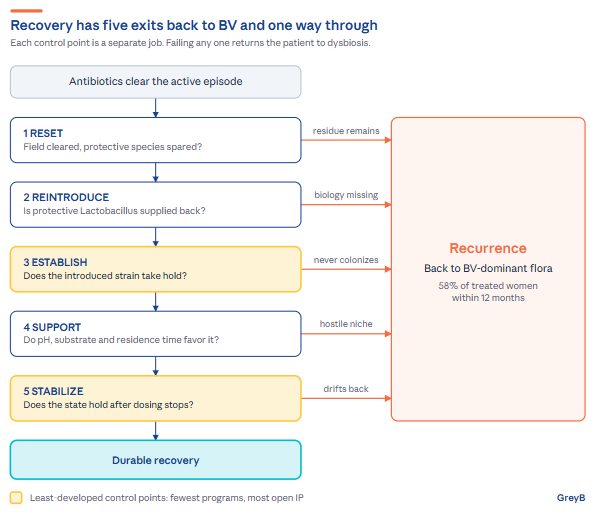
These challenges can be understood through five stages of microbiome recovery:
- RESET: Preparing the vaginal environment for recovery
Antibiotics reduce BV-associated bacteria, but residual organisms and bacterial biofilms may remain. The challenge is to remove harmful bacteria while preserving conditions that allow protective species to recover. - REINTRODUCE: Restoring protective bacteria
A healthy vaginal microbiome is often dominated by protective Lactobacillus species. Live biotherapeutics and microbiota-based treatments aim to restore these bacteria, but introducing them does not guarantee successful recovery. - ESTABLISH: Helping beneficial bacteria take hold
Even when protective bacteria are introduced successfully, they may fail to colonize or persist. The existing microbiome, bacterial load, and local inflammatory conditions can influence treatment success. - SUPPORT: Creating conditions for beneficial bacteria to thrive
Vaginal pH, nutrient availability, and treatment formulation can affect bacterial survival and growth. Technologies targeting these factors aim to make the environment more supportive of a protective microbiome. - STABILIZE: Maintaining recovery after treatment ends
Restoring a healthy microbial balance is not the same as maintaining it. Without lasting stability, the microbiome may shift back toward a BV-associated state, creating a need for better maintenance and recurrence-prevention strategies.
These stages reveal an important gap in current BV research. Most emerging treatments address specific parts of microbiome recovery rather than the entire process.
For R&D teams, understanding these differences can help identify which technologies have demonstrated clinical benefits, which remain experimental, and where opportunities exist to develop complementary solutions.
Treating BV Does Not Guarantee Long-Term Recovery
Metronidazole and clindamycin are effective treatments for bacterial vaginosis (BV). Both are recommended in the CDC treatment guidelines, with 30-day cure rates approaching 80%.
However, successful treatment does not always lead to lasting recovery. A follow-up study found that 58% of treated women experienced BV recurrence within 12 months, while 69% returned to abnormal vaginal flora.
The CDC also acknowledges that BV recurrence is common and that evidence on the best ways to manage it remains limited. Although suppressive therapy can reduce recurrence during treatment, its benefits may not continue once therapy stops.
This highlights a critical gap between treating an active episode and achieving long-term recovery. Current treatments can provide clinical clearance, but restoring and maintaining a healthy vaginal microbiome remains a challenge. Despite this, much of the industry’s focus remains on treating the active infection rather than preventing its return.
Where Current BV Treatments and Technologies Fall Short
BV recurrence does not have a single cause. A treatment may successfully reduce BV-associated bacteria but leave the vaginal environment unsuitable for recovery. Similarly, protective Lactobacillus bacteria may return without surviving long-term, while newly introduced strains may fail to establish themselves.
This creates different challenges for technology developers. A solution targeting one stage of recovery may not address the problems occurring at another.
Current BV treatments and emerging technologies target different stages of microbiome recovery, from clearing harmful bacteria to restoring protective species and supporting their growth. However, the strength of clinical evidence varies considerably across these approaches.
The following comparison shows which stages each technology addresses, what its strongest available evidence demonstrates, and which challenges remain unresolved.
| Approach | Control points | Strongest evidence to date | Population | What it has not shown |
| Metronidazole / clindamycin | RESET (broad) | Guideline-supported cure of active BV | Symptomatic BV | Durable restoration; recurrence prevention |
| LACTIN-V | REINTRODUCE, ESTABLISH | Phase 2b randomized: recurrence 30% vs 45% placebo at week 12 | Post-metronidazole BV | Effect in women not cured by antibiotics first |
| VIBRANT | REINTRODUCE, ESTABLISH | Phase 1: live strains detected in 66.1% of recipients; 49% still colonized at week 12 | Post-metronidazole BV | Recurrence prevention; superiority of multi-strain |
| VS-01 | SUPPORT | Randomized: CST-I conversion 90% vs 11% placebo | Healthy volunteers | Efficacy in recurrent BV |
| pHyph | SUPPORT, RESET | Randomized BV study: 33 participants shifted to Lactobacillus-dominant vs none in comparator | BV | Whether the shift prevents recurrence |
| Vaginal microbiota transfer (VMT) | REINTRODUCE (community) | Pilot preprint: L. crispatus dominance in 3 of 4 recipients at one month | Very small pilot (n=4) | Anything at scale; MOTIF trial pending |
| BNT331-EL | RESET (selective) | Ex vivo: viable Gardnerella reduced ≥94%; biofilm disrupted. Phase 1 complete | 49 BV samples ex vivo; first-in-human | Recurrent-BV efficacy |
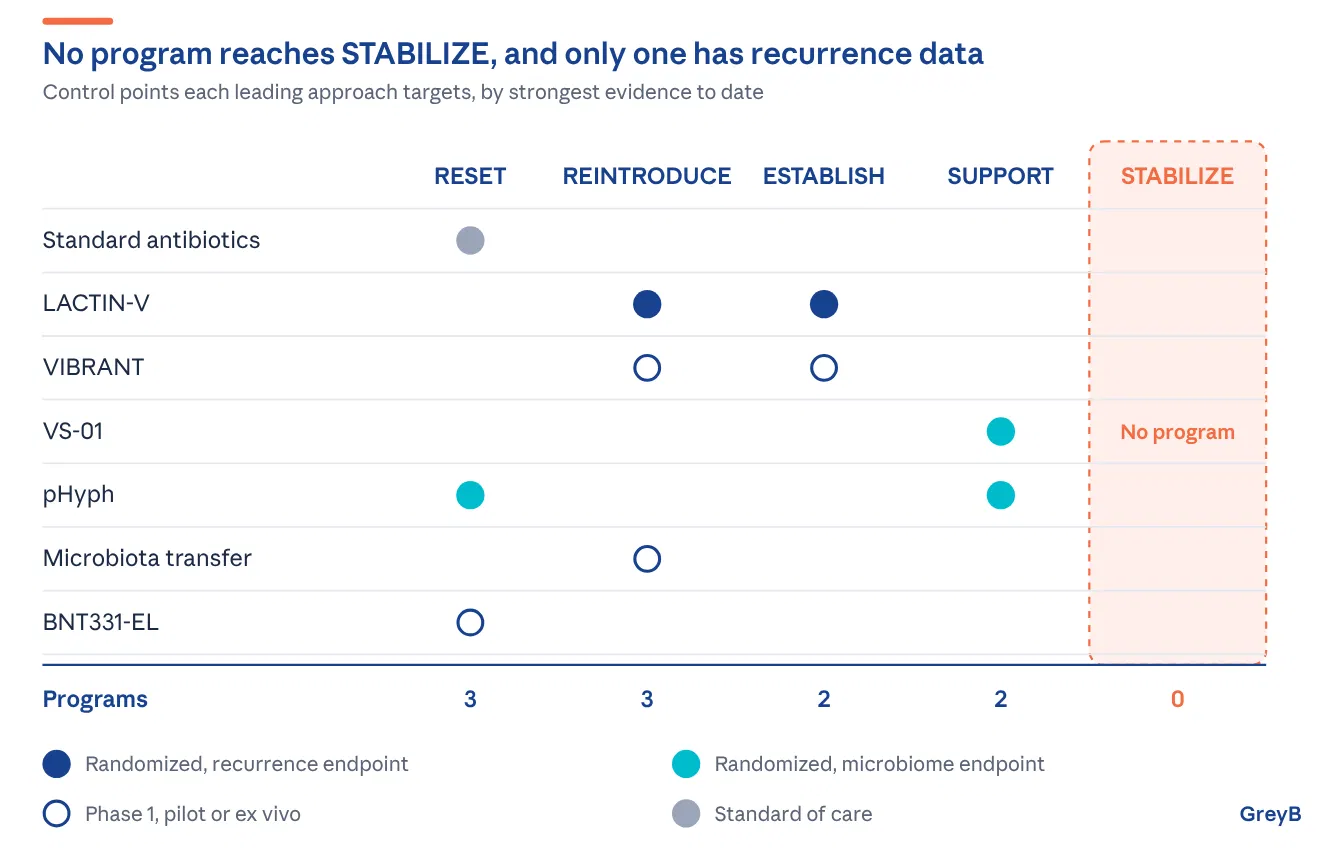
The comparison highlights two important gaps.
First, LACTIN-V is the only approach in this comparison with randomized clinical evidence demonstrating reduced BV recurrence. Other emerging technologies have shown promising results in bacterial colonization, microbiome restoration, or selective bacterial removal, but their ability to prevent recurrence remains unproven.
Second, none of these technologies specifically addresses the STABILIZE stage through a dedicated maintenance program. This leaves an important gap in supporting microbiome stability after treatment ends.
For R&D teams, these findings suggest that searching broadly for microbiome restoration technologies may not be enough. A more targeted approach is to identify where recovery fails and then evaluate the technologies, companies, and research addressing that specific challenge.
The following sections examine each recovery stage in greater detail, highlighting emerging approaches, their limitations, and potential opportunities for further development.
RESET: Clearing BV-Associated Bacteria Without Disrupting Recovery
The shift: Selective antimicrobial approaches are moving beyond broad bacterial clearance by targeting dysbiotic organisms while preserving conditions that support microbiome recovery.
The evidence: Alater analysis of the LACTIN-V trial found that achieving clinical cure after antibiotic treatment influenced the benefit of LACTIN-V in preventing recurrence.
Among women who achieved clinical cure following metronidazole treatment, the week-12 risk ratio for BV recurrence with LACTIN-V versus placebo was 0.56. However, the same benefit was not demonstrated in the smaller group that did not achieve clinical cure. This suggests that the condition of the vaginal environment after antibiotic treatment influences the effectiveness of subsequent restoration therapies.
The gap: Conventional antibiotics do not selectively remove BV-associated bacteria. They may leave residual organisms and biofilms while also removing protective species, making microbiome recovery more difficult.
Who is moving?
BNT331-EL is a notable example of selective bacterial clearance. In a 2025 ex vivo study involving vaginal samples from 49 women with BV, the engineered endolysin reduced viable Gardnerella by at least 94% at tested concentrations and disrupted Gardnerella-containing biofilms.
The study also found that L. crispatus proliferated where it was already present in substantial amounts, while L. iners was substantially reduced. BioNTech’s clinical trial portal lists the first-in-human Phase 1 study of BNT331 as complete.
Biofilm disruption is another potential RESET target, although development remains at an earlier stage. A 2024 systematic review found that 89% of the 35 identified anti-BV biofilm studies were preclinical laboratory research.
- Advantage: Selective antimicrobial platforms, including endolysins, phages, and targeted peptides, that can demonstrate an ability to preserve protective bacterial species.
- Exposed: Treatments focused solely on bacterial clearance without considering the microbial environment left behind.
- White space: Biofilm-disrupting technologies supported by human clinical evidence. With 89% of identified studies remaining preclinical, opportunities for IP development exist, although clinical risks remain uncertain.
What this means for planning. Future RESET technologies may be evaluated not only by the bacteria they eliminate but also by the microbial environment they leave behind. For developers working on post-antibiotic restoration therapies, patients’ clinical cure status is an important variable in trial design, as it can influence subsequent treatment outcomes.
REINTRODUCE: Supplying Bacteria Is Not the Same as Replacing a Community
The evidence: In a Phase 2b randomized trial, LACTIN-V reduced BV recurrence at week 12 from 45% in the placebo group to 30% following vaginal metronidazole treatment. It remains the only approach in this landscape with randomized clinical evidence showing reduced BV recurrence.
The shift. Development is moving beyond single, defined bacterial strains toward multi-strain systems, defined consortia, and whole-community transfers to restore the vaginal microbiome.
A small 2025 pilot preprint exploring vaginal microbiota transfer (VMT) reported L. crispatus dominance in three of four recipients after one month. In two successful transplantations, this dominance persisted for at least six months. None of the placebo recipients developed L. crispatus dominance.
The gap: Introducing protective bacteria does not guarantee their successful integration into the vaginal microbiome. The challenge is not simply how many strains a formulation contains, but whether combining strains improves their ability to establish themselves across different recipient conditions, provides complementary functions, or helps maintain microbial stability after treatment ends.
Who is moving?
Four approaches are being explored to address this challenge:
- LACTIN-V: Uses a single defined L. crispatus strain.
- VIBRANT: Uses multiple L. crispatus strains.
- VS-01: Combines a defined microbial community with a supporting substrate.
- VMT: Transfers an entire microbial community.
Each represents a different approach to restoring protective bacteria and supporting their establishment in the vaginal microbiome.
The larger randomized MOTIF trial is evaluating antibiotic treatment combined with VMT against antibiotic treatment with placebo in women with recurrent BV. The trial registry estimated primary completion on September 30, 2026, although its current status should be confirmed before making development or partnership decisions.
- Advantaged: Developers with well-defined, manufacturable bacterial strains supported by evidence of successful colonization, rather than delivery alone.
- Exposed: Generic probiotic products that lack strain-specific evidence and data demonstrating successful colonization.
- White space: Evidence-based consortium design. Published research has yet to establish why a particular combination of strains should outperform a single strain in a specific recipient microbiome.
What this means for planning. The choice between a single strain and a consortium should depend on the specific recovery challenge being addressed. Single-strain approaches rely on a more predictable recipient microbiome, while consortia aim to address greater variability between recipients. Both require data on the recipient’s microbiome to support their effectiveness, making bacterial establishment the next critical area of investigation.
ESTABLISH: Half the Strains Introduced Fail to Persist
The shift: Bacterial colonization is becoming a diagnostic challenge rather than just a formulation problem. The condition of a patient’s vaginal microbiome before treatment can help predict whether introduced bacterial strains will successfully establish themselves and persist.
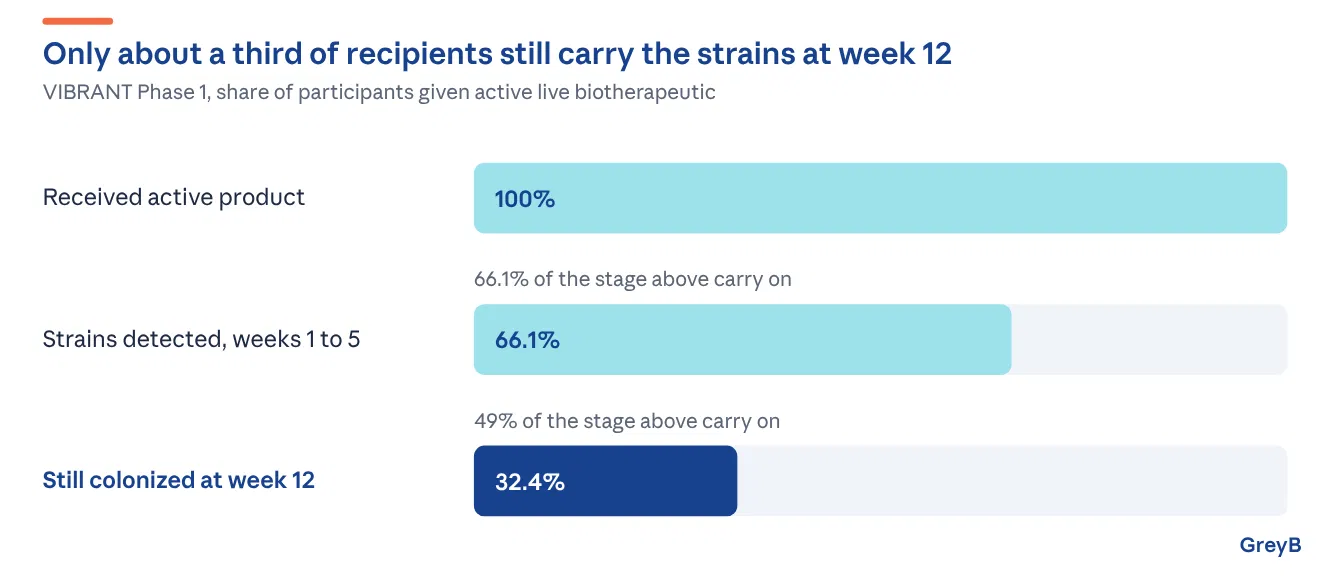
The evidence: In the VIBRANT study, live biotherapeutic strains were detected in 66.1% of participants receiving active products during the first five weeks. Among these participants, 49% remained colonized at week 12 following the short initial treatment course. Colonization was most frequently associated with one of three component strains.
This means that approximately two-thirds of recipients showed early colonization, but around half of those who initially responded no longer remained colonized by week 12.
A 2026 LACTIN-V multi-omics analysis also found that 30% of treatment recipients developed an L. crispatus-dominant microbiota by week 12, compared with 9% in the placebo group.
The analysis linked successful colonization to measurable characteristics of the vaginal environment before and after metronidazole treatment, including the pre-treatment microbiota, baseline inflammatory profiles, post-treatment bacterial load, and other clinical variables.
The gap: Current approaches typically administer bacterial strains first and evaluate colonization afterward. However, knowing whether a strain successfully colonized the microbiome does not explain why it succeeded or failed.
This highlights the need to assess the recipient’s microbiome before treatment rather than relying only on post-treatment colonization results.
Who is moving?
Few developers are directly addressing this challenge through dedicated diagnostic products.
VIBRANT comes closest through its multi-strain design, which introduces several potential colonizing strains instead of relying on a single strain for every recipient. However, this remains a formulation strategy rather than a diagnostic approach.
The LACTIN-V multi-omics analysis provides stronger evidence that the recipient’s microbiome characteristics can be measured and linked to colonization outcomes. However, these findings have not yet been translated into a validated companion diagnostic.
- Advantaged: Developers capable of assessing the recipient’s microbiome and selecting appropriate strains, along with companies holding IP related to microbiome-state classification linked to treatment selection.
- Exposed: Single-strain programs without a clear method for predicting treatment response. A 49% colonization rate without a way to identify likely responders creates challenges for Phase 3 trial design.
- White space: This represents the largest opportunity identified in the landscape. Potential areas include microbiome-state classification, treatment-readiness assessment, responder prediction, and strain–recipient matching. Technology scouting using platforms like Slate can help R&D teams explore solutions beyond microbiome therapeutics, including sequencing technologies, community state type (CST) classification, and clinical diagnostics.
What this means for planning. Successful bacterial colonization should be approached as a diagnostic challenge before focusing solely on formulation. Rather than asking only which bacterial strain to administer, R&D teams need to determine which patients are most likely to respond and how those patients can be identified before treatment begins.
SUPPORT: Formulation Is Part of the Mechanism
The shift: Factors such as local pH, substrates, mucoadhesion, dissolution, release profile, and residence time are increasingly being treated as active components of microbiome restoration rather than simply part of the delivery system.
The evidence: In arandomized study, VS-01 achieved conversion to community state type I (CST-I) in 90% of relevant participants, compared with 11% in the placebo group.
However, the study involved healthy volunteers rather than women with recurrent BV. Therefore, the results demonstrate the potential of formulation and delivery design to influence microbiome outcomes, but they do not establish treatment efficacy in recurrent BV.
pHyph addresses the same challenge without introducing bacteria. In arandomized BV study, it increased several Lactobacillus species while reducing multiple BV-associated organisms. Thirty-three participants in the treatment group shifted to a Lactobacillus-dominated microbial community, compared with none in the comparator group.
The gap: Successful microbiome restoration depends on more than the bacterial strains being administered. Supporting substrates, formulation, residence time, and local environmental conditions also influence treatment outcomes.
However, most published research continues to focus on changing the bacterial strains while keeping delivery conditions constant. This limits the understanding of how formulation and the local environment contribute to successful colonization.
Who is moving?
VS-01 combines microbial intervention with supporting substrates, demonstrating an approach that considers both the introduced bacteria and the conditions needed for their establishment.
pHyph takes a different approach by modifying the vaginal environment without administering bacteria. Its findings suggest that changing local ecological conditions alone can shift the microbiome toward a Lactobacillus-dominated state.
Although the available evidence remains limited, both approaches highlight opportunities to improve microbiome restoration through formulation and ecological modulation.
- Advantaged: Companies developing mucosal delivery platforms that can be adapted from other therapeutic areas. Their advantage may come from improving the performance of existing bacterial strains rather than developing new ones.
- Exposed: Biotherapeutic developers relying on standard delivery formulations without evidence of residence time or its influence on treatment outcomes.
- White space: Formulation-related IP linked to specific colonization outcomes. Delivery patents are less expensive to file than strain patents, and opportunities to protect these technologies may narrow quickly after competing products enter the market.
What this means for planning. R&D teams should evaluate the IP landscape for delivery technologies before competing products limit opportunities for protection.
At the same time, screening bacterial strains without varying formulation and delivery conditions may overlook factors that influence colonization. Formulation should therefore be evaluated alongside the biological intervention rather than treated as a fixed component.
STABILIZE: Nobody Is Funding the Maintenance Layer
The shift: Current approaches focus on restoring a Lactobacillus-dominant vaginal microbiome, but achieving this state does not guarantee long-term recovery. The microbiome must remain stable even after treatment ends, creating a separate challenge with its own commercial implications.
The evidence: Four leading approaches measure different aspects of microbiome recovery, but none directly establishes long-term stability after treatment ends.
LACTIN-V has demonstrated reduced BV recurrence in a randomized clinical trial. VIBRANT has reported bacterial strain persistence through week 12 following a short treatment course. VS-01 has shown microbiome conversion, while vaginal microbiota transfer (VMT) is being investigated for its ability to establish a protective microbial community.
Although these outcomes are related, they measure different aspects of recovery and cannot be treated as equivalent evidence of long-term stability.
The gap: Most existing programs focus on achieving a protective microbial state rather than maintaining it. However, successful microbiome restoration raises another challenge: how can that balance be preserved after active treatment stops?
Who is moving?
There are currently very few dedicated programs focused specifically on maintaining microbiome stability after treatment.
Potential approaches include maintenance formulations, sequential treatment regimens, ongoing support for the vaginal environment, and monitoring systems that detect a shift toward dysbiosis before BV symptoms return.
However, these approaches remain largely conceptual rather than established development programs. In particular, using microbiome monitoring to detect early changes and prevent recurrence remains a proposed strategy rather than a clinically established practice.
- Advantaged: Consumer-health companies with existing retail channels and recurring-use business models. Maintaining microbiome stability may be better suited to products designed for repeated use than to a single therapeutic intervention.
- Exposed: Single-course therapeutics focused on treating one BV episode without addressing the risk of recurrence. These approaches may resolve the immediate condition while leaving long-term recovery unaddressed.
- White space: This represents the second-largest opportunity in the technology landscape, with a clear commercial rationale. Developing a recurring maintenance product alongside an effective therapeutic could create a business model distinct from one-time treatment.
What this means for planning: While current developers focus on establishing a protective vaginal microbiome, maintaining that state represents a separate opportunity.
R&D teams should consider developing maintenance technologies that complement existing restoration therapies. As programs targeting bacterial establishment advance, they may create demand for solutions that help preserve the recovered microbiome over time. Tools like Slate Radar can help R&D teams track emerging research, patents, and companies working on these solutions.

Combining Technologies Could Address the Gaps in Long-Term BV Recovery
The opportunities for improving BV recovery may not lie in developing entirely new technologies, but in combining existing approaches to address different stages of microbiome restoration.
Current technologies target specific challenges, such as eliminating BV-associated bacteria, restoring protective species, or supporting bacterial colonization. However, important gaps remain in connecting these approaches to achieve lasting recovery.
The following combinations highlight where further research and development opportunities exist.
| Technology combination | What it addresses | Why the opportunity remains open |
| Selective RESET + live biotherapeutic | Improves the vaginal environment by selectively clearing harmful bacteria before introducing protective species. | Selective clearance only reached first-in-human testing in 2025, and the two approaches have not yet been combined. |
| Recipient-state assessment + strain selection | Evaluates the patient’s microbiome before selecting an appropriate bacterial intervention. | Predictive microbiome characteristics have been identified, but no validated companion diagnostic is available. |
| Live biotherapeutic + engineered local delivery | Combines protective bacteria with formulations designed to improve residence time and successful colonization. | Available delivery evidence comes from studies involving healthy volunteers rather than patients with recurrent BV. |
| Restoration + maintenance | Establishes a protective microbial community and supports its stability after treatment ends. | No dedicated maintenance programs are currently in development. |
| Ecological modulation + native recovery | Modifies local microbial conditions to support the recovery of protective bacteria already present. | pHyph remains the only clinical example identified, and the underlying mechanism requires further investigation. |
No current technology has demonstrated the ability to address all five stages of BV recovery: RESET, REINTRODUCE, ESTABLISH, SUPPORT, and STABILIZE.
However, expecting one technology to manage every stage may not be the most effective approach. Long-term BV recovery may instead depend on combining technologies that address different biological challenges at the appropriate stages of treatment.
For R&D teams, this shifts the focus from developing standalone solutions to identifying technologies that can work together to support more durable microbiome recovery. Slate Prism can help evaluate these combinations by examining technical evidence, limitations, and potential trade-offs.
Find the Next Opportunity in BV Treatment Research With Slate
The next advance in BV treatment may not come from discovering an entirely new therapy. It could come from connecting technologies that are currently being developed separately.
But identifying these opportunities requires looking beyond existing BV treatments. Research on selective antimicrobials, microbiome diagnostics, bacterial colonization, and drug delivery may hold answers to challenges that current therapies have yet to solve.
That is where Slate, GreyB’s AI-powered R&D intelligence platform, can help.
With Slate, R&D teams can:
- Discover emerging technologies: Explore patents and scientific research to identify new approaches to bacterial clearance, microbiome restoration, and recurrence prevention.
- Identify technology gaps: Examine existing solutions, their limitations, and areas where further innovation is needed.
- Find potential technology partners: Discover companies, startups, and research institutions developing solutions relevant to specific BV recovery challenges.
- Explore cross-industry solutions: Investigate technologies from related research areas, such as mucosal drug delivery and microbiome diagnostics, that could help address unresolved BV treatment challenges.
- Analyze the competitive and IP landscape: Understand who is developing relevant technologies, where patent activity is concentrated, and which areas may offer opportunities for further exploration.
Slate brings relevant patents, scientific literature, and company intelligence together, helping researchers move from identifying a problem to evaluating potential solutions.
Because the next opportunity in BV treatment may lie not in one technology, but in finding the right combination of technologies.