Allulose Environmental Fate & Ecotoxicity
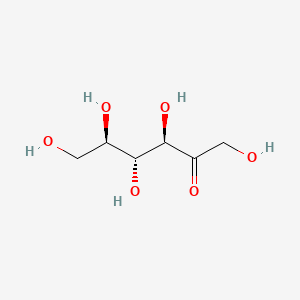
Identifiers
Functions
Where is allulose used, and what role does it play in each application?
Allulose functions primarily as a sweetener across food, beverage, and pharmaceutical applications, with additional roles as a humectant and skin-conditioning agent in cosmetics. In foods, it is used in ice cream, dairy products, hard candies, chewing gum, fish cakes, and beverages to provide sweetness while reducing caloric content. In pharmaceuticals, it serves as a direct compression excipient for tablets. It also appears in nutraceutical and hydration compositions, and in skin-whitening formulations where it inhibits tyrosinase activity. Its role varies from primary sweetener to functional ingredient for texture, stability, or bioactive effects.
Which product or formulation problem does allulose address?
Allulose addresses the formulation problem of reducing sugar and calories while maintaining sweetness and functional properties. In ice cream, it enables zero-calorie profiles when combined with high-intensity sweeteners. In dairy products, it serves as a low-calorie sweetener but can cause pigment separation, which is mitigated with stabilizers. It also solves processing issues: crystalline allulose improves flowability and tableting, and in hard candies it minimizes crystallization. Additionally, it addresses stability challenges in liquid syrups by requiring reduced dissolved oxygen to prevent degradation, and in fish cakes it improves texture and reduces spreadability.
What supports the main commercial or clinical uses of allulose?
Evidence for allulose's main uses comes from patent applications and regulatory listings. Patents describe its use as a primary sweetener in zero-calorie ice cream, low-calorie dairy, and sugar-free confections, with specific concentration ranges and co-ingredients. Clinical trial registration indicates investigation for metabolic effects, and its role as an antioxidant, hypoglycemic agent, and antilipemic drug is noted in chemical descriptions. In cosmetics, it is listed as an active humectant and skin-conditioning agent. However, patent filings are not proof of market adoption, and clinical evidence is limited to a single trial registration.
Which formulation trade-offs should researchers consider for allulose?
Key trade-offs include stability, physical form, and interaction with other ingredients. Allulose syrups require low dissolved oxygen and specific packaging to maintain stability, and dried crystals improve flowability and sensory properties. In dairy, allulose can cause pigment separation, requiring stabilizers like modified starch. In hard candies, it is used in small ratios with sugar alcohols to prevent crystallization. For tableting, crystalline allulose with specific particle size and density is needed for direct compression. In chewing gum, particle size affects hardening rate. These trade-offs require careful selection of form and co-ingredients.
What are the physicochemical properties of Allulose?
| Property | Value | Category |
|---|---|---|
| XLogP3 | -3.2 | Computed Molecular Properties |
| Exact Mass | 180.0633881 | Computed Molecular Properties |
| Monoisotopic Mass | 180.0633881 | Computed Molecular Properties |
| Topological Polar Surface Area | 118.0 | Computed Molecular Properties |
| Complexity | 147.0 | Computed Molecular Properties |
| Hydrogen Bond Donor Count | 5 | Computed Molecular Properties |
| Hydrogen Bond Acceptor Count | 6 | Computed Molecular Properties |
| Rotatable Bond Count | 5 | Computed Molecular Properties |
| Heavy Atom Count | 12 | Computed Molecular Properties |
| Formal Charge | 0 | Computed Molecular Properties |
Which formulation benchmark best contextualizes allulose, and what differs?
Sucrose is the most relevant benchmark for allulose, as it is used to replace sugar in many applications. Allulose provides sweetness with lower calories, but it differs in stability and processing behavior. Unlike sucrose, allulose syrups are prone to degradation under oxygen and require controlled storage. In tableting, allulose can serve as a direct compression excipient, a role sucrose does not typically fill. In dairy, allulose may cause pigment separation, a problem not associated with sucrose. These differences necessitate formulation adjustments when substituting allulose for sucrose.