Carnauba Wax
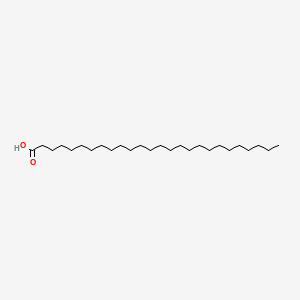
Identifiers
Functions
Hazards

Where is carnauba wax used, and what role does it play in each application?
Carnauba wax functions primarily as a structuring, film-forming, and surface-modifying agent across cosmetics, personal care, and industrial applications. In cosmetics, it is used in eye liners, mascaras, lip colors, and foundations to provide hardness, shape retention, and water resistance. It also appears in sunscreens to enhance water resistance and in hair styling products for hold. In industrial uses, it serves as a coating matrix for glass containers, a surface modifier in resin-coated metal sheets, and a component in polishes and wax dispersions. Its role varies from a primary structural wax to a minor additive for surface properties.
Which product or formulation problem does carnauba wax address?
Carnauba wax addresses formulation problems requiring structural integrity, water resistance, and surface durability. In stick cosmetics like eyeliners and lipsticks, it provides hardness and shape retention, preventing deformation. In mascaras and sunscreens, it enhances water resistance and film durability, improving wear. In industrial coatings, it modifies surface hardness and acts as a barrier, as seen in glass container coatings and metal sheet resins. It also solves brittleness and moisture absorption issues in microcapsule wall materials, acting as a plasticizer-hydrophobic synergist.
What supports the main commercial or clinical uses of carnauba wax?
Commercial use evidence is strong, with carnauba wax present in 973 products across 72 brands, spanning categories like eye liner (167 products), mascara (164), lip color (111), and shoe polish (54). Its functions in cosmetics are officially listed as skin conditioning, emollient, and film forming. Patent applications further support its roles in sunscreens for water resistance, in glass coatings as a primary matrix, and in microcapsules as a plasticizer. This combination of market prevalence and claimed technical functions substantiates its main uses.
Which formulation trade-offs should researchers consider for carnauba wax?
Formulators must balance carnauba wax's hardness and water resistance against potential impacts on texture and feel. In sunscreens, it can increase water resistance but may require combination with other agents like hydrogenated rapeseed oil to achieve desired efficacy. In cosmetics, its structuring properties are essential for stick formats but may lead to a waxy or heavy feel if overused. Concentration ranges vary widely by application, from 0.05% in sunscreens to 11-25% in glass coatings, indicating that optimal levels are highly context-dependent. Additionally, its use in microplastic-free dispersions suggests a trade-off between performance and environmental compliance.
What are the physicochemical properties of Carnauba wax?
| Property | Value | Category |
|---|---|---|
| Physical Description | White solid; [Acros Organics MSDS], Solid | Appearance |
| Melting Point | 88.5 °C | Handling Relevant Properties |
| Collision Cross Section | 205.3 Ų [M-H]- [CCS Type: DT; Buffer gas: N2; Sample Type: Human bronchoalveolar lavage fluid (BALF); Dataset: Unambiguous Lipids], 201.57 Ų [M-H]- [CCS Type: TIMS; Method: single field calibrated] | Analytical Properties |
| XLogP3 | 11.8 | Computed Molecular Properties |
| Exact Mass | 396.396730897 | Computed Molecular Properties |
| Monoisotopic Mass | 396.396730897 | Computed Molecular Properties |
| Topological Polar Surface Area | 37.3 | Computed Molecular Properties |
| Complexity | 301.0 | Computed Molecular Properties |
| Hydrogen Bond Donor Count | 1 | Computed Molecular Properties |
| Hydrogen Bond Acceptor Count | 2 | Computed Molecular Properties |
Which formulation benchmark best contextualizes carnauba wax, and what differs?
Beeswax serves as a relevant benchmark for carnauba wax in cosmetics, as both are natural waxes used for structuring and film formation. However, carnauba wax is notably harder and more brittle, which is why it is often combined with other waxes like candelilla or hydrocarbon waxes to adjust flexibility. In industrial applications, synthetic hydrocarbon waxes are proposed as partial substitutes, indicating that carnauba's unique hardness and barrier properties set a performance standard that alternatives aim to match. This distinction is critical for formulators selecting wax systems for specific mechanical or sensory requirements.