Carnauba Wax Patent Landscape
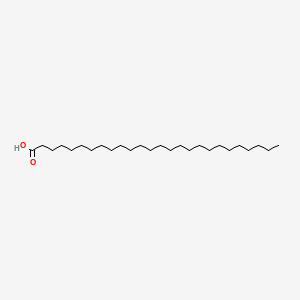
Identifiers
Functions
Hazards

Which organizations and claims shape current development around carnauba wax?
Key organizations include Arkema France (cold-end glass coatings, US12630716B2), Beiersdorf AG (sunscreen water resistance, EP4157213B1), L'Oréal (sunscreen sensory and SPF, FR3167855A3), JFE Steel Corp (resin-coated metal sheets, EP4082929B1), and a Korean entity (wax substitutes, KR102917095B1). Claims focus on specific performance outcomes: water resistance, surface indentation modulus, flowability, and barrier properties. These organizations are leveraging carnauba wax's unique properties for differentiated product performance.
How is Carnauba wax innovation changing in Packaging?
Monthly patent filings by domain
Which technical problems do recent patents address with carnauba wax?
Recent patents address several technical problems: improving water resistance in sunscreens (EP4157213B1), achieving a light, watery feel with enhanced SPF and blending effect (FR3167855A3), providing a primary wax matrix for cold-end glass coatings (US12630716B2), modifying surface indentation modulus in resin-coated metal sheets (EP4082929B1), and solving poor flowability, brittleness, and moisture absorption in microcapsule wall materials (CN121621538A). These patents claim solutions to performance and processing challenges across packaging and cosmetics.
How do recent patents change the role or application of carnauba wax?
Carnauba wax's role is expanding from a traditional structuring or coating agent to a functional performance enhancer. In sunscreens, it is claimed to increase water resistance when combined with hydrogenated rapeseed oil (EP4157213B1) and to contribute to a light, watery feel and blending effect (FR3167855A3). In microcapsules, it acts as a plasticizer-hydrophobic synergist (CN121621538A). In metal packaging, it modifies surface indentation modulus (EP4082929B1). These roles shift the ingredient from passive matrix to active contributor to product performance.
How is Carnauba wax used in Packaging patents?
Which Packaging product categories feature Carnauba wax in recent patents?
Which product categories and formulation strategies emerge in recent work on carnauba wax?
Emerging strategies include combining carnauba wax with other waxes or oils to enhance water resistance in sunscreens (EP4157213B1), using it in low concentrations (0.05–5.0%) with fillers and polymers for sensory and SPF benefits (FR3167855A3), and incorporating it into resin coatings for metal packaging at 0.01–2.0% to control surface modulus (EP4082929B1). Another strategy is developing hydrocarbon-based substitutes for partial replacement (KR102917095B1). Product categories span cosmetics, packaging, pharmaceuticals, and agriculture.
Where is the evidence-backed white space for further development of carnauba wax?
Evidence-backed white space exists in developing carnauba wax substitutes that maintain performance while reducing reliance on the natural wax, as seen in KR102917095B1. Another area is combining carnauba wax with other natural waxes or oils to enhance water resistance in sunscreens, as in EP4157213B1. Additionally, using carnauba wax as a plasticizer in microcapsule wall materials (CN121621538A) suggests opportunities in encapsulation for pharmaceuticals and agriculture. These areas are supported by recent patent activity but not yet widely adopted.