Centella Asiatica Extract Environmental Fate & Ecotoxicity
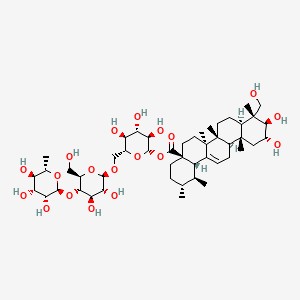
Identifiers
Functions
Where is centella asiatica extract used, and what role does it play in each application?
Centella asiatica extract is used primarily in cosmetics, with market data showing its presence in face creams, lip balms, lotions, foundations, masks, and eye creams. Its roles are defined by its functions as a cleansing, skin conditioning, smoothing, soothing, and tonic agent. Patent filings also indicate applications in food, beverages, and pharmaceuticals, where it is claimed to support muscle function, immunity, and anti-obesity. In cosmetics, it is often positioned as a soothing, repairing, or anti-aging active, sometimes in specialized formats like liposomal or nanocapsule delivery systems.
Which product or formulation problem does centella asiatica extract address?
Centella asiatica extract addresses formulation problems related to skin sensitivity, irritation, and barrier weakness. It is used to provide soothing and anti-inflammatory benefits, which is critical for products targeting atopic or sensitive skin, as seen in formulations like 'Centella ATO' creams. Patent claims also support its role in strengthening the skin barrier by increasing filaggrin and involucrin expression, promoting collagen synthesis, and reducing inflammatory cytokines. This makes it a solution for products needing to calm reactive skin while supporting long-term barrier repair.
What supports the main commercial or clinical uses of centella asiatica extract?
Evidence for the main uses of centella asiatica extract comes from its regulatory listing as a cosmetic ingredient with functions like skin conditioning and soothing, and from extensive patent literature. Patents describe specific mechanisms, such as inhibiting MMP-1 and stimulating procollagen synthesis for anti-wrinkle effects, and synergistically inhibiting PGE2 for irritation relief. Market data shows adoption across 399 products from 69 brands, indicating commercial acceptance. However, clinical efficacy data is not provided in the available evidence, so the support is primarily from formulation claims and regulatory acceptance.
Which formulation trade-offs should researchers consider for centella asiatica extract?
Formulation trade-offs for centella asiatica extract center on its solubility and stability. Patent filings describe using nanocapsule powder forms to overcome low solubility and prevent precipitation, and liposomal encapsulation to enhance delivery and stability, particularly in low-pH compositions. The extract's active compounds, like asiaticoside, may require specific extraction and purification methods to achieve high purity, which adds process complexity. Additionally, effective concentrations vary widely by application, from 0.0005% in makeup bases to 20% in specialized compositions, requiring careful optimization to balance efficacy with formulation aesthetics and cost.
What are the physicochemical properties of Centella asiatica extract?
| Property | Value | Category |
|---|---|---|
| XLogP3 | 0.1 | Computed Molecular Properties |
| Exact Mass | 958.51373025 | Computed Molecular Properties |
| Monoisotopic Mass | 958.51373025 | Computed Molecular Properties |
| Topological Polar Surface Area | 315.0 | Computed Molecular Properties |
| Complexity | 1820.0 | Computed Molecular Properties |
| Hydrogen Bond Donor Count | 12 | Computed Molecular Properties |
| Hydrogen Bond Acceptor Count | 19 | Computed Molecular Properties |
| Rotatable Bond Count | 10 | Computed Molecular Properties |
| Heavy Atom Count | 67 | Computed Molecular Properties |
| Formal Charge | 0 | Computed Molecular Properties |
Which formulation benchmark best contextualizes centella asiatica extract, and what differs?
A relevant formulation benchmark is the use of centella asiatica extract in moisturizers and skin barrier repair products, as seen in patents combining it with beta-sitosterol, allantoin, and panthenol. This benchmark differs from simpler soothing applications by emphasizing dermal regeneration and collagen synthesis, not just immediate calming. It also highlights the need for multi-ingredient synergy and higher extract concentrations (2-5%) to achieve barrier-strengthening effects, contrasting with lower-dose uses in color cosmetics where the extract is a minor active.