Cobalt Carboxylate
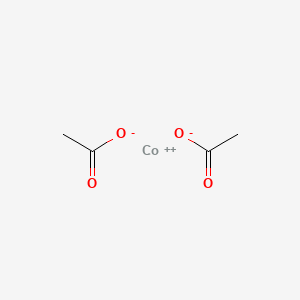
Identifiers
Hazards


Where is cobalt carboxylate used, and what role does it play in each application?
Cobalt carboxylate, specifically cobalt(II) acetate, serves multiple roles across industrial applications. It acts as a bleaching agent and drier for lacquers and varnishes, a catalyst for oxidation and esterification, a foam stabilizer for malt beverages, and an anodizing agent. It is also used in sympathetic inks, as a mineral supplement in feed additives, and as a processing aid in petrochemical manufacturing. In patent filings, it is claimed as a cure accelerator in thermo-curable gel coat resins and as a source of cobalt in oxygen scavenging compositions for packaging. These roles leverage its cobalt content for catalytic and oxidative functions.
Which product or formulation problem does cobalt carboxylate address?
Cobalt carboxylate addresses formulation problems requiring accelerated curing, oxidation catalysis, and oxygen scavenging. In gel coat resins, it accelerates curing when combined with a peroxide initiator, enabling tack-free surfaces within specified timeframes. In packaging, it acts as an oxygen scavenger to extend product shelf life by reducing oxygen exposure. It also solves drying and stabilization issues in coatings and beverages, functioning as a drier, bleaching agent, and foam stabilizer. These functions are critical for achieving desired performance in industrial and consumer products.
What supports the main commercial or clinical uses of cobalt carboxylate?
Evidence for cobalt carboxylate's main uses comes from regulatory listings and patent filings. It is listed as an active substance under TSCA and REACH, with FDA approval as an indirect food additive for adhesives and as a trace mineral in animal feeds. Patent applications describe its use as a cure accelerator in gel coat resins and as an oxygen scavenger in packaging master batches. These sources indicate established industrial roles, though patent claims do not confirm market adoption. Production data show significant U.S. volumes, suggesting ongoing commercial relevance.
Which formulation trade-offs should researchers consider for cobalt carboxylate?
Researchers must balance cobalt carboxylate's functional benefits against significant regulatory and safety constraints. It is classified as a hazardous air pollutant and a REACH Substance of Very High Concern, with reported hazard traits including carcinogenicity, reproductive toxicity, and respiratory toxicity. Formulations must comply with TSCA reporting and REACH registration, and handling requires separation from strong oxidants. In gel coat resins, the amount of cobalt metal is tightly controlled (0.003–0.01 phr) to achieve curing performance, indicating a narrow effective window. These factors necessitate careful risk assessment and substitution considerations.
What are the physicochemical properties of Cobalt carboxylate?
| Property | Value | Category |
|---|---|---|
| Physical Description | Cobalt acetate is a red-violet crystalline solid. Vinegar-like odor, Liquid; Dry Powder, Light-pink solid; [Merck Index] Pink crystals, soluble in water; [MSDSonline] | Appearance |
| Color/Form | Light pink crystals, Pink crystals | Appearance |
| Odor | Vinegar-like odor | Appearance |
| Solubility | Readily soluble in water, 2.1 parts by wt (of the formula wt)/100 parts methanol by wt at 15 °C, Soluble in alcohol and dilute acids | Formulation Relevant Properties |
| Melting Point | 284 °F, 298 °C (decomposes) | Handling Relevant Properties |
| Density | 1.71 at 68 °F - Denser than water; will sink, Intense red monoclinic, prismatic crystals; density 1.705; on heating becomes anhydrous by 140 °C; soluble in water, alcohols, dilute acids, and pentyl acetate; pH of 0.2 molar aqueous solution: 6.8 /Cobalt(2+) acetate tetrahydrate/ | Handling Relevant Properties |
| Stability/Shelf Life | Stable under recommended storage conditions | Handling Relevant Properties |
| Decomposition | When heated to decomp it emits acrid smoke and irritating fumes | Handling Relevant Properties |
| Refractive Index | Mol wt: 249.08; Index of refraction: 1.542 /Tetrahydrate/ | Analytical Properties |
| Relative Evaporation Rate | Evaporation of cobaltous acetate tetrahydrate at 20 °C is negligible | Analytical Properties |
Which formulation benchmark best contextualizes cobalt carboxylate, and what differs?
A relevant formulation benchmark is the thermo-curable gel coat resin composition, where cobalt carboxylate is used at 0.003–0.01 phr cobalt metal alongside a peroxide initiator to achieve tack-free curing at 100°C within 25 minutes or less. This benchmark highlights the ingredient's role as a cure accelerator in a specific resin system. What differs from other applications is the precise dosage and the combination with a free-radical initiator, which is not typical for its use as a drier or oxygen scavenger. This distinction is critical for formulators targeting similar thermoset systems.