Cobalt Carboxylate Environmental Fate & Ecotoxicity
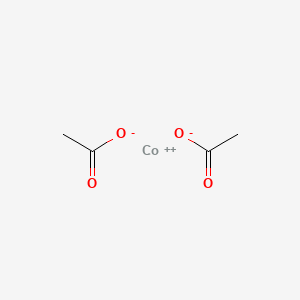
Identifiers
Hazards


What is known about the environmental fate of cobalt carboxylate?
Cobalt carboxylate is expected to exist in particulate form in the atmosphere because inorganic cobalt compounds are nonvolatile. These particles are removed by wet and dry deposition, and cobalt has been detected in atmospheric deposition and precipitation. This indicates that the compound will partition to air particles and eventually settle onto soil or water surfaces. For formulators, this means that environmental release is likely to be localized near emission sources, but long-range transport via atmospheric particles is possible. No direct data on soil or water partitioning are available, so fate in those compartments remains uncertain.
What do biodegradation, bioaccumulation, and ecotoxicity findings indicate for cobalt carboxylate?
No direct evidence on biodegradation, bioaccumulation, or ecotoxicity for cobalt carboxylate is available. The only relevant information is that cobalt compounds are nonvolatile and particulate in air, which does not address these hazard endpoints. Therefore, no conclusions can be drawn about persistence, food-chain accumulation, or toxicity to aquatic or terrestrial organisms. This absence of data is a critical gap for regulatory submissions and hazard communication. Until studies are conducted, the environmental hazard profile of cobalt carboxylate remains uncharacterized, and any claims of low hazard or safety would be unsupported.
Which environmental exposure pathways or concentrations are reported for cobalt carboxylate?
No specific environmental concentrations or exposure pathways for cobalt carboxylate are reported. The only relevant evidence is that cobalt has been detected in atmospheric deposition and rain-snow precipitation, but this is not linked to cobalt carboxylate specifically. This suggests that atmospheric release and subsequent deposition could be a potential exposure route, but quantitative data are lacking. For risk assessment, this means that exposure cannot be estimated without additional monitoring or modeling. The absence of measured concentrations in air, water, soil, or biota is a significant limitation for any environmental exposure evaluation.
How might use context or formulation affect the environmental profile of cobalt carboxylate?
The environmental profile of cobalt carboxylate is likely influenced by its physical form and application method. Since inorganic cobalt compounds are nonvolatile and particulate, any use that generates fine particles or sprays could lead to atmospheric release and subsequent deposition. Formulations that bind cobalt into a solid matrix may reduce air emissions, while liquid or powder forms may increase them. However, no direct evidence links specific use contexts to environmental behavior. Therefore, formulators should consider containment and emission controls, but the actual impact cannot be quantified without further data.
Which evidence gaps must be resolved before making sustainability claims about cobalt carboxylate?
Before any sustainability claim can be made, direct evidence on biodegradation, bioaccumulation, and ecotoxicity is required. Additionally, measured environmental concentrations and fate data in soil, water, and biota are missing. Without these, it is impossible to assess persistence, toxicity, or exposure potential. The only available data on atmospheric particulate behavior is insufficient to support any environmental benefit. Therefore, any sustainability claim would be premature and unsupported. Research should prioritize these endpoints to establish a credible environmental profile.